Algeria
 Egypt
 Libya
 Morocco
 Sudan
 Tunisia
 Benin
 Burkina Faso
 Cabo Verde
 Côte d'Ivoire
 Ghana
 Guinea
 Guinea-Bissau
 Liberia
 Mali
 Mauritania
 Niger
 Nigeria
 Senegal
 Sierra Leone
 The Gambia
 Togo
 Cameroon
 Central African Republic
 Chad
 DR Congo
 Equatorial Guinea
 Gabon
 São Tomé and Príncipe
 Burundi
 Comoros
 Djibouti
 Eritrea
 Ethiopia
 Kenya
 Madagascar
 Malawi
 Mauritius
 Mozambique
 Rwanda
 Seychelles
 Somalia
 South Sudan
 Tanzania
 Uganda
 Angola
 Botswana
 Eswatini
 Lesotho
 Namibia
 South Africa
 Zambia
 Zimbabwe
In Brazzaville, a broken pump can bring much more than a car to a halt. When petrol runs short, taxis, motorbikes and small businesses lose working hours, while people have to find another way to get around. The September 2026 crisis is a reminder that an oil-producing country can still be vulnerable when it comes to delivering fuel to the pump.
Crude oil, but a fragile supply chain
The Republic of the Congo produces oil, but extracted crude does not automatically become the petrol or diesel consumed in the country. It must be refined, missing products imported, stored and then transported to filling stations. Each stage depends on separate infrastructure and financing.
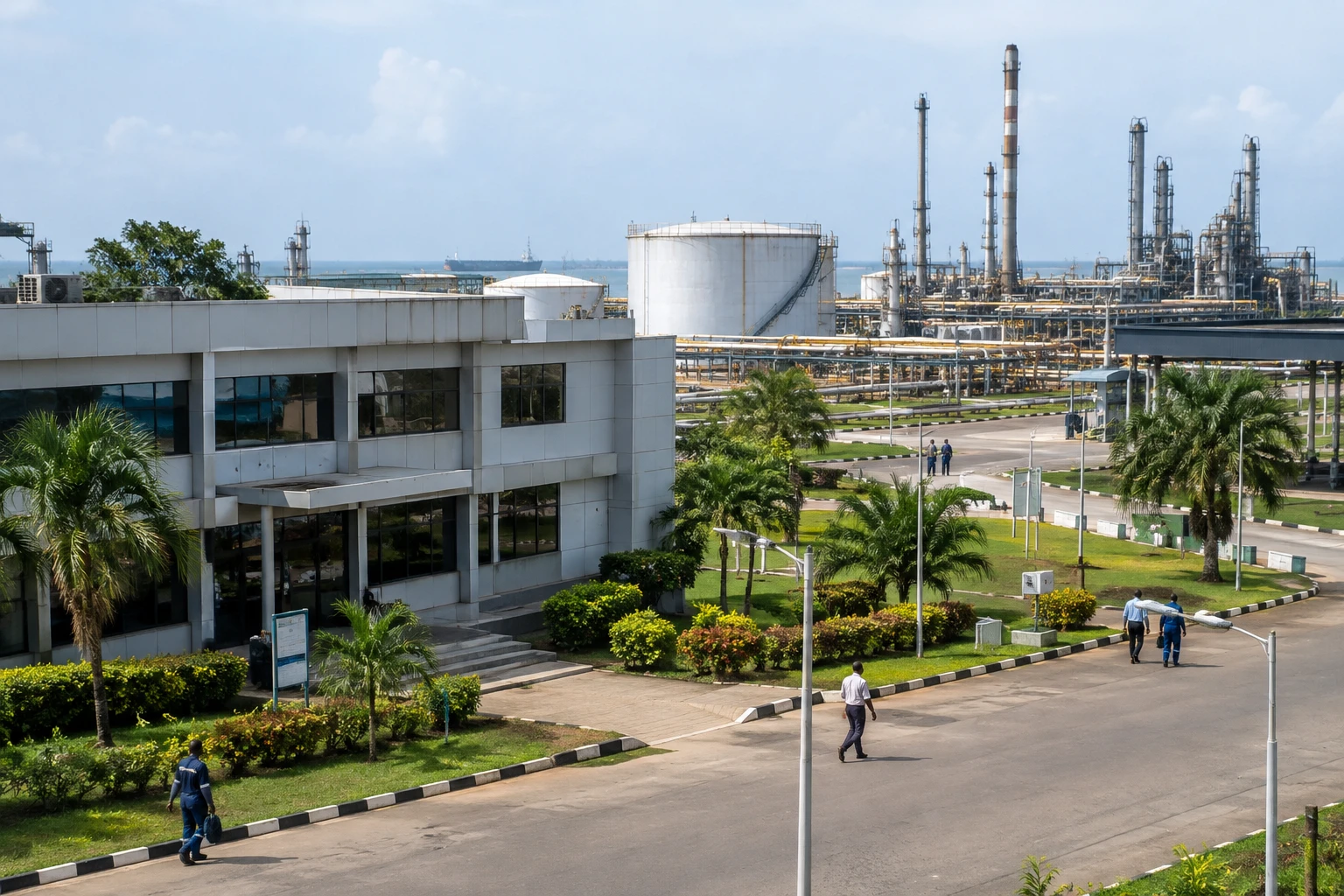
At the heart of this chain is the Congolaise de raffinage (CORAF), based in Pointe-Noire and a subsidiary of the Société nationale des pétroles du Congo (SNPC). It is the country’s only refinery. Its share of national demand is generally estimated at around 60%, with the rest imported. The proportions vary according to the period and the products concerned.
Crude oil is an export resource, but its local processing and distribution are different activities. Moreover, crude production is organised through production-sharing contracts: part goes to partner companies and another part to the state. The availability of crude for the refinery therefore also depends on the volumes allocated to it.
This dependence is also apparent at regional level. Congo is a member of the Central African Economic and Monetary Community (CEMAC), which brings together six countries in a common market using the CFA franc. Yet the existence of this community alone does not guarantee swift cross-border deliveries: transport, stocks, financing and supply agreements remain decisive.
In Brazzaville, the queues disrupt travel
In September 2026, motorists and drivers reported queues and filling stations without fuel in several districts of Brazzaville. Some left without being able to fill their tanks. Others sought out jerrycans from informal sellers, where a litre could cost several times the price charged at a filling station, according to accounts collected at the time.
The crisis does not affect all households in the same way. For a taxi or motorbike driver, a few hours without petrol mean fewer fares and a smaller daily income. Passengers, meanwhile, may face longer journeys or higher fares. Small businesses that rely on vehicles or generators also see their costs rise.
The problems now extend beyond transport. On 27 October, Les Dépêches de Brazzaville reported that diesel shortages were affecting telecommunications networks and that the Regulatory Authority for Posts and Electronic Communications was working with the SNPC on supply. This shows that fuel also powers essential services, beyond individual travel.
Informal sales meet immediate demand, but at a price not everyone can afford. They also highlight the gap between the official price and the cost of obtaining the product when filling stations run dry. The available accounts point to these practices but do not make it possible to measure their extent or establish individual responsibility.
Maintenance shutdown, imports and financing
CORAF was shut down for maintenance from 8 September 2026. During a parliamentary visit to the site on 30 September, a refinery representative confirmed the shutdown and said operations were expected to resume by 10 October at the latest. The Senate delegation thus provided independent evidence on the maintenance schedule and the refinery’s role.
This confirmation is not, however, enough to explain all the shortages. When local production falls, imports must make up the difference. Prime Minister Anatole Collinet Makosso cited several constraints at a Congolese Labour Party meeting on 3 and 4 October: fewer crude oil cargoes allocated to the refinery and limited financial capacity to purchase refined products. These points were reported by the Congolese press and in a secondary account; they should be understood as explanations attributed to the head of government, not as an independent audit of the system.
The price paid at the pump does not necessarily reflect the international purchase cost. A study published by Unicongo describes a system of administered prices and the financial pressures it can create for those responsible for supply. In times of difficulty, importers therefore have to find the funds needed to buy and transport fuel, even if the domestic retail price does not cover all costs.
Logistics matter just as much. CORAF is in Pointe-Noire, while demand is high in Brazzaville and other regions. Storage and transport rely in particular on the Société commune de logistique, as well as rail and road. A delivery available at the port therefore cannot necessarily be distributed immediately to every filling station.
Announced restart does not resolve underlying weaknesses
On 5 October, after the political meeting on 3 and 4 October, PCT officials noted an improvement in the availability of premium petrol, while saying that difficulties with diesel persisted. This observation highlights the difference between the resumption of production at the refinery and a uniform return to normal at filling stations: products, stocks and distribution channels are not interchangeable.
For the authorities, the immediate challenge is to secure imports and transport the available volumes. In the longer term, recurring shortages raise questions about the regularity of maintenance, refining capacity, strategic stocks and financing for purchases. They also highlight the concentration of responsibilities around the SNPC and the rules governing the participation of approved distributors in imports. A report by the Congolese Ministry of Finance, produced with technical assistance, describes this central role and the framework for using approved importers.
The September crisis is also a reminder that energy security is measured not only by the volume of oil extracted. It also depends on the ability to turn a national resource into products that are available at an affordable price, in cities and across the regions. For Congolese people, the next tangible measure will be the continuity of deliveries, particularly of diesel, beyond CORAF’s announced restart.