Algeria
 Egypt
 Libya
 Morocco
 Sudan
 Tunisia
 Benin
 Burkina Faso
 Cabo Verde
 Côte d'Ivoire
 Ghana
 Guinea
 Guinea-Bissau
 Liberia
 Mali
 Mauritania
 Niger
 Senegal
 Sierra Leone
 The Gambia
 Togo
 Cameroon
 Central African Republic
 Chad
 DR Congo
 Equatorial Guinea
 Gabon
 Republic of the Congo
 São Tomé and Príncipe
 Burundi
 Comoros
 Djibouti
 Eritrea
 Ethiopia
 Kenya
 Madagascar
 Malawi
 Mauritius
 Mozambique
 Rwanda
 Seychelles
 Somalia
 South Sudan
 Tanzania
 Uganda
 Angola
 Botswana
 Eswatini
 Lesotho
 Namibia
 South Africa
 Zambia
 Zimbabwe
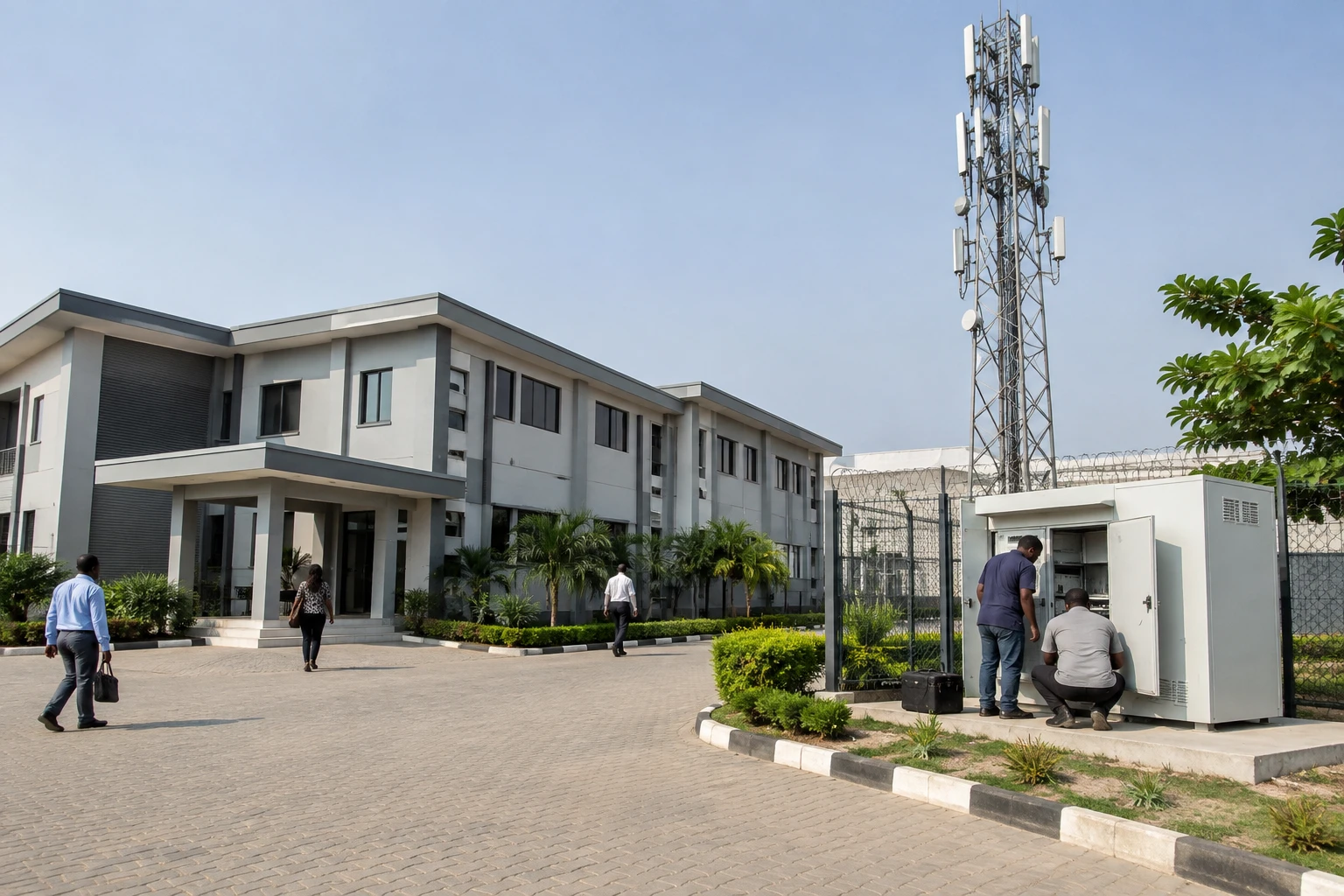
For a community far from major routes, a new mobile site can transform access to digital services. But installing an antenna is not enough: it must also be powered, connected and made viable to operate. In Nigeria, Africa Mobile Networks’ (AMN) expansion highlights this challenge, which the private company and the government are tackling with different models.
Rural coverage, a national and regional priority
Nigeria is Africa’s most populous country and the continent’s largest mobile market by subscriber numbers, according to data presented by AMN. Yet some of its people remain poorly served or without coverage. The problem is not limited to phone availability: without a reliable signal, online financial, educational, commercial and administrative services remain difficult to access.
In rural areas, operators may be reluctant to build their own sites when populations are dispersed and potential revenues uncertain. Distances, access to electricity and connections to transmission networks also complicate operations. These obstacles affect service quality and continuity, not just the number of antennas.
The federal government has launched a public response with the Nigeria Universal Communication Access Project (NUCAP), a universal telecommunications access programme. Its stated goal is to deploy 3,700 sites to connect nearly 20 million Nigerians. The first was inaugurated on 16 October 2026, in the Bende area of Abia State. The relevant federal ministry and Nigerian media have confirmed the launch and the project’s targets.
AMN bets on infrastructure sharing
On 27 October, AMN announced that it had activated its 2,000th base station in Nigeria. The company plans to exceed 2,100 sites by the end of 2026, then surpass 60 new installations a month in 2027. It says its infrastructure serves more than 4.7 million people in areas that were previously unserved or underserved. These figures come from the company and were reported by pan-African specialist outlet Space in Africa; on their own, they do not constitute an independent audit of network performance.
AMN operates a model known as “Network-as-a-Service”. It finances, builds and maintains stations, then enables mobile operators to offer services from them. This sharing means each operator does not have to build and operate every site separately. AMN says it uses radio technology compatible with 2G, 3G and 4G, as well as satellite links for some remote sites.
The company says its stations account for about 10% of the active sites operated by Nigeria’s largest mobile operator, which it did not name in its announcement. This is a share of that operator’s network, not 10% of all the country’s telecoms infrastructure. AMN is also smaller than major tower specialists such as IHS Towers and American Tower Corporation.
Ambitious targets, conditions to verify
The pace announced for 2027 will require construction, equipment procurement and commissioning to be sustained at scale. In poorly connected communities, each site also needs an energy solution and a reliable transmission link. Satellite connectivity can meet some connection needs, but it does not automatically resolve questions of cost, capacity or availability.
In the information reviewed, AMN has not publicly detailed the financing planned to meet its timetable or how its future installations will be distributed among states. It is therefore important to distinguish announced targets from sites actually deployed and operational. The number of towers also does not show how many people have access to an affordable, stable and sufficiently fast service.
The public NUCAP programme and AMN’s commercial model could complement one another: the former targets areas that are difficult for the market to serve, while the latter pools the cost of sites used by operators. Their effectiveness will nevertheless depend on co-ordination between the state, mobile operators, infrastructure companies and communities. For residents, the practical issue will be signal quality and service continuity, particularly where electricity or transmission networks are unreliable.
A connectivity test for West Africa
Nigeria’s challenge resonates beyond its borders. In West Africa, ECOWAS — the Economic Community of West African States — is seeking to strengthen regional integration, while trade and digital services increasingly depend on reliable networks. Nigeria’s experience may inform discussions about infrastructure sharing and access to rural areas, but it cannot automatically be applied to countries with different territories and markets.
The next step will be to compare announcements with results: how many AMN sites will be active by the end of 2026, whether the promised pace is maintained in 2027, and how NUCAP progresses after its first site in Abia. Monitoring will also need to cover the actual coverage achieved, service quality and operators’ ability to maintain these installations over time.