Algeria
 Egypt
 Libya
 Morocco
 Sudan
 Tunisia
 Benin
 Burkina Faso
 Cabo Verde
 Côte d'Ivoire
 Ghana
 Guinea
 Guinea-Bissau
 Liberia
 Mali
 Mauritania
 Niger
 Nigeria
 Senegal
 Sierra Leone
 The Gambia
 Togo
 Cameroon
 Central African Republic
 Chad
 DR Congo
 Equatorial Guinea
 Gabon
 Republic of the Congo
 São Tomé and Príncipe
 Burundi
 Comoros
 Eritrea
 Ethiopia
 Kenya
 Madagascar
 Malawi
 Mauritius
 Mozambique
 Rwanda
 Seychelles
 Somalia
 South Sudan
 Tanzania
 Uganda
 Angola
 Botswana
 Eswatini
 Lesotho
 Namibia
 South Africa
 Zambia
 Zimbabwe
In Djibouti, the public budget must now contend with a clear gap: revenue collected in the spring was well below forecasts, while spending exceeded its planned path. The revision announced in late October adjusts the accounts. It also tests the state’s ability to finance its priorities without adding to pressure on its public finances.
A budget revised on the basis of revenue actually collected
The Council of Ministers considered the draft supplementary finance bill on 27 October 2026. Under it, the state budget is reduced to 168.48 billion Djiboutian francs, from 172.30 billion in the initial finance law. The decrease amounts to 3.82 billion FDJ, or 2.22%, according to figures published by the Djiboutian authorities and reported by national radio and television.
The shortfall is already visible in revenue. At the end of May 2026, general revenue, including grants and excluding borrowing, totalled 55.204 billion FDJ. The forecast for that period was 68.082 billion. The negative gap therefore stood at 12.878 billion. Domestic revenue, which includes taxes and duties collected in the country, accounted for a large share of the shortfall.
At the same time, executed spending exceeded the planned path, particularly in recurrent and operating costs. The draft supplementary budget therefore provides for spending to be adjusted to available resources. It also envisages an increase in external financing to offset part of the fall in domestic revenue. This should be distinguished from revenue already collected: external financing depends on resources yet to be mobilised.
Collecting more while keeping public services in view
The government intends to broaden the tax base, meaning the number of activities and taxpayers actually subject to tax. It also plans to improve the yield of value-added tax (VAT), digitise the tax and customs administrations, and combat tax fraud and evasion.
These measures can strengthen revenue if they improve the registration of activities and payment of taxes due. Their implementation matters as much as their announcement. For formal businesses, more digital procedures can simplify administrative steps, provided the tools are accessible and reliable. For small shops and workers in the informal economy, broadening the tax base also raises questions about filing requirements and the burden of levies.
Spending adjustments require the same scrutiny. Budget savings can affect administrations, businesses bidding for public contracts and households reliant on state-funded services in different ways. The available public documents do not specify the items to be cut. It would therefore be premature to say which sectors or groups will bear most of the burden.
Dependence on ports links national finances to regional trade
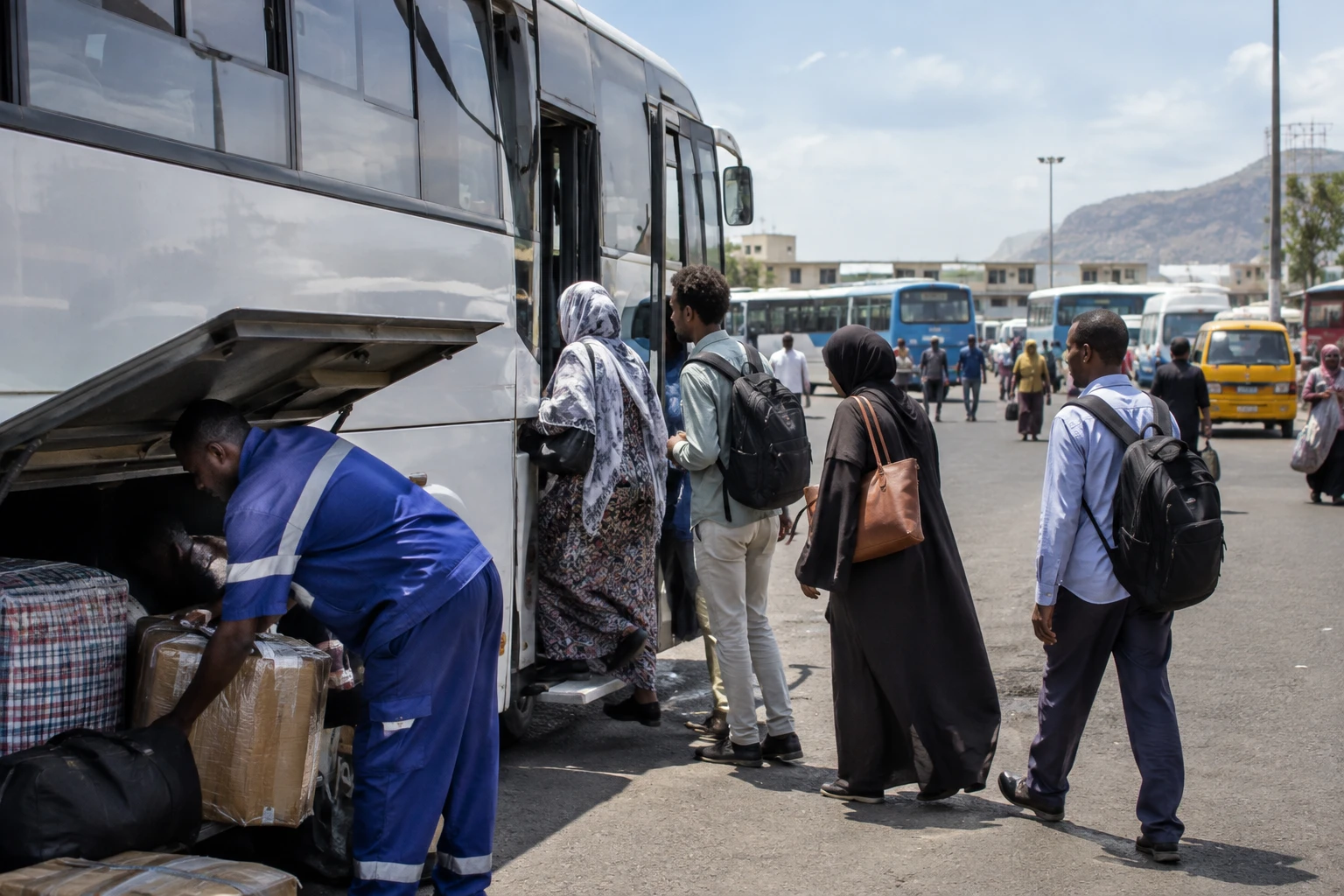
The budget situation is unfolding in an economy where port and logistics services play a major role. The Port of Djibouti is a vital gateway for trade with neighbouring landlocked Ethiopia. This relationship generates activity and revenue, but also exposes Djibouti’s economy to fluctuations in regional and maritime trade.
Tensions in the Red Sea and disruptions to shipping routes can alter flows, transport costs and port activity. The Djibouti–Ethiopia corridor also depends on the level of Ethiopian demand and conditions for the movement of goods. The World Bank estimates that Djibouti’s growth could slow to 5.9% in 2026. In January, the International Monetary Fund (IMF) put growth in 2025 at 6.5%, driven in particular by port activity and construction.
Forecasts are not, however, results already secured. They depend on economic conditions, and institutions may use different assumptions. For the state, sustained growth does not automatically guarantee sufficient tax revenue: economic activity must generate taxable income, and taxes must actually be collected.
Debt and parliamentary scrutiny: the next milestones
The IMF estimates Djibouti’s public debt at 68.9% of gross domestic product in 2024 and 67.2% in 2025. Its September 2025 scenario projected it at 62.3% in 2026. These figures are the institution’s estimates and projections, not a final assessment of the current financial year. In January 2026, the IMF had notably stressed improved revenue collection and spending control to strengthen debt sustainability.
The budget revision therefore does not, on its own, resolve the question of debt. It adjusts forecasts after revenue came in lower than expected and leaves two questions open: will the announced external financing be mobilised, and will the tax measures generate sustainable revenue? The answer will also depend on actual spending and developments in trade along the corridor with Ethiopia.
Djibouti is a member of the Intergovernmental Authority on Development (IGAD), a regional organisation in the Horn of Africa. Changes affecting transport, trade and maritime security therefore extend beyond the national level. For Djiboutians, the immediate challenge is more direct: to maintain public services and investment while adjusting the accounts to the resources actually available. Parliamentary scrutiny of the draft supplementary budget and the next execution figures will help gauge the adjustment’s real impact.