Algeria
 Egypt
 Libya
 Morocco
 Sudan
 Tunisia
 Benin
 Burkina Faso
 Cabo Verde
 Côte d'Ivoire
 Ghana
 Guinea
 Guinea-Bissau
 Liberia
 Mali
 Mauritania
 Niger
 Nigeria
 Senegal
 Sierra Leone
 The Gambia
 Cameroon
 Central African Republic
 Chad
 DR Congo
 Equatorial Guinea
 Gabon
 Republic of the Congo
 São Tomé and Príncipe
 Burundi
 Comoros
 Djibouti
 Eritrea
 Ethiopia
 Kenya
 Madagascar
 Malawi
 Mauritius
 Mozambique
 Rwanda
 Seychelles
 Somalia
 South Sudan
 Tanzania
 Uganda
 Angola
 Botswana
 Eswatini
 Lesotho
 Namibia
 South Africa
 Zambia
 Zimbabwe
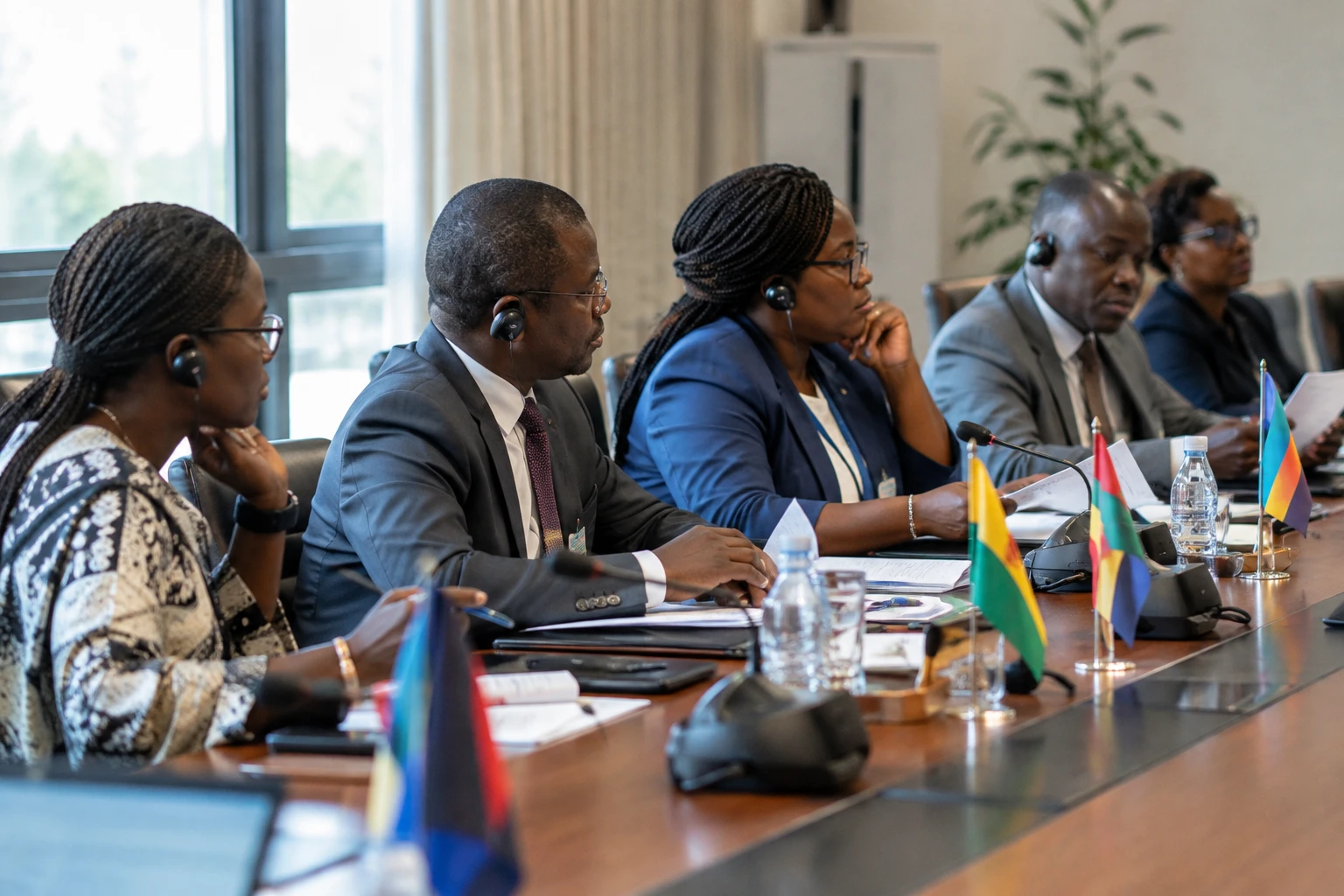
For Togolese businesses, the value of closer ties with Moscow will not be measured by the number of agreements signed, but by the projects that take shape in Lomé and the regions. Agriculture, education, health and trade are now among the areas identified by the two governments. The challenge is to turn these intentions into investment, services and opportunities accessible to local stakeholders.
Agreements signed in Moscow, projects still to be defined
On 27 October 2026, on the sidelines of the third Russia-Africa Summit in Moscow, Togo’s President of the Council, Faure Essozimna Gnassingbé, presided over the signing of two agreements and a memorandum of understanding between institutions from the two countries. The summit opens on 28 October, according to official Togolese announcements. The texts build on the first session of the Togo-Russia Intergovernmental Joint Commission, held in Lomé from 29 September to 1 October.
The first agreement links Togo with Eurasia, a Russian non-profit organisation. It covers humanitarian action, education, research, culture and social development. It provides, in particular, for possible funding for projects and infrastructure in health and education. It also paves the way for agricultural centres and practical training, with the stated aim of strengthening skills and food security.
A second agreement, signed with Rossotrudnichestvo — the Russian federal agency responsible for international humanitarian cooperation — concerns cultural, educational, scientific and humanitarian exchanges. It provides, among other things, for scholarships for Togolese students wishing to continue their studies in Russia. The texts identify areas for cooperation but, in the published material, do not yet specify the amounts committed or the timetable for projects.
Finally, Togo’s National Commission for Human Rights and the Human Rights Ombudsman of the Russian Federation concluded a memorandum. The two institutions intend to cooperate in promoting and protecting fundamental rights and freedoms. The practical scope of this partnership will depend on the joint activities and monitoring mechanisms put in place.
Lomé seeks to give dialogue an economic dimension
The Moscow meeting is part of an effort to structure relations that began in Lomé. At the joint commission in September and October, delegations identified several areas for further work: trade, customs, investment, agriculture, energy, science and innovation, information technology, education and transport. Togo’s Ministry of Trade also raised industrial and logistics proposals, including a transport route between Russia and West Africa.
The commission provides a framework for monitoring agreements and preparing projects. It should therefore help move from diplomatic announcements to more operational discussions: the businesses involved, financing, access conditions, worker training and benefits for Togolese suppliers. The Togo Chamber of Commerce and Industry has, for its part, called for mechanisms to bring businesses in the two countries together on a lasting basis, beyond occasional meetings.
Current trade remains characterised by Togolese imports. The World Trade Organization’s 2024 data, based on UN statistics, put Togo’s imports from Russia at $97.1m. They accounted for 3.3% of Togolese imports that year. This figure describes Togo’s purchases from Russia; it is not, by itself, the total bilateral trade, which also includes Togolese exports to the Russian market.
This imbalance provides a concrete benchmark for assessing the partnership’s progress. For agricultural producers, training centres could improve practices and skills, provided that equipment, inputs and market opportunities are suited to local needs. For students, scholarships would broaden educational opportunities; their impact will also depend on the courses offered and prospects for returning to or finding work in Togo.
A partnership that will be judged by its results
Togo is seeking to diversify its partners while consolidating its role as an open economy in West Africa. Its port of Lomé and logistics infrastructure can support regional trade. But a bilateral agreement alone does not guarantee that investment will benefit Togolese businesses or that trade will become more balanced. Financing terms, skills transfer and local operators’ participation will be decisive.
The regional context also matters. Togo is a member of ECOWAS, the Economic Community of West African States, whose members coordinate some of their economic and trade policies. Any new logistics link or increase in trade with Russia could therefore affect neighbouring markets, not just Togo’s. The impact will nevertheless depend on customs rules, available infrastructure and businesses’ capacity to export.
The significance of these agreements will be determined by the next steps: funded projects, scholarships actually awarded, agricultural centres established and trade agreements translated into contracts. Togolese institutions will also need to report on implementation, particularly on the human rights component. Across Africa, this rapprochement reflects the search for a more diverse range of partnerships; its value will be judged less by ceremonies than by verifiable results for the people and economy of Togo.
Context sources: official announcement of the Togo-Russia agreements, Togo’s Ministry of Trade on the joint commission, Togo First on the Chamber of Commerce’s proposals and Togo’s trade profile at the World Trade Organization.