Algeria
 Egypt
 Libya
 Morocco
 Sudan
 Tunisia
 Benin
 Burkina Faso
 Cabo Verde
 Côte d'Ivoire
 Ghana
 Guinea
 Guinea-Bissau
 Liberia
 Mali
 Mauritania
 Niger
 Nigeria
 Senegal
 Sierra Leone
 The Gambia
 Togo
 Cameroon
 Central African Republic
 Chad
 DR Congo
 Equatorial Guinea
 Gabon
 Republic of the Congo
 São Tomé and Príncipe
 Burundi
 Comoros
 Djibouti
 Eritrea
 Ethiopia
 Kenya
 Madagascar
 Malawi
 Mauritius
 Mozambique
 Rwanda
 Seychelles
 South Sudan
 Tanzania
 Uganda
 Angola
 Botswana
 Eswatini
 Lesotho
 Namibia
 South Africa
 Zambia
 Zimbabwe
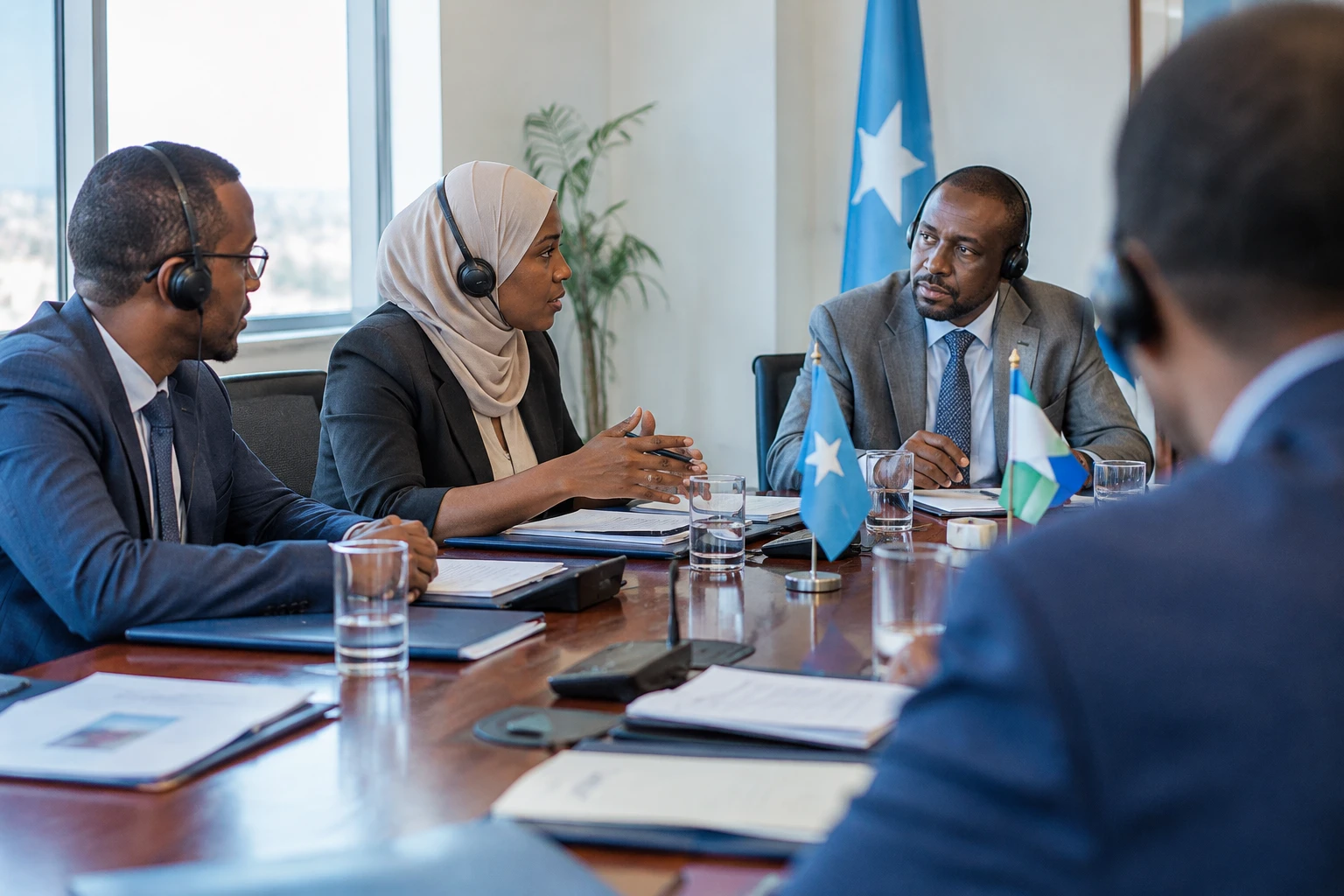
Increasing state revenues is not enough to reduce poverty. In Somalia, the challenge is also to turn public income into schools, infrastructure and jobs accessible beyond Mogadishu.
A fiscal reform scenario presented by the World Bank points to possible gains by 2033. But these figures describe a conditional trajectory, not results already achieved. Their realisation will depend on the choices of the federal government, coordination with member states and how spending is allocated.
Projections dependent on implementation
In its review of Somalia’s public finances, the World Bank estimates that reforms could raise domestic revenue by six percentage points of GDP. The scenario would bring the poverty rate down to 47.2% in 2033, from 53.6% in 2025, and then to around 30% in 2046. These are modelled projections, not a promise or an already observed decline. The report on the World Bank’s projections for Somalia also notes that the assumptions depend on the measures envisaged being implemented.
The scenario combines stronger tax collection with better management of public spending. It also envisages greater investment in education and infrastructure. According to the estimates reported, these measures could enable the creation of 54,500 teaching posts by 2033. They could also improve the quality or productivity of around 250,000 jobs by that date, and of more than 730,000 by 2046.
The World Bank links some of the projected decline in poverty to growth in per capita income. Its calculation assumes that 70% of growth in GDP per capita would feed through to household consumption. This assumption matters: economic growth can rise without family incomes improving at the same pace, particularly if the jobs created remain few in number or concentrated in certain sectors.
A starting point marked by disparities
Available data show the scale of the challenge, but also the need to specify the indicators. The World Bank estimates that 54% of the population lived below the national poverty line in 2022. The Somali National Bureau of Statistics published a figure of 54.4% based on the national household budget survey. The reference years and rounding differ slightly, but both series describe widespread poverty. The World Bank’s poverty and equity brief also notes that rates are higher in rural areas and among nomadic populations. The findings of the Somali National Bureau of Statistics survey underline the role of income and access to education.
The effects of the reforms would therefore not be uniform. In cities, improved services and the expansion of formal jobs could benefit households close to government offices and markets. In rural regions, incomes depend more on livestock, agriculture and access to water. Nomadic households, meanwhile, remain particularly exposed to livestock losses and displacement. An increase in average national income does not, by itself, guarantee a reduction in these disparities.
The food situation is a reminder of this vulnerability. In 2026, an analysis by the Integrated Food Security Phase Classification (IPC), an international system for monitoring food insecurity, estimated that 6.5 million people could face acute food insecurity at “crisis” level or worse between February and March. The FAO relayed this estimate and reported a deterioration linked to drought and rising prices. The IPC analysis for Somalia and the FAO’s food security monitoring provide independent corroboration. These figures concern food emergencies, which are distinct from the national poverty measure.
The institutional challenge: collect, distribute, account
Higher revenues must be accompanied by credible rules governing their use. The federal government, member states and local administrations share responsibilities, while service needs are substantial across the country. The World Bank stresses the need for better coordination between these levels. Without agreement on the allocation of resources and each party’s responsibilities, an increase in central revenues will not automatically translate into better services in the regions.
Tax reform also raises a question of trust. For tax broadening to be sustainable, it must go hand in hand with a more effective administration and better tracking of spending. Additional revenues can fund education, transport networks and other essential services. But their impact will depend on the quality of projects, their geographic distribution and the ability to account for how funds are used. The teaching jobs announced in the scenario, for example, will need to be backed by recurrent funding and deployed in a way that meets local needs.
This equation is playing out at a time when humanitarian funding is declining, while drought, conflict and price shocks continue to undermine livelihoods. The United Nations’ 2026 humanitarian plan estimates that 4.8 million people in Somalia need assistance. This figure, based on a different definition of need from that used in food security analyses, is not comparable with the 6.5 million exposed to acute food insecurity. The United Nations’ 2026 humanitarian plan notes that the decrease from the previous year reflects, in particular, stricter assessment criteria, rather than a general improvement in conditions.
A Somali challenge with regional significance
Somalia is part of East Africa and a member of the Intergovernmental Authority on Development (IGAD), a regional organisation bringing together countries facing shared challenges related to climate, mobility and food security. Shocks linked to drought and markets cross borders. The fiscal response, however, remains primarily a national one: strengthening institutions, coordinating administrations and delivering services to people living far from Mogadishu.
The next step will be to measure the decisions taken, rather than treat projections as gains already secured. Changes in revenues, the share of budgets allocated to education and infrastructure, and the distribution of new jobs will make it possible to assess progress. For Somali households, the practical test will be whether they can find more stable work, access a quality school and better withstand economic and climate shocks. Only then can public finance reforms bring about a lasting reduction in poverty.