Algeria
 Egypt
 Libya
 Morocco
 Sudan
 Tunisia
 Benin
 Burkina Faso
 Cabo Verde
 Côte d'Ivoire
 Ghana
 Guinea
 Guinea-Bissau
 Liberia
 Mali
 Mauritania
 Niger
 Nigeria
 Senegal
 Sierra Leone
 The Gambia
 Togo
 Central African Republic
 Chad
 DR Congo
 Equatorial Guinea
 Gabon
 Republic of the Congo
 São Tomé and Príncipe
 Burundi
 Comoros
 Djibouti
 Eritrea
 Ethiopia
 Kenya
 Madagascar
 Malawi
 Mauritius
 Mozambique
 Rwanda
 Seychelles
 Somalia
 South Sudan
 Tanzania
 Uganda
 Angola
 Botswana
 Eswatini
 Lesotho
 Namibia
 South Africa
 Zambia
 Zimbabwe
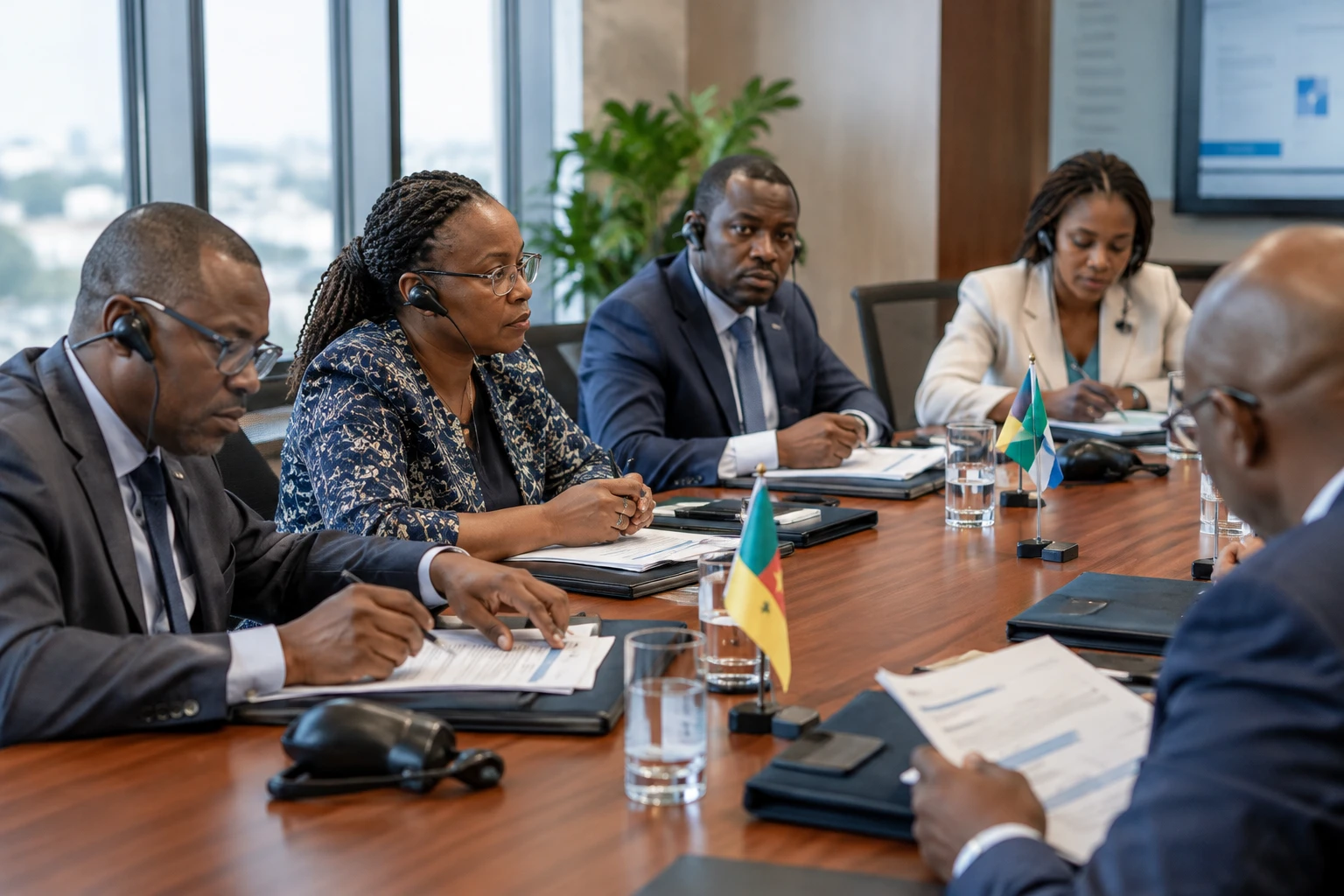
A regional stock exchange depends not only on companies raising funds there. It also relies on infrastructure able to register securities, safeguard their custody and support transactions. In Central Africa, this shared component is still pending, while the Central African Securities Exchange (BVMAC) says it is bearing the cost.
Regional infrastructure still under development
Based in Douala, BVMAC serves the six countries of the Economic and Monetary Community of Central Africa (CEMAC): Cameroon, the Central African Republic, the Republic of the Congo, Gabon, Equatorial Guinea and Chad. CEMAC coordinates their economic and monetary integration. Its financial market is intended, among other things, to enable governments and companies to raise capital in the region.
The Single Central Depository (DCU) is intended to perform an essential function for this market: centralising the registration and custody of securities. While it awaits commissioning, the Bank of Central African States (BEAC) is performing this role on a transitional basis. The continuation of this temporary arrangement underlines that financial integration depends not only on common rules but also on technical tools and operational governance.
The African Development Bank had already included the establishment of a shared depository among the steps towards a unified Central African financial market. More recently, a Bank of France report on monetary cooperation in Africa noted that BEAC was still performing the function after the transitional deadline of 31 December 2024. This finding highlights the length of the delay without prejudging the precise causes of the current hold-up.
BVMAC presses regional institutions
Meeting in Douala on 26 October 2026, BVMAC’s board of directors asked its chairman and management to renew their efforts with the relevant regional bodies. According to a statement reported by several regional financial media outlets, the exchange estimates that the delay in launching the DCU is costing it CFAF 10 million a month in foregone revenue.
BVMAC says it has invested CFAF 2.080 billion in the capital of the planned entity. That sum represents an investment tied up until the depository becomes fully operational. The monthly figure cited is an estimate by the exchange, not a detailed set of accounts made public in the material reviewed. It should therefore be understood as an assessment attributed to the institution.
A sign of progress nevertheless emerged on 20 October. BEAC published an international selection procedure to acquire and deploy an IT platform covering the activities of the regional money market and the DCU. This step launches a technical selection process; it does not mean the platform has already been delivered or that the depository has begun operations.
The central bank had also taken financial measures in October 2025. According to reports on the decision, its board had authorised the release of CFAF 1.040 billion corresponding to its capital contribution, as well as the temporary carrying of CFAF 814.58 million linked to shares not paid up by certain shareholders. These amounts illustrate the gap between financial commitments and the infrastructure’s becoming operational.
Unpaid dues weigh on cash flow
The DCU project is not the only financial pressure reported by BVMAC. As at 30 September 2026, arrears owed to the exchange by governments had reached CFAF 3.5 billion, according to the board’s statement, also reported by independent financial publications. The institution instructed its management to secure payment of these debts.
These unpaid sums affect the regional operator’s finances; on their own, they do not make it possible to measure any direct consequences for households or public services. But strained cash flow can reduce the operating and investment capacity of an exchange seeking to broaden access to finance. The practical impact will depend on the nature and age of the debts and the repayment schedule, details that are not provided in the available information.
The issue therefore involves several levels of responsibility: debtor governments for their payments, CEMAC bodies for coordinating the project, and BEAC for conducting the announced technical procedure. Shared infrastructure cannot operate sustainably if its funding, governance and operational responsibilities remain uncertain.
A signal for companies and investors
The board of directors also authorised the listing of Renaprov Finance SA on the E-PME segment, intended for small and medium-sized enterprises, subject to the non-objection of the Central African Financial Market Supervisory Commission (COSUMAF). The decision therefore does not yet amount to the regulator’s final approval or the start of trading on the exchange.
In September, the Cameroonian institution provided details of a land dispute with Martin Joël Mbia Essama before the Cameroonian courts. BVMAC had previously requested clarification before continuing its review of the application. The step announced on 26 October shows that the process is advancing, but the condition relating to COSUMAF remains. The case is a reminder that access to the market depends both on shared infrastructure and on scrutiny of the risks specific to each issuer.
For the region, the next steps to watch are therefore concrete: the outcome of BEAC’s IT selection process, clarification of arrangements for launching the DCU, payment of arrears and COSUMAF’s position on Renaprov. Their progress will show whether regional commitments translate into services that issuers and investors in the six countries can use.