Algeria
 Egypt
 Libya
 Morocco
 Sudan
 Tunisia
 Burkina Faso
 Cabo Verde
 Côte d'Ivoire
 Ghana
 Guinea
 Guinea-Bissau
 Liberia
 Mali
 Mauritania
 Niger
 Nigeria
 Senegal
 Sierra Leone
 The Gambia
 Togo
 Cameroon
 Central African Republic
 Chad
 DR Congo
 Equatorial Guinea
 Gabon
 Republic of the Congo
 São Tomé and Príncipe
 Burundi
 Comoros
 Djibouti
 Eritrea
 Ethiopia
 Kenya
 Madagascar
 Malawi
 Mauritius
 Mozambique
 Rwanda
 Seychelles
 Somalia
 South Sudan
 Tanzania
 Uganda
 Angola
 Botswana
 Eswatini
 Lesotho
 Namibia
 South Africa
 Zambia
 Zimbabwe
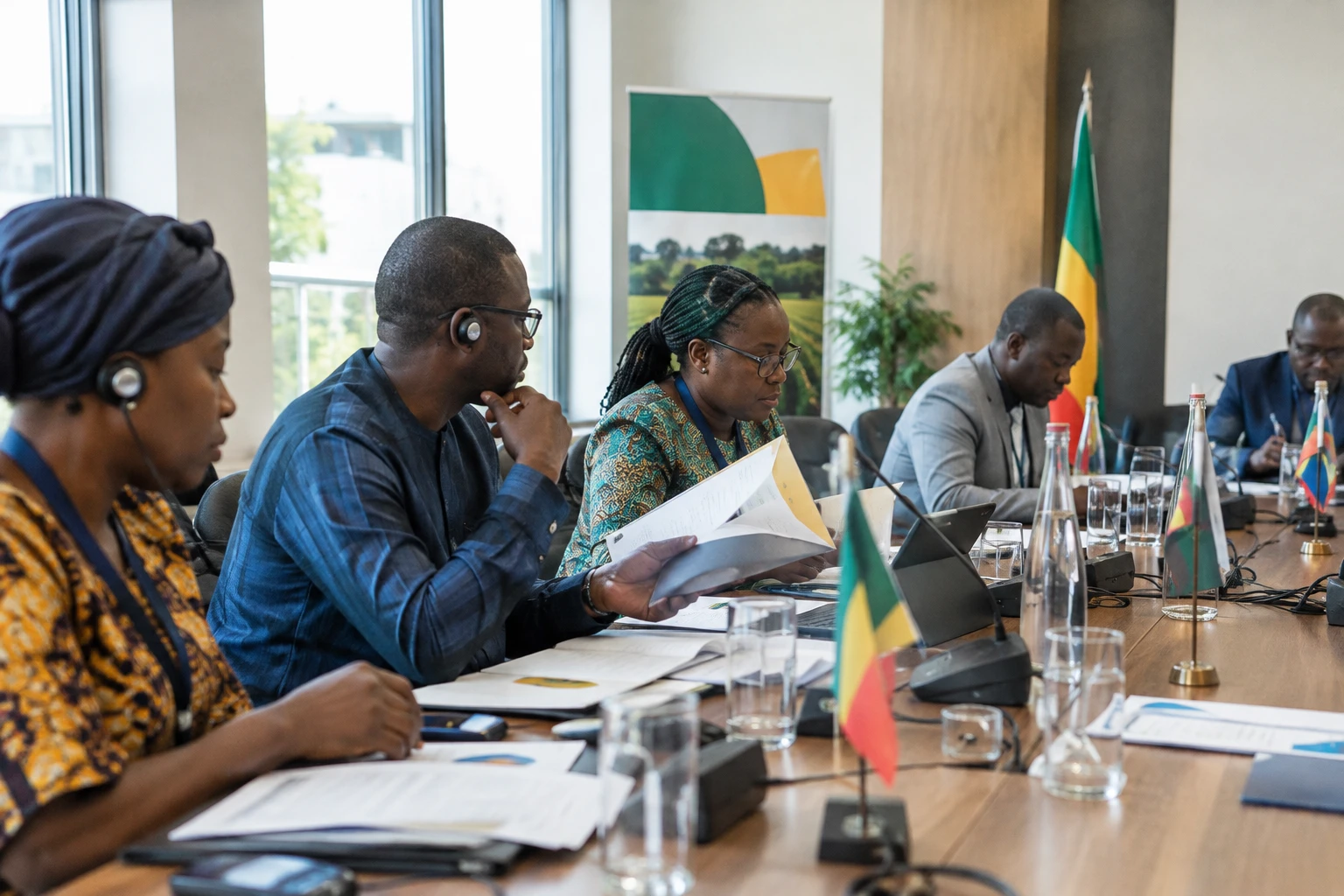
Training a young person in an agricultural trade is not enough to secure them an income. They also need market opportunities, financing and the capacity to absorb climate shocks. That is the challenge a new rural programme in Benin aims to address, with ambitious targets that will still need to translate into results on the ground.
From the field to business: the rural jobs wager
On 26 October 2026, in Cotonou, the Beninese government and the International Fund for Agricultural Development (IFAD) signed a $37.1 million financing agreement for the Project to Support Professional Integration and Agricultural Entrepreneurship (ProPEA). IFAD confirmed the agreement, which was also corroborated by a Beninese business news outlet. It covers the institution’s contribution, not the programme’s total cost.
Scheduled to run for eight years, from 2026 to 2033, ProPEA has an announced overall budget of $149.1 million. Other financing and contributions are expected to complete the funding package. The programme aims to support about 50,000 rural households, or more than 360,000 people, in the country’s agricultural development hubs. Its stated goal is to create job opportunities for 21,000 young people by 2033.
The scheme is not limited to training. It also provides support for business creation, advice, access to finance and insurance, as well as production partnerships. Agriculture, aquaculture and poultry farming are among the targeted sectors. Young people are to make up 60% of participants, while measures are planned to include women and people with disabilities.
Market access matters as much as training
The challenge is to link skills with activities that can genuinely generate income. A rural entrepreneur may master a technique but lack credit, insurance or a regular buyer. By bringing these levers together, ProPEA seeks to support a chain running from training to marketing. The project also aims to promote practices that are more resilient to climate risks and the more sustainable use of natural resources.
These goals remain projections. The 21,000 jobs are not positions that have already been created, and the 50,000 households are a target for support. Their reach will depend in particular on the actual availability of financing, the quality of training and small businesses’ access to markets. The programme will also need to report on how benefits are distributed among young people, women, people with disabilities and the areas concerned.
Needs vary by activity. A poultry or aquaculture business faces different constraints from a farm, and conditions in one production hub differ from those in another. At household level, access to insurance can help cushion a loss caused by adverse conditions, but it is no substitute for infrastructure or storage and sales networks. Monitoring will therefore need to measure incomes and the sustainability of activities, not just the number of people trained.
An initiative within a long-standing partnership
The financing marks the first agreement of this kind between Benin and IFAD since the institution opened its country office in Cotonou in March 2025. IFAD says it has financed 15 projects and programmes in Benin since 1978, for a cumulative total of $729.6 million, of which $296.6 million came from the institution. The new commitment is therefore part of a long-standing relationship, but with a marked focus on professional integration and entrepreneurship.
The project is also expected to align with national priorities for training and agricultural development. ProPEA’s design provides for coordination with agricultural training centres and sector partners, so that it complements rather than duplicates existing schemes. This alignment will be crucial: training will have a lasting impact only if the skills acquired match the needs of local sectors and businesses.
At regional level, the issue also concerns member states of the Economic Community of West African States (ECOWAS), which are seeking to strengthen trade and agri-food value chains. Beninese businesses can contribute to these networks, but their ability to sell beyond local markets will depend on productivity, processing and infrastructure. ProPEA is a national programme: its announcement does not, in itself, mean these regional obstacles have been overcome.
The test of results starts now
For households, the practical measure of success will be a lasting improvement in incomes and the stability of their activities, especially when climate or market difficulties arise. For young people, the challenge is to turn training into a viable job, whether salaried or entrepreneurial. For public authorities and partners, it will be a matter of making the financing mobilised and the results achieved through to 2033 clear.
The IFAD statement on ProPEA details the objectives and announced financing. The project design document sets out its 2026-2033 timeframe and components. The next stage to watch will therefore be less about announcing additional targets than about implementation: disbursements, actual access to services and jobs that are sustained.