Algeria
 Egypt
 Libya
 Morocco
 Sudan
 Tunisia
 Burkina Faso
 Cabo Verde
 Côte d'Ivoire
 Ghana
 Guinea
 Guinea-Bissau
 Liberia
 Mali
 Mauritania
 Niger
 Nigeria
 Senegal
 Sierra Leone
 The Gambia
 Togo
 Cameroon
 Central African Republic
 Chad
 DR Congo
 Equatorial Guinea
 Gabon
 Republic of the Congo
 São Tomé and Príncipe
 Burundi
 Comoros
 Djibouti
 Eritrea
 Ethiopia
 Kenya
 Madagascar
 Malawi
 Mauritius
 Mozambique
 Rwanda
 Seychelles
 Somalia
 South Sudan
 Tanzania
 Uganda
 Angola
 Botswana
 Eswatini
 Lesotho
 Namibia
 South Africa
 Zambia
 Zimbabwe
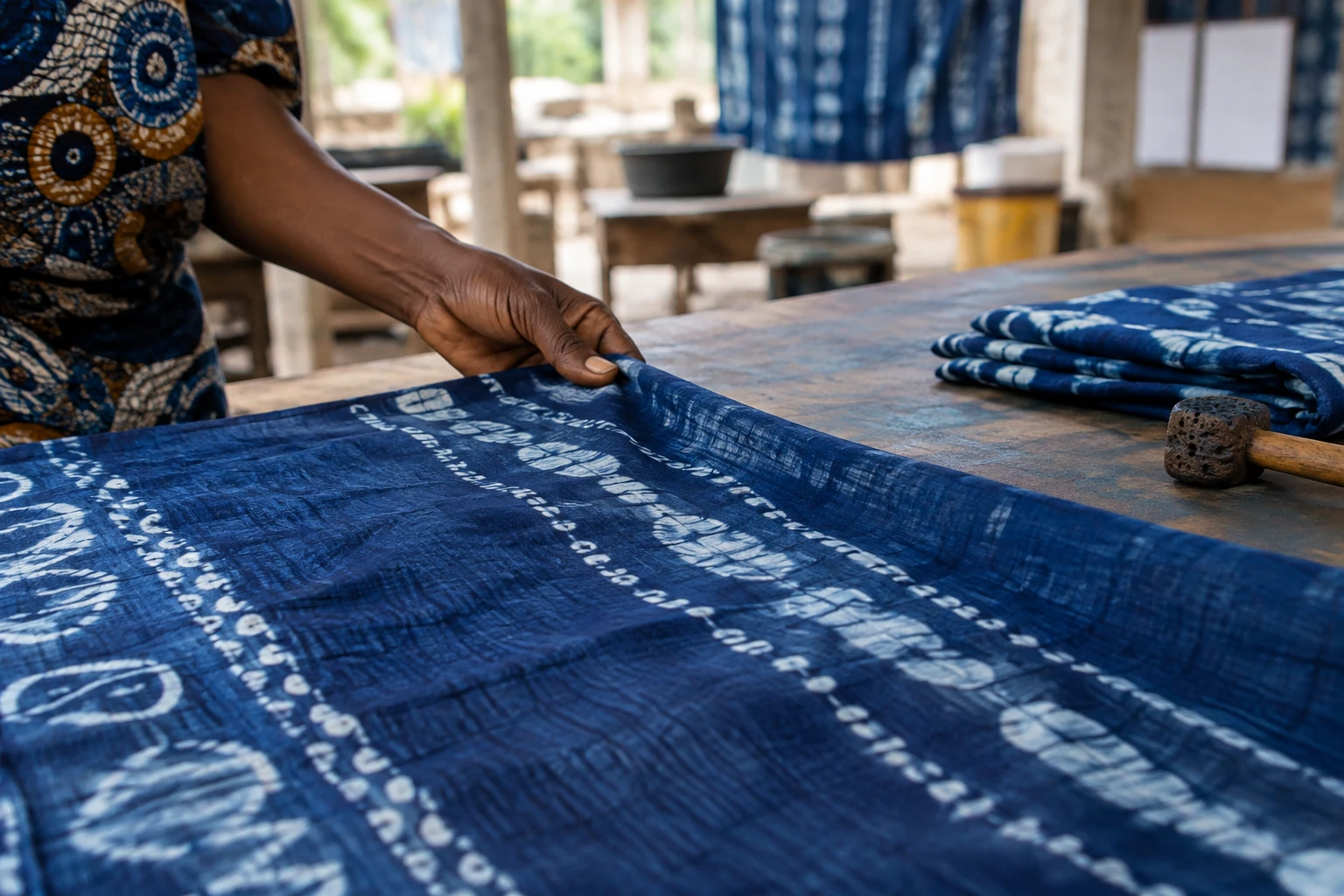
In Ouidah, indigo is more than the colour of a garment. It also carries craft skills, economic activity and stories linked to the history of the Atlantic. The challenge for Beninese creators is to keep this heritage alive without freezing it in the past.
This question was at the heart of a presentation held on 24 October 2026 at Indigo Village, near Lake Toho. The Couleur Indigo brand unveiled “Apusomè”, its 19th collection, designed by stylist Nadia Adanlé. The project brings together marine motifs, textile production and historical memory.
Keeping a craft alive in Ouidah
Ouidah holds a special place in the memory of the transatlantic slave trade and in cultural exchanges between Africa and its diasporas. The city, in southern Benin, also attracts initiatives that connect heritage, creativity and cultural tourism. In this context, a fabric can become both an object for everyday use and a vehicle for storytelling.
Indigo Village showcases several stages of production, from preparing materials to dyeing, then sewing and creating finished products. The site thus aims to make visible a craft that is often less well known than the garments it produces. It is part of a broader effort to develop the craft sector, provide training and pass on skills, as described by the organisers of the Symposium on African Indigo.
This continuity matters as much as the presentation of a collection. It connects artisans who master the techniques, creators who reinterpret them and audiences who can sustain demand. The sector is therefore more than a tourist showcase: it also depends on quality, fair pay for work and sustainable markets.
Sixteen motifs between sea and memory
“Apusomè” comprises 16 motifs inspired by the seabed. Those named include Anvigan, Nussianu, Corail intégral, Filimi and Scallop. Fish, shells, octopuses, jellyfish, turtles and corals inform the designs. The production details and meaning of each motif have not been independently documented; here, they are based on the collection presentation by its creators.
Nadia Adanlé gives “Filimi”, translated as “Remember me”, a commemorative meaning. She says she wanted to evoke those who died in the Atlantic during the slave trade, deprived of a known burial place. The motif thus turns the fabric into a tribute, without claiming to replace memorial sites or to sum up the history of deportation.
The creator also says she wants to improve the quality and image of her products while continuing to experiment. This balance is central: promoting indigo means preserving skills, but also offering contemporary designs that can find a place in different markets. Creativity can renew interest in the material; on its own, it cannot guarantee regular incomes for artisans.
The event is part of a Beninese cultural landscape in which heritage is promoted through local initiatives and professional gatherings. The fourth edition of the symposium, held in 2025, according to the Beninese daily La Nation, brought together participants from Benin, Brazil and Nigeria to explore transatlantic memories. This precedent gives the work in Ouidah a regional and diasporic dimension, without conflating the distinct histories of each country.
A sector to strengthen beyond the fashion show
The economic impact of this kind of project is felt at several levels. For artisans, the challenge is to maintain orders and pass on techniques. For creators, it is about distinguishing their products and ensuring their quality. For Ouidah, regular cultural activity can complement the tourism offer, but local benefits will depend on the place given to workers and businesses in the area.
The brand describes Indigo Village as a space spanning dyeing to garment-making. This integrated approach can help the public understand the stages involved in producing a finished textile. However, without published data, it is not possible to measure the number of jobs involved, production volumes or the share of revenue going to artisans. These indicators will be essential to assess the sector’s strength beyond its visibility.
The memory embodied by “Filimi” also calls for careful interpretation. Ouidah is an important site of remembrance of the slave trade, but that memory is not confined to one city or a single narrative. Links with diasporas and other Atlantic societies can enrich the dialogue, provided the communities and specialists concerned take part in shaping it.
The organisers have announced that a fifth edition of the Symposium on African Indigo will be held in November 2026, under the theme “Indigo and plural arts, performative dialogue and hybrid practices”. The event will show whether the exchanges announced lead to new collaborations, training or concrete commercial opportunities. For Benin, the challenge goes beyond a collection: it is about bringing living heritage, contemporary creativity and local economic activity into dialogue, without detaching the cultural narrative from the people who bring it to life.