Algeria
 Egypt
 Libya
 Morocco
 Sudan
 Tunisia
 Benin
 Cabo Verde
 Côte d'Ivoire
 Ghana
 Guinea
 Guinea-Bissau
 Liberia
 Mali
 Mauritania
 Niger
 Nigeria
 Senegal
 Sierra Leone
 The Gambia
 Togo
 Cameroon
 Central African Republic
 Chad
 DR Congo
 Equatorial Guinea
 Gabon
 Republic of the Congo
 São Tomé and Príncipe
 Burundi
 Comoros
 Djibouti
 Eritrea
 Ethiopia
 Kenya
 Madagascar
 Malawi
 Mauritius
 Mozambique
 Rwanda
 Seychelles
 Somalia
 South Sudan
 Tanzania
 Uganda
 Angola
 Botswana
 Eswatini
 Lesotho
 Namibia
 South Africa
 Zambia
 Zimbabwe
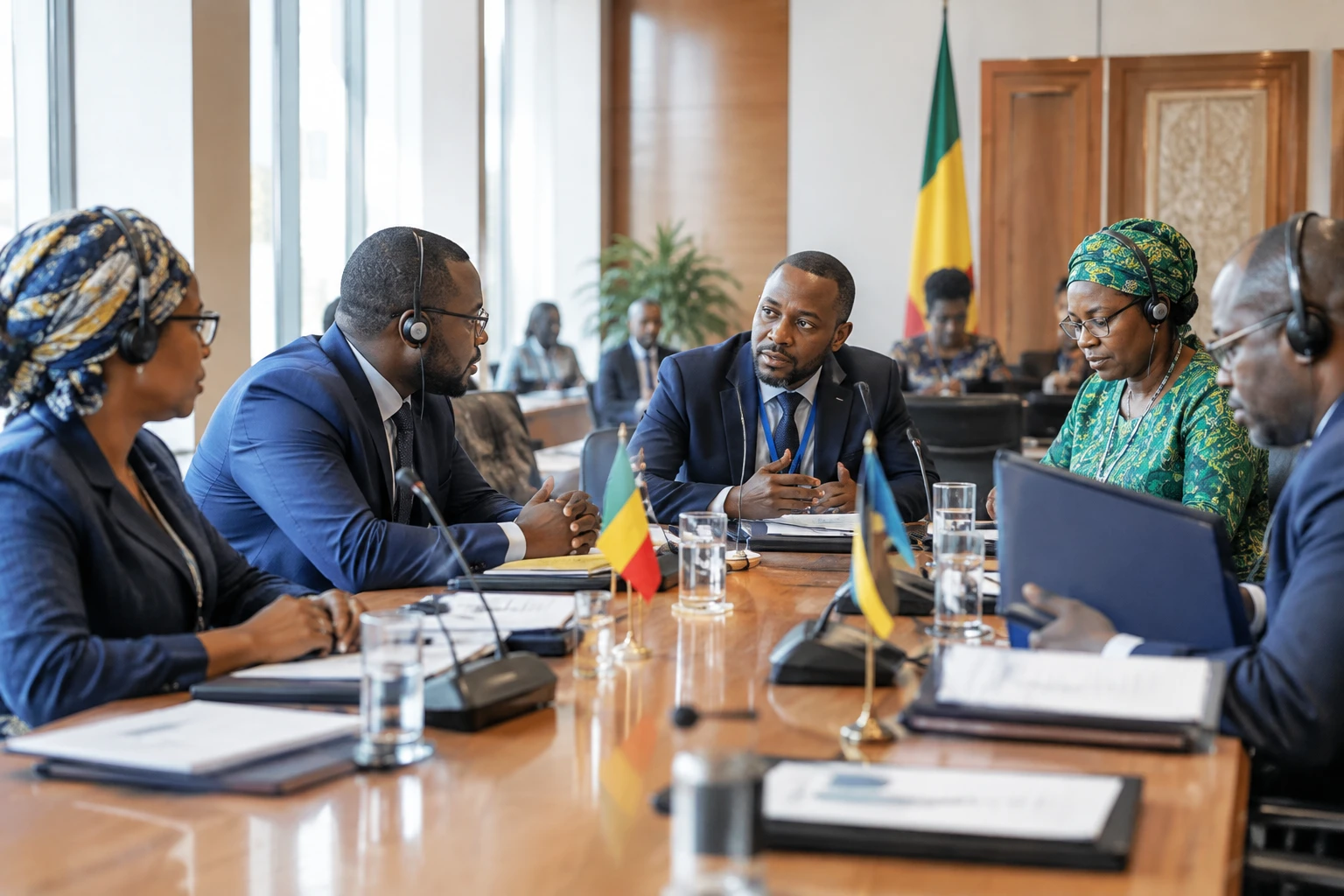
For Bamako, the Moscow meeting comes down to a very practical question: can the partnerships announced improve security, trade and the services on which Malians depend? Diplomatic presence matters, but results must also be measured far from conference rooms.
A rapprochement set against regional realignment
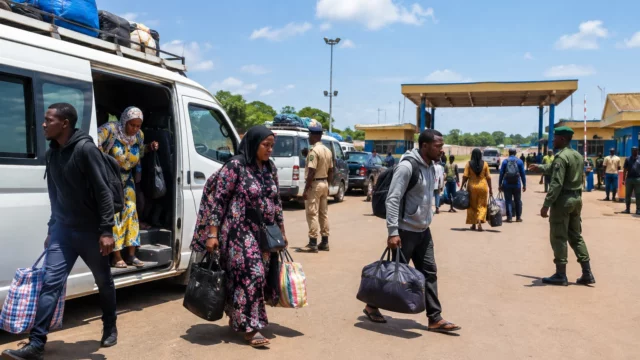
Mali, Burkina Faso and Niger have established the Alliance of Sahel States (AES), a confederation for political and security co-operation. Their withdrawal from the Economic Community of West African States (ECOWAS), a regional integration organisation, took effect on 29 January 2025. ECOWAS has nevertheless provisionally maintained freedom-of-movement and trade arrangements to limit the impact on populations and businesses.
This shift accompanies a redefinition of the three countries’ military partnerships. The transitional authorities have scaled back or severed several Western security ties and expanded co-operation with Moscow. They present this approach as a choice of sovereignty. For Russia, the AES opens up a sphere of diplomatic and strategic influence in the Sahel. ECOWAS set out transitional arrangements following the withdrawal.
The change also affects the relationship with Moscow itself. After Yevgeny Prigozhin’s death in 2023, Russia tightened state control over its overseas operations. In Mali, the Africa Corps, which is attached to Russia’s defence ministry, took over some of Wagner’s activities. In July 2026, the foreign ministers of the AES and Russia met in Niamey to continue their consultations.
Summit must go beyond announcements
The third Russia-Africa summit takes place in Moscow on 28 and 29 October 2026. Russian authorities have confirmed the participation of the leaders of Mali, Burkina Faso and Niger. The announced agenda covers trade, investment, civilian nuclear energy, payments, digitalisation and food security. Moscow says it wants to conclude political and commercial agreements. Their impact will depend on implementation, financing and measurable effects.
Discussions between Russia and the AES are not limited to defence. The two sides are also discussing mining, energy, education, economic exchanges and social co-operation. For Mali, projects in these sectors would generate lasting benefits only if they specify responsibilities, financial terms, skills transfers and the role of local businesses.
Announcements concerning the continent as a whole must also be distinguished according to their stage of progress. A statement of intent, an exploratory agreement and an operational project do not represent the same level of commitment. The number of leaders attending is therefore not enough to measure the depth of relations. Signed contracts, their timetables and the institutions responsible for monitoring them will need to be examined.
Security: co-operation judged on the ground
Russian military co-operation provides the Malian authorities with personnel, equipment, training and political support. But the presence of a partner does not in itself guarantee an improvement in security. Armed groups continue to attack military positions and civilians. Residents of affected regions face violence, displacement and restrictions on their activities, while the capital and main economic centres have different realities.
Operations carried out by Malian forces alongside Russian allies have also been the subject of allegations of abuses against civilians. In October 2026, Human Rights Watch published new allegations targeting the Malian army and the Africa Corps. These claims must be examined and attributed with caution; they nevertheless underline the importance of independent investigations and accountability mechanisms. Protecting the population is a central concern, distinct from partnership declarations.
The question therefore has two dimensions. The authorities are seeking ways to fight armed groups and consolidate their control of the territory. Communities, meanwhile, need security in everyday life, passable roads and access to markets and services. An assessment of a partnership should take these results into account, as well as respect for the law and trust between residents and institutions. Human Rights Watch details its recent allegations concerning Mali.
A relationship extending beyond the military sphere
Moscow is also seeking to develop ties through trade in grain and fertiliser, mineral resources, energy, scholarships, health, culture and media. These areas could address practical needs. But announcements on uranium, civilian nuclear power or mineral exploration do not mean that a facility or production already exists. Proposed projects must be distinguished from achievements, and their terms made available for public debate.
Communication accompanies these relations. Russian authorities emphasise respect for sovereignty and criticise the colonial legacy, themes that resonate in African political debates. AES governments are also developing their own communications tools. This convergence in rhetoric does not mean that partners’ interests are identical: each agreement should be assessed on its terms, costs and the benefits it brings to the countries concerned.
Across West Africa, the summit comes amid a period of realignment between the AES and ECOWAS. Maintaining trade, mobility and regional co-operation remains crucial for traders, families and both formal and informal economies. For Mali, the next indicator will therefore be not only the content of Moscow’s declarations, but also the ability to turn commitments into projects that can be scrutinised, are useful and are compatible with national and regional needs.