
 Algeria
 Egypt
 Libya
 Morocco
 Sudan
 Tunisia
 Benin
 Burkina Faso
 Cabo Verde
 Côte d'Ivoire
 Ghana
 Guinea
 Guinea-Bissau
 Liberia
 Mali
 Mauritania
 Niger
 Nigeria
 Sierra Leone
 The Gambia
 Togo
 Cameroon
 Central African Republic
 Chad
 DR Congo
 Equatorial Guinea
 Gabon
 Republic of the Congo
 São Tomé and Príncipe
 Burundi
 Comoros
 Djibouti
 Eritrea
 Ethiopia
 Kenya
 Madagascar
 Malawi
 Mauritius
 Mozambique
 Rwanda
 Seychelles
 Somalia
 South Sudan
 Tanzania
 Uganda
 Angola
 Botswana
 Eswatini
 Lesotho
 Namibia
 South Africa
 Zambia
 Zimbabwe
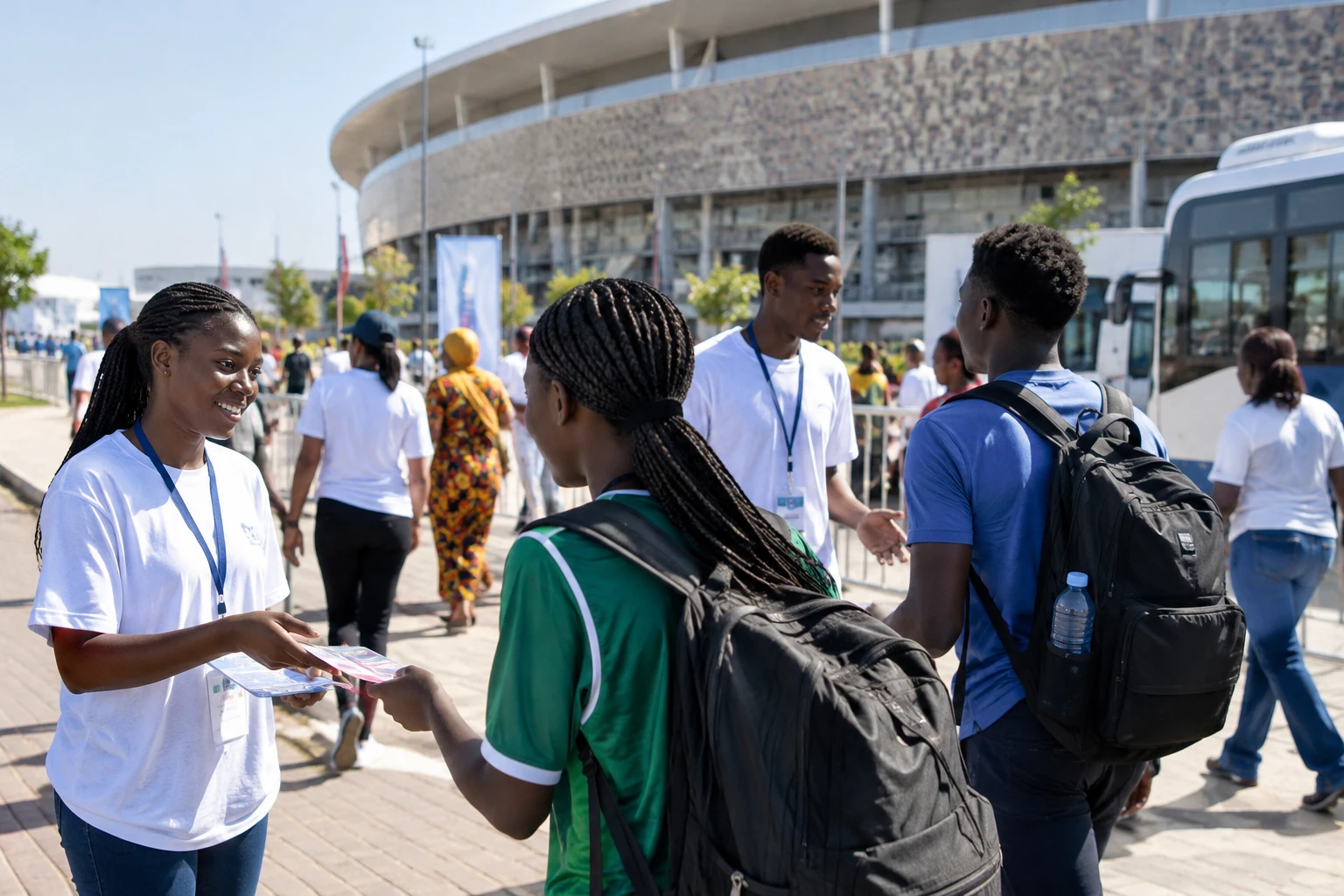
With the first events just four days away, attention is no longer focused solely on tracks and pitches. For Senegal, Dakar 2026 is also a test of coordination between several cities, the welcome given to delegations and the ability to make the event a meaningful occasion for young people.
International Olympic Committee (IOC) President Kirsty Coventry arrived in Dakar on the evening of Monday 26 October. The Summer Youth Olympic Games (YOG) will begin on Saturday 31 October and end on 13 November. They will be the first Olympic event held on African soil.
Arrival at the final turn of preparations
Welcomed at Blaise Diagne International Airport by the president of the organising committee, Mamadou Diagna Ndiaye, and its general coordinator, Ibrahima Wade, Kirsty Coventry met Games volunteers. Local officials described her visit as an important milestone as preparations enter their final stretch.
The Zimbabwean leader is the first woman and the first African to head the IOC. She said she was delighted to be in Senegal and praised the energy of the teams involved. Her arrival brings international visibility to the event, but is not, in itself, proof that every arrangement is ready.
The programme spans Dakar, Diamniadio and Saly. Around 2,700 young athletes are expected. The Olympic Village is in Diamniadio, while competitions and activities are spread across several venues. This decentralised organisation requires reliable connections, clear information for the public and close coordination between the services involved.
The YOG combine sporting competition, cultural activities and educational programmes. Created by the IOC, they held their first summer edition in Singapore in 2010. For Dakar, the programme features 25 competitive sports and ten introductory or participation disciplines. Baseball5 is due to begin on 30 October, ahead of the opening ceremony the following day.
An event in Senegal’s wider trajectory
Senegal was chosen to host the Games in 2018. Originally scheduled for 2022, they were postponed to 2026 during the Covid-19 pandemic, amid disruption to the global sporting calendar. The delay pushed back the deadline, but also extended preparations and put the fulfilment of commitments under scrutiny.
The competition is taking place in a country where major sporting events and infrastructure investment are part of an ambition to raise its international profile. Dakar will host some of the activities, while Diamniadio and Saly will also stage events. This distribution could extend the benefits beyond the capital, provided transport, access to venues and services keep pace with the competitions.
The effects will not be the same for everyone. Delegations and visitors will need suitable transport and logistics. Residents of neighbourhoods near the venues could face changes to traffic or access. Traders, service providers and informal-sector workers may benefit from the influx, although such gains are neither automatic nor evenly distributed.
The question of legacy will therefore also be decided after the ceremony. Facilities, skills acquired by local teams and opportunities for young people to take part in sport will matter more than a single spell in the spotlight. The results will depend on the lasting use of the venues and their accessibility to clubs and communities beyond the days of competition.
Significance beyond Senegal’s borders
For neighbouring countries, Dakar 2026 offers a meeting point for young athletes and members of Africa’s Olympic movement. The competition could strengthen exchanges between federations and give the continent’s athletes a nearby international stage. It cannot, however, replace national investment in sport or the training work carried out by clubs.
Senegal’s selection also gives the Games a pan-African significance. Kirsty Coventry’s presidency and the hosting of the event on the continent reflect a shift in African representation within global sporting institutions. But this symbolic progress will also be judged by the responsibilities taken on locally and the tangible benefits left for young people.
In the coming days, the clearest indicators will be practical: movement between the three hubs, the welcome given to delegations, public access and the running of the first events. The official schedule lists the Games from 31 October to 13 November, with the first baseball5 competition on 30 October. The immediate challenge is to turn anticipation into smooth organisation, then translate the experience into a lasting legacy for Senegalese sport.



