Algeria
 Egypt
 Libya
 Morocco
 Sudan
 Benin
 Burkina Faso
 Cabo Verde
 Côte d'Ivoire
 Ghana
 Guinea
 Guinea-Bissau
 Liberia
 Mali
 Mauritania
 Niger
 Nigeria
 Senegal
 Sierra Leone
 The Gambia
 Togo
 Cameroon
 Central African Republic
 Chad
 DR Congo
 Equatorial Guinea
 Gabon
 Republic of the Congo
 São Tomé and Príncipe
 Burundi
 Comoros
 Djibouti
 Eritrea
 Ethiopia
 Kenya
 Madagascar
 Malawi
 Mauritius
 Mozambique
 Rwanda
 Seychelles
 Somalia
 South Sudan
 Tanzania
 Uganda
 Angola
 Botswana
 Eswatini
 Lesotho
 Namibia
 South Africa
 Zambia
 Zimbabwe
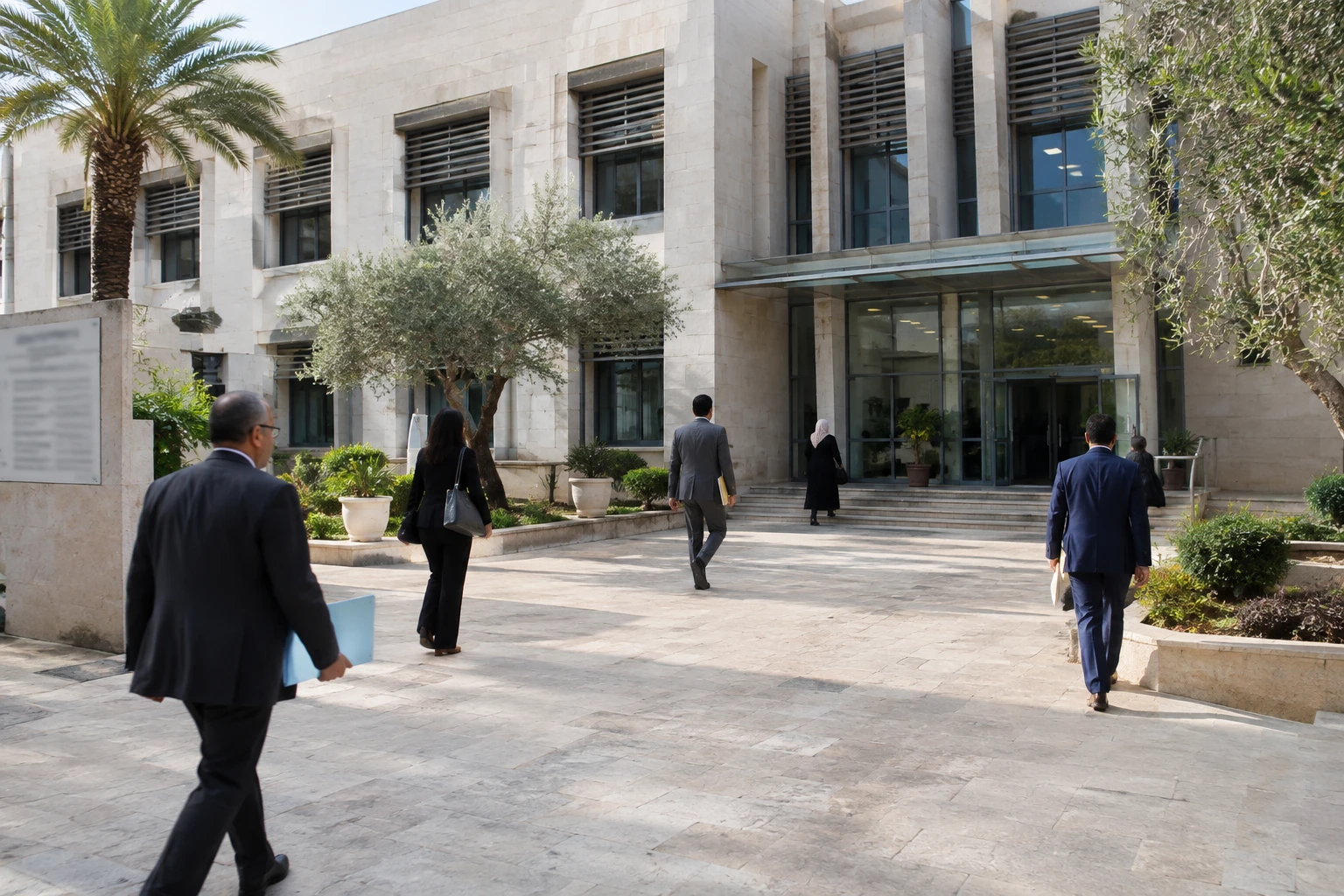
For the Tunisian state, the challenge of the 2027 budget is not simply the amount of spending: it must also find the resources to meet debt repayments and fund public services. The draft plans to mobilise domestic savings on a large scale, while relying more heavily on financing from abroad. These projections remain subject to parliamentary scrutiny and to the completion of the announced borrowing.
A budget still under discussion
The 2027 finance bill falls in the second year of Tunisia’s 2026-2030 development plan. It must still be debated and adopted by the Assembly of the Representatives of the People. The amounts listed are therefore budget targets, not financing already secured. The text and its timetable were made public in October 2026, according to the 2027 finance bill draft.
Tunisia is a member of the Arab Maghreb Union (AMU), a framework for regional cooperation in North Africa. But in this case, decisions are made nationally: the government draws up the budget, while parliament must examine its choices. The trade-offs will affect state services, investment in the regions and financing conditions for businesses.
Domestic market takes centre stage
The draft provides for 26.722 billion Tunisian dinars in borrowing to cover the state’s financing needs in 2027, compared with 25.864 billion expected in 2026. About 19.845 billion would come from the domestic market, or nearly three-quarters of the total. The government is considering Treasury bills — debt securities issued by the state — and facilities provided by the Central Bank of Tunisia.
Turning to the local market makes it possible to mobilise resources without relying entirely on foreign creditors. But this does not create money without a corresponding obligation: the state will have to repay the securities and pay the interest due. If banks devote more resources to financing the Treasury, access to credit for businesses may also become an issue. The scale of this effect will depend, among other things, on available liquidity and demand for credit.
External borrowing is set to rise more quickly. Loans from abroad are estimated at 6.877 billion dinars, compared with 4.269 billion in 2026, an increase of about 61%. The draft refers to loans linked to public projects, on-lending and resources intended for the budget. Some are presented as potentially coming from international markets or private subscriptions, which would require a lender to accept the terms actually offered.
Planned operations include two bond issues: one for €450 million and the other for $350 million. International financial institutions are said to have expressed interest in direct subscriptions. These possibilities do not amount to a final commitment. Their completion will depend on discussions, financial terms and the state’s ability to conclude the deals.
Deficit and repayments: two distinct constraints
The draft sets out spending of 68.895 billion dinars and revenue of 54.280 billion, resulting in a projected deficit of 14.615 billion. It also provides for 13.307 billion in repayments of debt principal. Principal is the borrowed capital falling due, as distinct from interest paid on debt.
This distinction helps explain why the financing requirement exceeds the deficit alone: the state must cover the gap between revenue and spending, as well as meet repayments falling due. The total borrowing planned should therefore not be understood as new spending on public policies. It will also be used to refinance previous obligations.
The consequences for households will vary across regions and sectors. Revenue and borrowing are intended to enable the state to fund its responsibilities and the projects announced in the regions. At the same time, the burden of debt service reduces the room available for new budgetary choices. Businesses dependent on bank credit may also be affected if Treasury financing absorbs a significant share of local resources.
The question of sustainability
The debate is therefore not solely about the ability to raise funds in 2027. It also concerns the cost of those resources and whether they can be repaid without undermining other priorities. A large share of domestic financing exposes the budget to the capacity of banks and the local market. An increase in foreign borrowing, meanwhile, may heighten exposure to lenders’ terms and exchange-rate movements.
The draft also provides for financing facilities from the Central Bank. Such a mechanism can address an immediate cash-flow need, but it raises questions about the relationship between fiscal and monetary policy. The Central Bank has a role distinct from that of the government in managing money and prices. Parliament will therefore have to assess the terms and limits of this mechanism when examining the text.
The proposed path balances the funding of public spending, debt repayments and the preservation of credit for the economy. The budget figures alone are not enough to establish the future impact on growth or living standards. That will depend on how spending is carried out, the revenue actually raised and the terms on which borrowing is concluded.
Next steps to watch
The next step is for MPs to examine the draft; they can discuss its assumptions and financing mechanisms before the vote. It will then be necessary to check whether the announced bond issues go ahead and whether the proposed private subscriptions materialise. For Tunisia and its regional partners, the budget will also indicate how the state intends to reconcile social needs, investment in the regions and financial commitments.
The budget data presented here are reported in the draft and by Tunisian media. The TAP has, in particular, confirmed the total amount of planned spending, while La Presse de Tunisie has reported the borrowing breakdown and planned issues. Financing estimates remain projections until the operations have been completed.