Algeria
 Egypt
 Libya
 Morocco
 Sudan
 Tunisia
 Benin
 Burkina Faso
 Cabo Verde
 Côte d'Ivoire
 Ghana
 Guinea
 Guinea-Bissau
 Liberia
 Mali
 Mauritania
 Niger
 Senegal
 Sierra Leone
 The Gambia
 Togo
 Cameroon
 Central African Republic
 Chad
 DR Congo
 Equatorial Guinea
 Gabon
 Republic of the Congo
 São Tomé and Príncipe
 Burundi
 Comoros
 Djibouti
 Eritrea
 Ethiopia
 Kenya
 Madagascar
 Malawi
 Mauritius
 Mozambique
 Rwanda
 Seychelles
 Somalia
 South Sudan
 Tanzania
 Uganda
 Angola
 Botswana
 Eswatini
 Lesotho
 Namibia
 South Africa
 Zambia
 Zimbabwe
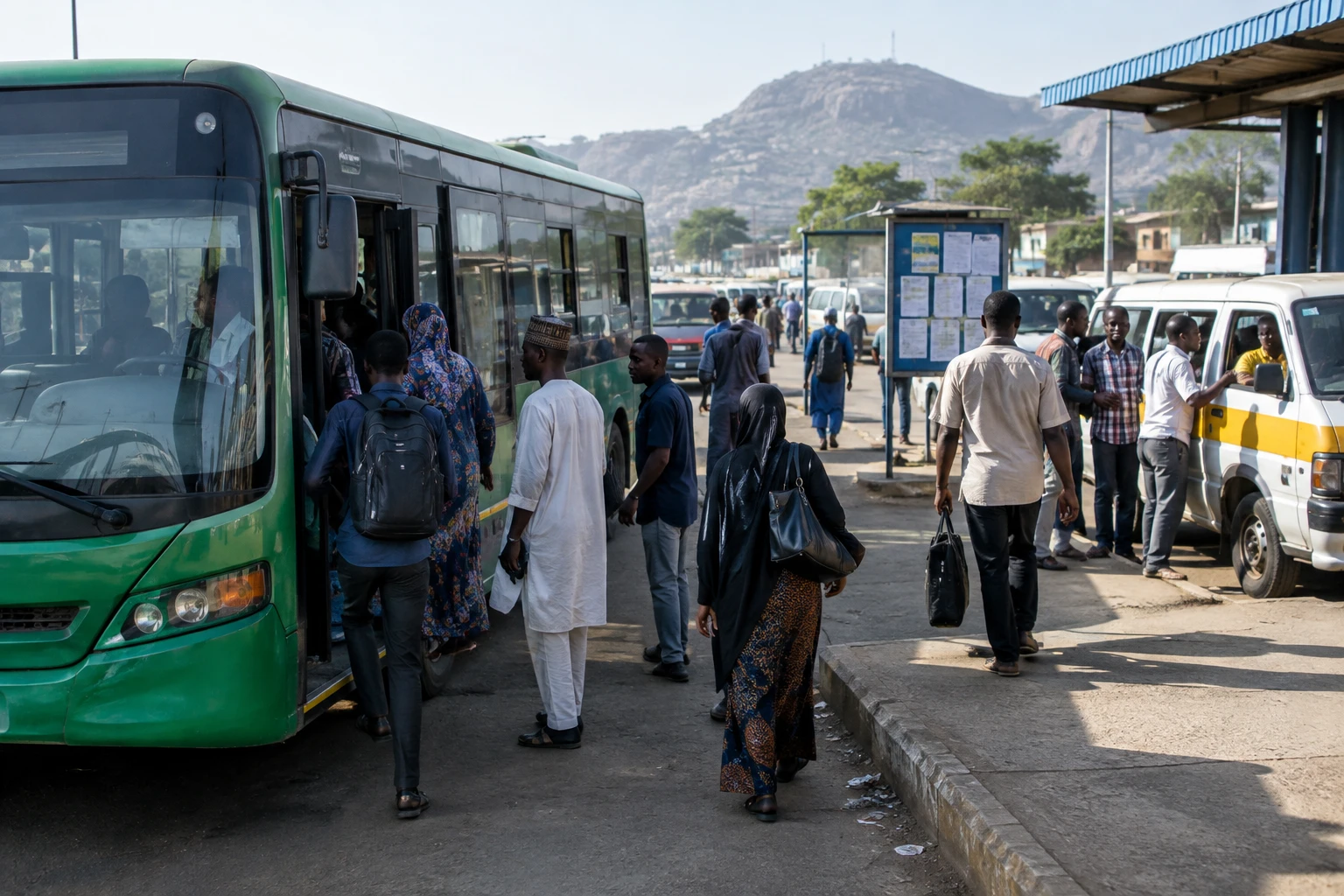
In Kaduna, Bola Tinubu’s campaign opens with a question that will weigh on voters in the polling booth: can the reforms announced by the president improve daily life before voters choose their next leader? The rally on 24 October launched his bid for a second term, less than three months before the presidential election scheduled for 16 January 2027.
A national election, very different realities
Nigeria is a federation of 36 states, alongside the Federal Capital Territory, where Abuja is located. The issues are not experienced in the same way everywhere. In major cities, households and businesses feel the cost of living directly. In rural areas, access to roads, public services and security also affects travel and incomes.
The federal election is also taking place against a West African backdrop of contrasting political and security trajectories. ECOWAS, a regional organisation bringing together West African states, remains a framework for cooperation among its members. But Nigeria’s election is first and foremost a national decision: it will determine the political and economic direction of the region’s most populous country.
The 2027 vote follows a closely contested presidential election. In 2023, the Independent National Electoral Commission (INEC) declared Tinubu the winner with 8,794,726 votes. Atiku Abubakar and Peter Obi came second and third respectively. These official results do not, on their own, indicate how voters will judge the record of the current term.
Continuity at the heart of Tinubu’s message
In Kaduna, in the country’s north-west, the president defended the continuation of his programme and promised to honour a commitment to “prosperity, continuity, progress and development”. He also said he wanted to eradicate hunger and poverty, while blaming his opponents for part of these difficulties. This accusation is part of his campaign rhetoric, not an independent assessment.
Works Minister David Umahi highlighted completed infrastructure and projects still under way. His argument is political as well as practical: a new term would allow the projects already started to be completed, he said. For voters, the challenge will be to distinguish between announcements, work actually completed and its tangible effects on travel, trade and economic activity.
Security was also raised. Kaduna State Governor Uba Sani presented travel along the road linking Kaduna to Birnin Gwari as evidence of progress, saying that travellers could now use it without a police escort. This statement describes the governor’s account of the record; on its own, it does not show that security has been restored across the state or on all roads.
The rally thus brought together three promises: to continue infrastructure works, improve the economic situation and strengthen security. But results do not become measurable at the same pace. A project may be visible without its benefits being immediately accessible to residents. Similarly, an improvement on one road does not necessarily resolve the difficulties encountered in other communities.
Cost of living, the central test of the record
The campaign begins as part of the population voices discontent over economic hardship. Tinubu is asking voters to judge his project over the long term; his critics may instead focus the debate on effects already being felt. This clash between a promise of continuity and the expectation of results is likely to shape exchanges until the vote.
The consequences differ among groups. Households have to weigh up their day-to-day spending. Small businesses and workers in the informal economy are particularly sensitive to changes in costs and demand. For the government, the challenge is to defend its reforms without allowing the promised benefits to seem too distant. The campaign has yet to provide an independent indicator to measure the extent of these effects.
Infrastructure also offers a basis for comparison. The authorities can present roads and construction projects as evidence of action. Voters, particularly outside urban centres, may focus above all on their practical value: a usable road, safer journeys and more reliable access to markets and services. The record therefore cannot be reduced either to the number of projects announced or to their visibility at a rally.
Opposition faces task of uniting before January
In 2025, several opposition figures, including Atiku Abubakar and Peter Obi, took part in an initiative to bring political forces closer together. The project did not produce a lasting alliance. As the election approaches, this fragmentation could make it harder to mount a united challenge to the ruling party, although it does not predetermine voters’ choices or the outcome of the election.
INEC’s official timetable sets the presidential vote for 16 January 2027. The campaign will therefore give candidates an opportunity to present their programmes and voters a chance to compare promises with the record. Points to watch include changes in the field of candidates, opposition parties’ ability to coordinate their supporters, and the detail of their proposals on the economy, infrastructure and security.
For West Africa, the stakes extend beyond competition between Nigerian parties. Nigeria’s political stability and the decisions of its next government will affect trade and regional cooperation. In Kaduna, Tinubu chose to defend continuity. Before the vote, his campaign will have to convince voters that continuity can deliver tangible results across regions and social groups with differing expectations.
Verifiable references: report on the campaign launch in Kaduna, INEC’s official election timetable and official report on the 2023 results.