Algeria
 Egypt
 Libya
 Morocco
 Sudan
 Tunisia
 Benin
 Burkina Faso
 Cabo Verde
 Côte d'Ivoire
 Ghana
 Guinea
 Guinea-Bissau
 Liberia
 Mali
 Mauritania
 Niger
 Nigeria
 Senegal
 Sierra Leone
 The Gambia
 Togo
 Cameroon
 Central African Republic
 Chad
 DR Congo
 Equatorial Guinea
 Gabon
 Republic of the Congo
 São Tomé and Príncipe
 Burundi
 Comoros
 Djibouti
 Eritrea
 Ethiopia
 Madagascar
 Malawi
 Mauritius
 Mozambique
 Rwanda
 Seychelles
 Somalia
 South Sudan
 Tanzania
 Uganda
 Angola
 Botswana
 Eswatini
 Lesotho
 Namibia
 South Africa
 Zambia
 Zimbabwe
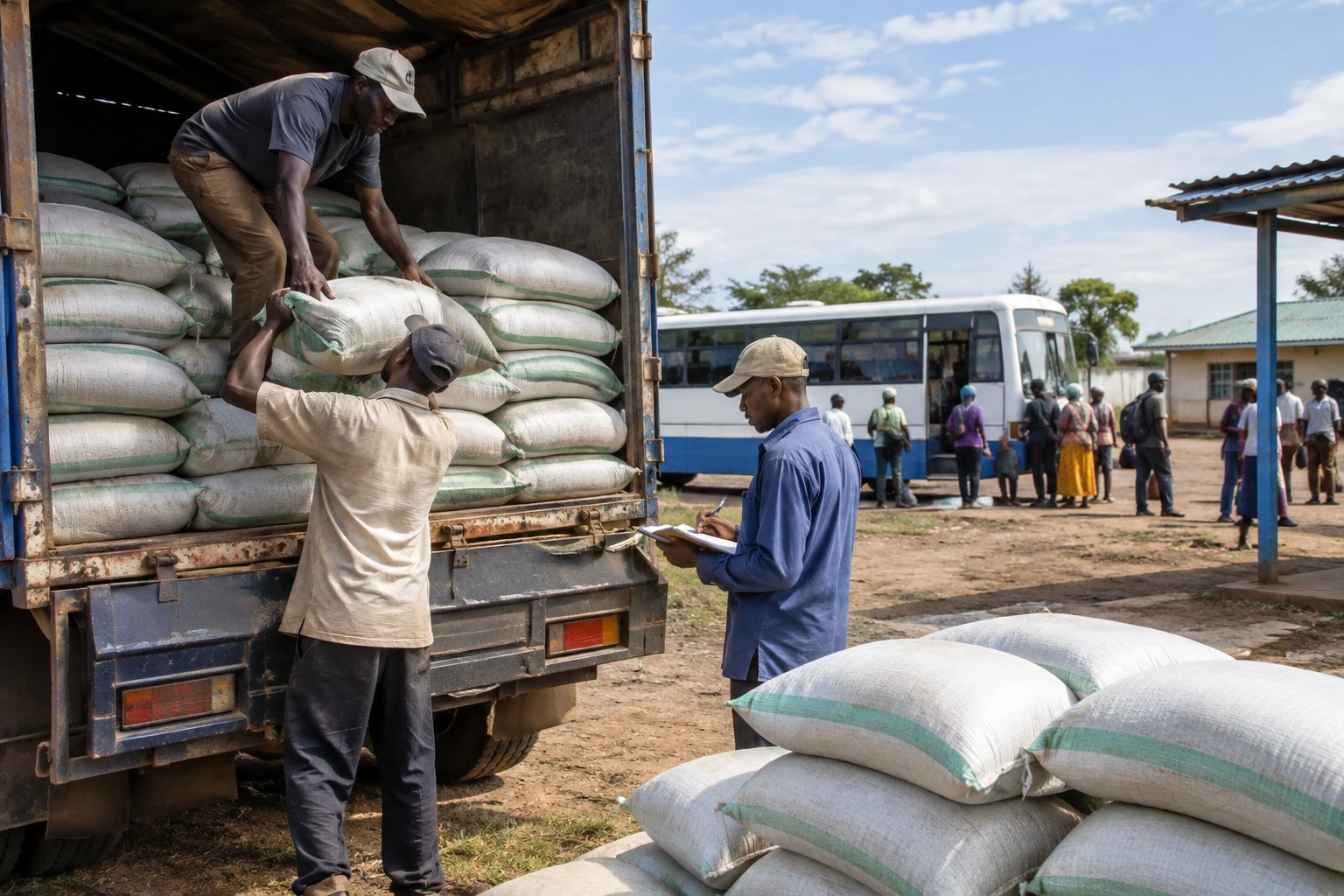
In Bura, in Tana River County, the challenge is not simply to harvest more rice. It is to deliver reliable water to fields, process the harvest locally and create sustainable markets. An official visit to southern India has opened up this possibility, but no Indian investment has yet been announced.
At Bura, irrigation comes before the industrial promise
On 21 October 2026, a Kenyan delegation led by Ephantus Kimotho, Principal Secretary for Irrigation, visited the Indian states of Telangana and Andhra Pradesh. It visited Pattabhi Agro Foods and studied irrigation and agricultural processing models, at the invitation of United Port Services.
The initiative concerns a development project in Bura, in eastern Kenya, where the government is seeking to combine large-scale irrigated farming with agribusiness. According to ministerial estimates reported by People Daily, 35,000 acres under cultivation could produce about 78,750 tonnes of paddy per cycle, based on a projected yield of 30 75-kilogramme bags per acre. This figure remains a projection, not an established level of production.
The Bura scheme depends on the Tana River. Its gravity-fed irrigation system, which delivers water through canals rather than by pumping, is intended to limit energy costs and improve the reliability of supply. The National Irrigation Authority says the scheme covers a vast area, but that infrastructure is operational on only part of it. Access to water, canal maintenance and its allocation among farmers will therefore remain decisive.
Published plans do not all describe the same allocation of land. Kenya’s investment catalogue, published in March 2026, presents a 35,000-acre project split between 20,000 acres of rice and 15,000 of sugar cane. It also envisages a rice mill with an annual capacity of 36,000 tonnes. These details, available in the official investment projects catalogue, call for clarification on the areas actually earmarked for rice and the implementation timetable.
A market reliant on imports
The project is set against a significant gap between local production and consumer purchases. Figures from Kenya’s economic survey, cited by Business Daily, show that 785,930 tonnes of rice were imported in 2025. The bill reached 55.11 billion Kenyan shillings. Imports fell compared with 2024, but remain a major component of national supply.
Meanwhile, paddy production — rice harvested before milling — rose by 6.4% in the 2024-2025 season, reaching 285,439 tonnes. However, output remains far below demand. Local producers, particularly those in Mwea, must also contend with input costs, water availability and competition from imported rice. Fluctuations in international prices and the exchange rate can therefore affect households, particularly in cities where rice is becoming an increasingly important part of the diet.
The government has included Bura in a broader policy to expand irrigation. Its 2025-2035 sector plan aims, among other things, to increase rice production and modernise public irrigation schemes. In June, Principal Secretary Kimotho cited a national target of 700,000 tonnes of paddy by 2027. This is an official target whose achievement will depend on separate projects and adequate water resources, as detailed in the plan presented by the State Department for Irrigation.
From technical visit to local benefits
The model observed in India is based on integrated processing. Pattabhi says it processes 200 to 300 tonnes of paddy daily. In addition to milled rice, bran can be used to produce oil or animal feed ingredients. Broken rice can find food or feed markets, while rice husks can be used as fuel. These activities can diversify income, but their adoption in Kenya will depend on investment, energy, markets and local capacity.
For Bura’s farmers, the central question will be practical access to water, land, equipment and buyers. For local residents, the promised jobs will become real only if recruitment, training and contracts with local producers are specified. Smallholdings will also need to coexist with any potential large-scale commercial production. Local processing could support transport, storage and livestock farming, but only if businesses in the region can join these supply chains.
The scale of the facilities will need to match the volumes actually available. The 36,000-tonne rice-mill capacity listed in the official catalogue is below the project’s projected output of 78,750 tonnes per cycle. This comparison does not prove that there will be a processing shortfall: harvest periods, the number of cycles and the phases of development remain to be clarified. It does, however, underline the importance of specifying equipment, storage capacity and markets before presenting expected volumes as supply ready to enter the market.
A Kenyan issue with regional implications
Kenya is a member of the East African Community (EAC), which facilitates trade among several countries in the region. Common trade rules, including the external tariff applied to imports, affect the price of imported rice and the competitive conditions facing local producers. Bura’s experience is therefore also of interest to neighbouring countries grappling with food dependence and the choices between imports, support for producers and agricultural investment.
The visit to India marks an exploration, not the conclusion of a financial partnership. The next step will be to establish what companies have committed to, which areas have been allocated, how access to water will work and what place will be reserved for Kenyan producers. Beyond the projected yields, the test is simple: how much processed rice will reach markets regularly, at what price, and what share of the value created will remain in the local economy?