Algeria
 Egypt
 Libya
 Morocco
 Sudan
 Tunisia
 Benin
 Burkina Faso
 Cabo Verde
 Côte d'Ivoire
 Ghana
 Guinea
 Guinea-Bissau
 Liberia
 Mali
 Mauritania
 Niger
 Senegal
 Sierra Leone
 The Gambia
 Togo
 Cameroon
 Central African Republic
 Chad
 DR Congo
 Equatorial Guinea
 Gabon
 Republic of the Congo
 São Tomé and Príncipe
 Burundi
 Comoros
 Djibouti
 Eritrea
 Ethiopia
 Kenya
 Madagascar
 Malawi
 Mauritius
 Mozambique
 Rwanda
 Seychelles
 Somalia
 South Sudan
 Tanzania
 Uganda
 Angola
 Botswana
 Eswatini
 Lesotho
 Namibia
 South Africa
 Zambia
 Zimbabwe
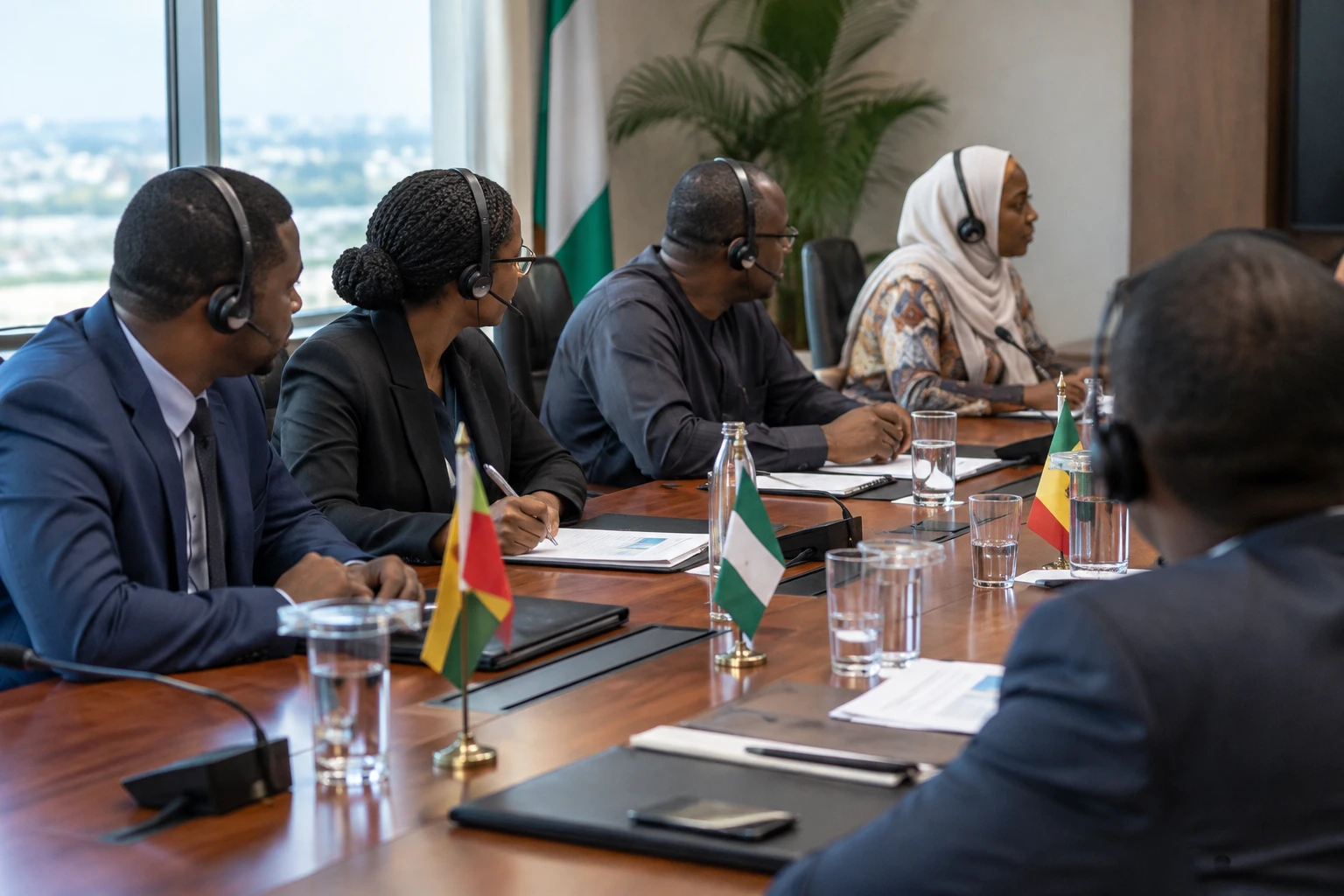
In Nigeria, a presidential campaign is also fought in regions where the incumbent has failed to win over voters. By choosing Kaduna for his first major rally, Bola Tinubu is highlighting his economic record, but is also returning to an electoral battleground that resisted him in 2023.
A national vote, regional balances
Nigeria, Africa’s most populous country, will vote on 16 January 2027 to elect its president and renew its parliament. The election is organised by the Independent National Electoral Commission, INEC. It comes after four years of contested economic reforms and as insecurity remains a concern in several regions.
Across West Africa, the vote will be watched beyond Nigeria’s borders. The country is a major player in ECOWAS, the Economic Community of West African States, and its demographic and economic weight gives its political choices regional significance. The campaign must therefore be viewed in Abuja, the federal capital, across the states and within an opposition seeking to organise itself.
Kaduna is a particular battleground. The north-western state brings together voters with diverse political and social views. In 2023, Atiku Abubakar won more votes there than Tinubu. Across the region, however, the ruling APC, the All Progressives Congress, candidate received more votes than his rivals, despite varied results from state to state.
In Kaduna, Tinubu defends his reforms
On Saturday 24 October 2026, Tinubu launched his campaign for a second term at a rally in Kaduna. INEC’s electoral timetable sets the presidential vote for 16 January 2027. The president presented his programme under the banner of “prosperity” and continuity in his reforms.
At the heart of his case is the removal of the public petrol subsidy, decided after he took office in 2023. The measure reduces a major expense for the state, but it has also helped make the cost of living heavier for many households. Tinubu defends it as a necessary reform and says his government is seeking to tackle hunger and poverty.
At the rally, he blamed previous administrations for these difficulties. “I hear my opponents talking about hunger and poverty. Who created them? They did,” he said, according to the Associated Press. Opposition candidate Atiku Abubakar replied that voters would judge the government on their daily lives rather than on explanations given at rallies.
The contrast between the national message and households’ experience will be central to the campaign. Reforms can improve public finances without immediately producing the same effects for everyone. Formal-sector employees, small traders and families dependent on irregular incomes do not experience price rises in the same way. The political question will also be whether the promised benefits reach people beyond the major cities.
Insecurity, the rally’s blind spot
Another important issue did not feature in the presidential speech reported in Kaduna: security. The state remains exposed to kidnappings and attacks by armed criminal groups, although the situation can vary by area and over time. The absence of this topic from a rally does not, in itself, demonstrate the absence of government policy. It does, however, leave a direct concern of many residents unanswered in public that day.
The consequences are especially tangible for rural communities, travellers and families living far from urban centres. Kidnappings can disrupt travel, farming and access to services. In cities, the campaign is also being fought on prices, jobs and transport. These different realities make it difficult to offer a single promise to the whole state.
Security is also a federal issue. It depends on coordination between the central government, security forces and state authorities. For Kaduna’s voters, campaign statements will therefore be judged against observable results: the protection of people, responses to kidnappings and the continuity of daily activities.
A contest still wide open
The rally is not enough to gauge Tinubu’s electoral strength. It does, however, show the importance attached to the north-west, a vast region where results across the states can affect the national tally. In 2023, the APC won more votes there than its rivals, while Atiku carried Kaduna. The coming election could therefore test the president’s ability to retain his regional support while gaining ground in contested states.
The opposition, for its part, must convince voters and avoid letting its divisions make the president’s re-election easier. Atiku, who finished second in 2023, is running again. But the contest is not simply a two-way race: alliances, candidacies and voter turnout could shift the balance before January.
As the campaign progresses, two questions stand out: will Nigerians feel that economic reforms are beginning to deliver accessible results, and will the authorities be able to address security concerns, particularly in exposed areas? The vote on 16 January 2027 will provide an initial political measure of these issues, in Nigeria and across a West Africa closely watching the stability of its most populous neighbour.
INEC’s official timetable for Nigeria’s presidential election ; the report on the Kaduna rally ; Atiku Abubakar’s response.