
 Algeria
 Egypt
 Libya
 Morocco
 Sudan
 Tunisia
 Benin
 Burkina Faso
 Cabo Verde
 Côte d'Ivoire
 Ghana
 Guinea
 Guinea-Bissau
 Liberia
 Mali
 Mauritania
 Niger
 Senegal
 Sierra Leone
 The Gambia
 Togo
 Cameroon
 Central African Republic
 Chad
 DR Congo
 Equatorial Guinea
 Gabon
 Republic of the Congo
 São Tomé and Príncipe
 Burundi
 Comoros
 Djibouti
 Eritrea
 Ethiopia
 Kenya
 Madagascar
 Malawi
 Mauritius
 Mozambique
 Rwanda
 Seychelles
 Somalia
 South Sudan
 Tanzania
 Uganda
 Angola
 Botswana
 Eswatini
 Lesotho
 Namibia
 South Africa
 Zambia
 Zimbabwe
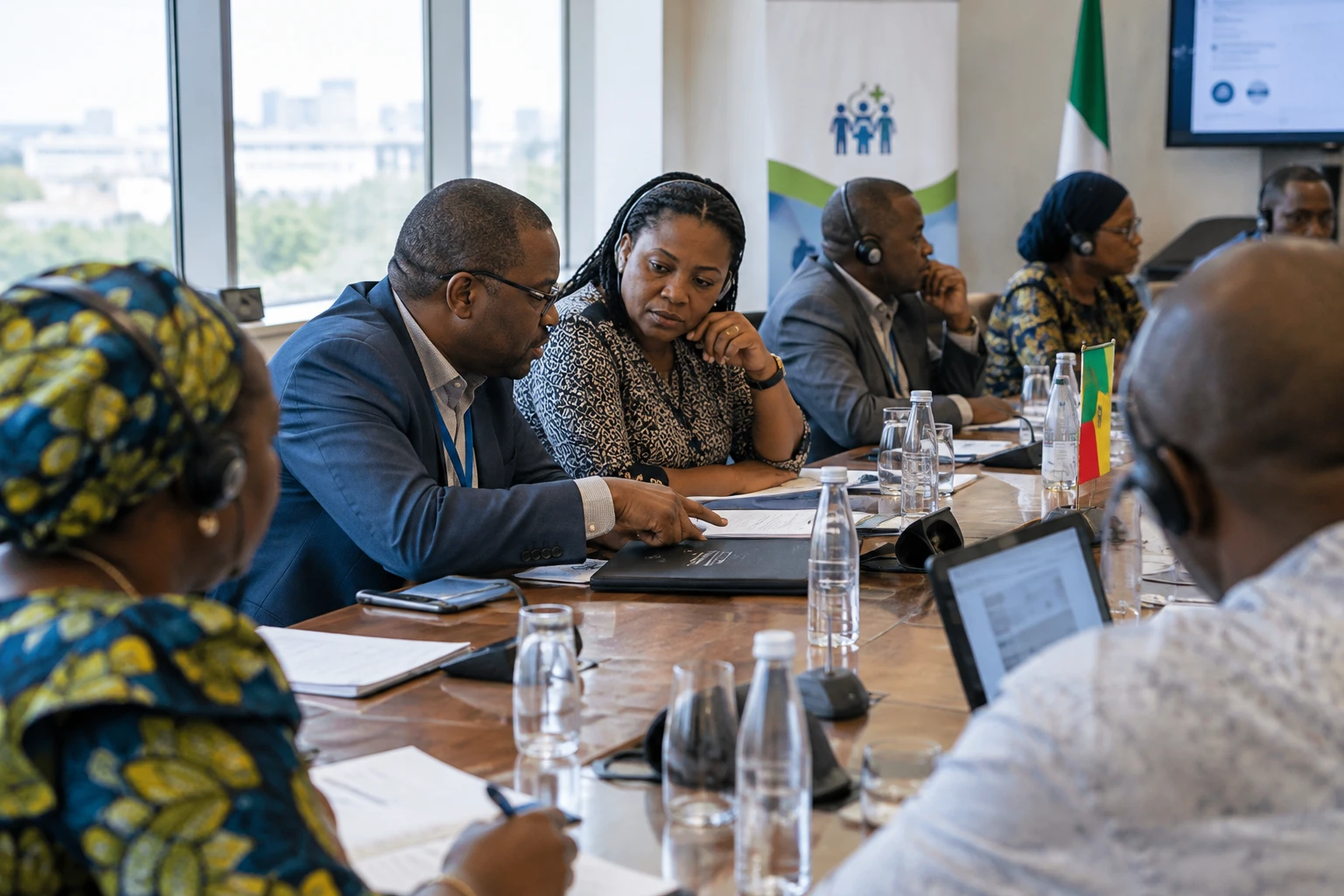
In Nigeria, a public health emergency is also playing out on the terrain of public trust. Since an Ebola case was confirmed in Abuja, the authorities have been seeking to contain the risk of transmission. At the same time, the opposition is demanding answers about the resources committed before the virus emerged. With the 2027 presidential election only months away, every public health decision can now be viewed through a political lens.
A confirmed case in the federal capital
Nigeria’s Ministry of Health confirmed an imported case of Ebola virus disease in the Federal Capital Territory, which includes Abuja, on 20 October 2026. The World Health Organization (WHO) said the virus identified was Bundibugyo, a strain distinct from the one that caused the West African epidemic of 2014-2016. The patient developed symptoms on 7 October, visited a health facility in Abuja on 11 October, and tested positive on 20 October.
The authorities said they had identified 44 people who may have been in contact with her. Monitoring them and tracing further contacts are intended to interrupt any potential chains of transmission. As of 22 October, Health Minister Muhammad Ali Pate said the case was contained and that no community transmission had been confirmed. This assessment describes the situation reported at that time; it does not mean that surveillance can be relaxed. The Nigerian Ministry of Health and WHO Africa confirmed the identification of the case.
The precise source of exposure remained unclear. Initial reports suggested travel to the eastern region of the Democratic Republic of the Congo and transit through Uganda. Uganda’s health ministry clarified that the patient had merely transited through the country and that the place of infection remained under investigation. Transit alone is therefore not enough to establish that the infection was contracted in Uganda.
A health alert that crosses borders
The case is part of a regional outbreak declared in the Democratic Republic of the Congo on 15 May 2026. Nigeria was then the fifth country in which the Bundibugyo virus had been detected since the outbreak began, according to WHO. Cases have also been reported in Kenya. The risk of spread makes information-sharing, traveller surveillance and coordination between public health teams essential.
For Nigeria, West Africa’s most populous country, the stakes are both national and regional. Abuja is home to federal institutions and sees considerable travel, but response capacity also depends on the federated states, public and private hospitals, and local teams. An alert detected in the capital must therefore be followed by clear communication across the country, including with populations far from major medical centres.
The experience of 2014 also matters. At the time, Nigeria succeeded in interrupting transmission after the virus was introduced by a traveller in Lagos. That precedent informs the capacities and protocols available; it does not in itself guarantee the same outcome today. The strain, epidemic context and circumstances of exposure are different. ECOWAS, the organisation for the integration of West African countries, also provides an important framework for cross-border health cooperation, even though the current outbreak affects several regions of the continent.
Funding becomes a political issue
On 22 October, Muhammad Ali Pate called on political leaders not to exploit the epidemic. “Health has no party, nationality, tribe or religion,” he said, according to Nigerian media. The minister also said there was, at this stage, no immediate reason to cancel public gatherings. This position does not absolve organisers or health authorities of the need to monitor the situation and adapt guidance if necessary.
Atiku Abubakar, a former vice-president and a leading figure in the African Democratic Congress (ADC), has called on the government to account for the 10 billion naira approved in June for preparedness against Ebola and other health threats. The amount, reported by the Nigerian press, is equivalent to about $7.5 million according to conversions cited in the debate. The opposition figure is questioning how the funds were used, as well as the time between the onset of symptoms, the consultation and confirmation of the diagnosis.
The criticism also concerns how the alert system worked: who reported the case, when, and what measures followed? These are legitimate questions of public accountability, but are not in themselves proof of mismanagement. The president’s camp responded that the approved funds had not yet been spent. This claim, attributed to the ruling party, calls for documented clarification on the budgetary status of the allocation, the expenditure incurred, and the equipment or services funded. Atiku’s demand and the response reported by the president’s camp highlight conflicting accounts, not yet a full public audit.
Transparency and protection, two simultaneous requirements
The controversy has a tangible effect on trust. If citizens doubt the accuracy of the figures or the management of funds, they may be reluctant to report symptoms or follow guidance. Conversely, regular updates on testing, contacts being monitored and expenditure make it possible to distinguish verified facts from partisan accusations. Communication must also avoid stigmatising the patient, travellers or people under monitoring.
Health measures can affect different groups in different ways. Health workers and people being monitored need clear guidance and protection. Travellers and businesses depend on reliable information about checks. Informal traders, who often rely on daily income, can quickly feel the effects of poorly targeted restrictions. This is why decisions should be proportionate to epidemiological data rather than driven solely by political pressure.
The electoral timetable is heightening scrutiny of public administration. Nigeria’s electoral commission, INEC, has set the presidential and legislative elections for 16 January 2027. The minister presents health as a unifying issue; the opposition is focusing on budgetary accountability. These two imperatives are not mutually exclusive: protecting the population also requires decisions and resources to be open to scrutiny.
For Nigeria and its neighbours, what happens next will depend on monitoring contacts, clarifying the chain of exposure and publishing consistent health information. Regional cooperation will be all the more useful because travel crosses borders and the first alerts may emerge far from capitals. The central political question is therefore less who might benefit from the epidemic than whether institutions are turning their preparedness commitments into a rapid, clear and accountable response.



