Algeria
 Egypt
 Libya
 Morocco
 Sudan
 Tunisia
 Benin
 Burkina Faso
 Cabo Verde
 Côte d'Ivoire
 Ghana
 Guinea
 Guinea-Bissau
 Liberia
 Mali
 Mauritania
 Niger
 Nigeria
 Senegal
 Sierra Leone
 The Gambia
 Togo
 Cameroon
 Central African Republic
 Chad
 DR Congo
 Equatorial Guinea
 Gabon
 Republic of the Congo
 São Tomé and Príncipe
 Burundi
 Comoros
 Djibouti
 Eritrea
 Ethiopia
 Kenya
 Madagascar
 Malawi
 Mauritius
 Mozambique
 Rwanda
 Seychelles
 Somalia
 South Sudan
 Uganda
 Angola
 Botswana
 Eswatini
 Lesotho
 Namibia
 South Africa
 Zambia
 Zimbabwe
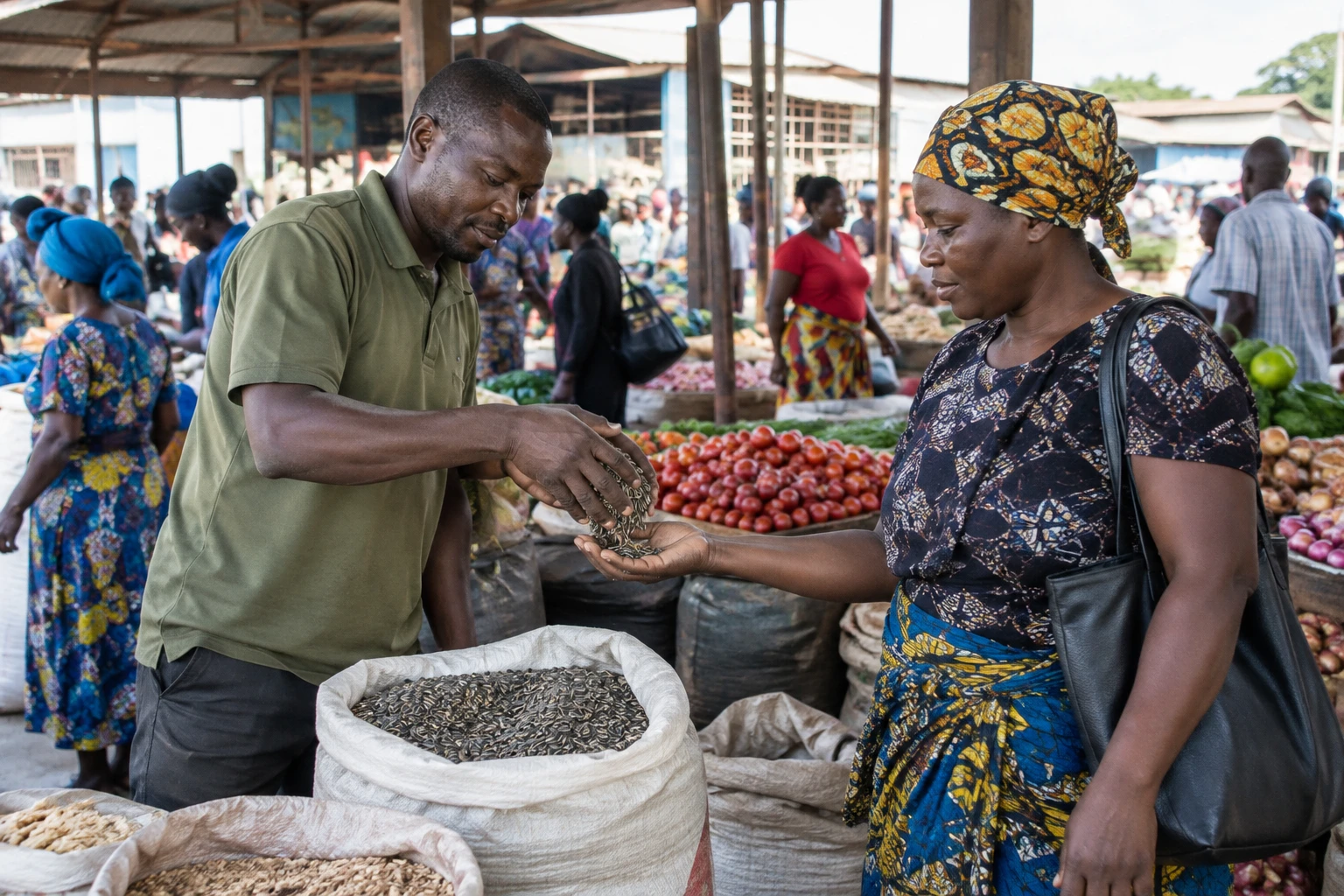
An agricultural project can create markets and jobs. But when it comes with an announcement involving hundreds of thousands of hectares, another question arises: who will decide how the land is used, and how will Tanzanian producers benefit?
This question lies at the heart of the plans announced by Indian company BL Agro to establish a presence in Tanzania. The group is talking about a major investment. At this stage, however, the figures and ambitions announced should not be confused with investments already made.
A project announced in a strategic sector
Agriculture plays a major role in Tanzania’s economy and employment. The country is seeking to develop local processing, particularly to better meet demand for edible oils and add value to its harvests. The stakes extend beyond farms: they also concern rural incomes, the prices consumers pay and dependence on imports.
BL Agro, an India-based agribusiness, says it is preparing to enter this market. In an interview published on 22 October 2026 by ETRetail, its managing director, Ashish Khandelwal, outlined a programme worth 70 billion rupees over ten years, or about $739 million according to the figures reported. He also said the authorities were offering the company agricultural land under long-term leases, covering an announced area of about 700,000 hectares.
These details remain statements attributed to the executive. The sources consulted do not confirm that a lease covering this area has been concluded, or that the announced funds have been committed. The distinction matters: these are steps and projects presented by the company, not operational facilities.
The programme described has several strands. BL Agro plans, in particular, an edible-oil processing complex valued at 15 billion rupees, with a stated processing capacity of 1,100 tonnes a day. The group says it intends to source from local producers while developing its own crops. It also mentions investment in cattle farming and the local manufacture of tractors and agricultural equipment. The company estimates that its activities could eventually generate about 100,000 jobs; this figure remains a company forecast.
Land, producers and local processing
Processing is the main point of intersection between the project and Tanzania’s priorities. According to figures from the Ministry of Agriculture reported in the material available, the country was estimated to need about 733,000 tonnes of edible oils a year, compared with local production of close to 306,000 tonnes. These estimates indicate a substantial gap, but could not be cross-checked here against a second independent publication. They should therefore remain attributed to the ministry.
A plant can create a regular buyer for oilseeds and support storage, transport and maintenance activities. However, the impact on farmers will depend on sourcing arrangements: prices offered, contracts, payment terms, quality requirements and whether small-scale producers can sell their crops. High industrial capacity alone does not guarantee higher farm incomes.
The land question deserves the same attention. In Tanzania, foreign investors can obtain rights of occupancy for investment purposes through regulated procedures; land is not simply transferred into a company’s ownership. The Tanzanian authority responsible for investment and special economic zones describes the mechanisms for rights of occupancy and sub-leasing. This makes publication of agreements, demarcation of plots and consultation with affected communities essential, particularly when village land is involved.
The figure of 700,000 hectares announced in the interview is considerable. On its own, it says nothing about the location or status of the land, its availability, or how it would be divided between crops, livestock and other uses. These details will be crucial in assessing the effects on farmers already there, access to water and local activities.
Mechanisation: an industrial promise and a test of access
The equipment manufacturing plan fits with an existing public policy direction. In 2026, Tanzania launched a new agricultural mechanisation strategy covering the coming decade. The government is targeting, among other things, the acquisition of 10,000 tractors and the establishment of service centres. The Tanzanian Ministry of Agriculture announced the strategy at a regional conference organised with the FAO in Dar es Salaam.
This policy is about more than importing or assembling machinery. For a small farm, access to a hire service may be more realistic than buying a tractor. Spare parts, repair technicians, trained operators and equipment suited to crops and soils are also needed. The ministry’s annual report records an increase in the area cultivated with tractors between 2019-2020 and 2023-2024, while noting that mechanisation remains uneven.
If BL Agro delivers on local production, the benefits will therefore depend on how it aligns with these needs. Equipment made in the country could support maintenance and industrial employment. But its usefulness to farmers will depend on its cost, availability beyond major centres and the provision of services in rural areas.
Announcements to be tested across the region
Tanzania is a member of the East African Community (EAC), a regional organisation that facilitates cooperation and trade between several neighbouring countries. Increased Tanzanian agrifood production could serve the domestic market and, if standards, prices and logistical capacity allow, regional markets. This prospect is not a commercial guarantee, however: local producers and processors will need viable access to markets.
For Dodoma, the challenge is to turn an investor’s interest into measurable benefits: factories actually built, purchases from Tanzanian producers, lasting jobs and accessible equipment. For rural communities, transparency over land and the terms of participation will matter as much as the announced amount. For BL Agro, the decisive step will be moving from discussions to permits, verifiable agreements and investment actually made.
The next developments to watch are therefore concrete: official confirmation of the land involved, a timetable for construction, funding secured and local sourcing arrangements. Until these elements are established, the project represents a major industrial ambition, but not yet a transformation of Tanzanian agriculture.