Algeria
 Egypt
 Libya
 Morocco
 Sudan
 Tunisia
 Benin
 Burkina Faso
 Cabo Verde
 Côte d'Ivoire
 Ghana
 Guinea
 Guinea-Bissau
 Liberia
 Mali
 Mauritania
 Niger
 Nigeria
 Senegal
 Sierra Leone
 The Gambia
 Togo
 Cameroon
 Central African Republic
 Chad
 DR Congo
 Equatorial Guinea
 Gabon
 Republic of the Congo
 São Tomé and Príncipe
 Burundi
 Comoros
 Djibouti
 Eritrea
 Kenya
 Madagascar
 Malawi
 Mauritius
 Mozambique
 Rwanda
 Seychelles
 Somalia
 South Sudan
 Tanzania
 Uganda
 Angola
 Botswana
 Eswatini
 Lesotho
 Namibia
 South Africa
 Zambia
 Zimbabwe
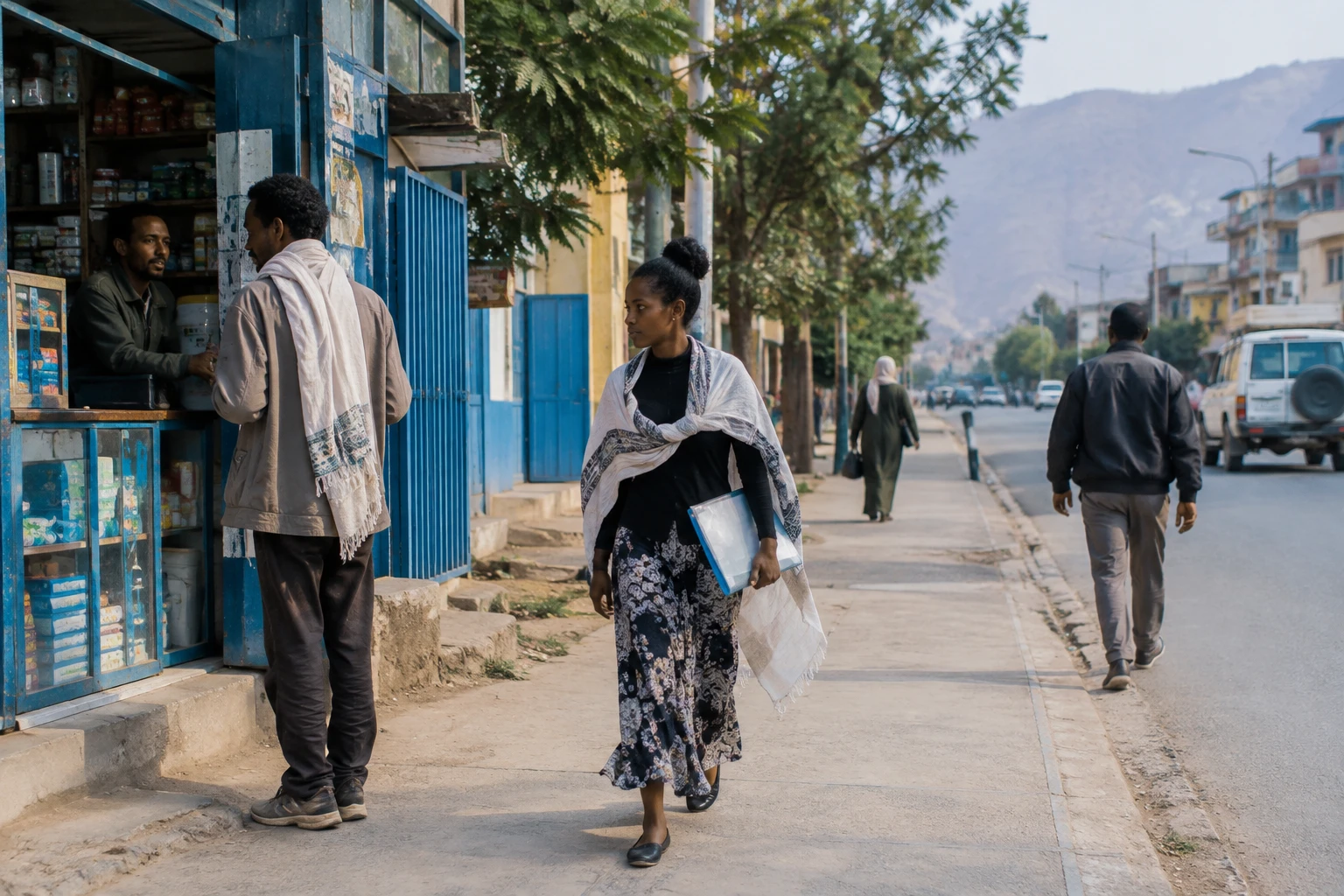
The resumption of fighting in Tigray has put a question at the heart of Ethiopia’s crisis: who actually holds authority in the region, and at what cost to its residents? On 21 October 2026, Tigray People’s Liberation Front (TPLF) leader Debretsion Gebremichael said on local television that his forces were continuing armed operations.
Pretoria peace deal weakened by return to arms
The conflict pits forces linked to the TPLF against the Ethiopian federal army. It is part of the long-running confrontation between the central government in Addis Ababa and Tigray’s political authorities. The 2020–2022 war ended with the Pretoria agreement, concluded under the auspices of the African Union. But the agreement did not resolve disputes over regional governance, disarmament and the return of displaced people.
Clashes resumed on 23 September 2026, according to reports by the Associated Press. Fighting quickly spread to several areas in northern Ethiopia. In early October, forces allied with the federal government entered Mekelle, the regional capital, after TPLF fighters announced their withdrawal. The loss of the city does not, however, mean that fighting has stopped in rural areas.
The region remains at the centre of an institutional power struggle. On 16 October, the federal government announced the creation of a six-month interim administration in Tigray, tasked in particular with restoring public services and preparing elections. Addis Ababa presented the decision as a step towards restoring constitutional order, but TPLF leaders have challenged it. It raises a central question: what authority can govern the region without a political agreement accepted locally?
Victory claims without independent verification
In his 21 October address, Debretsion Gebremichael described mobile operations conducted far from urban centres. He said Tigrayan forces had achieved tactical successes and accused the federal army of being stretched across several fronts. He also used a threatening phrase against his opponents. His remarks reflect the TPLF leader’s position; they do not, in themselves, provide independent confirmation of the military situation.
The TPLF had previously claimed to have neutralised hundreds of federal soldiers in fighting in northern and central Tigray. The government had not responded to these latest statements at the time of the reported events. In the absence of independent verification, the movement’s reported toll cannot be established. Claims by the parties must therefore be distinguished from facts confirmed on the ground.
The available reporting also describes a drone strike that reportedly killed four people in southern Tigray on 20 October, as well as strikes in the Amhara region the previous day. These tolls are not corroborated here by a second independent source. They should remain attributed and do not, as things stand, establish all the circumstances or responsibility for the attacks.
Between territorial control and daily life
Announcements that towns have been captured and claims of military gains describe only part of the crisis. For residents, the intensification of fighting threatens freedom of movement, access to healthcare, schools and supplies. Rural populations, closer to areas of operations, may be directly exposed to clashes. In urban centres, the presence of an administration alone does not guarantee the return of services or security.
The federal government says the interim administration is intended to restore services and enable displaced people to return. The Ethiopian News Agency has reported this policy, while the Associated Press has confirmed the establishment of the administration and the existence of a programme to help former fighters return to civilian life. These measures do not, however, answer the question of whether they are accepted by the different Tigrayan forces, or what conditions would be needed for a credible vote.
The crisis is also weighing on demobilisation efforts. Hundreds of former fighters have registered for a programme to return to civilian life, according to the Associated Press. But the resumption of hostilities is undermining these efforts: fighters may be encouraged to return to the front rather than lay down their arms. For displaced families, an announced administrative timetable is not enough if roads, housing and security guarantees remain uncertain.
Implications for the Horn of Africa
Tigray lies in a strategic part of the Horn of Africa, bordering Eritrea and close to Afar and Amhara. The fighting is therefore not taking place in isolation. An escalation of tensions could affect regional security and complicate relations between Addis Ababa and its neighbours. Ethiopia is a member of the Intergovernmental Authority on Development (IGAD), a regional organisation in the Horn of Africa, as well as the African Union, which helped broker the Pretoria agreement.
At the continental level, the return to arms is testing the ability of African peace agreements to hold beyond an immediate cessation of fighting. Pretoria halted a major war, but political and territorial disagreements remained active. The short-term priority remains protecting civilians and resuming verifiable dialogue between the federal government, the regional administration and Tigrayan leaders.
The next milestones will be the interim administration’s ability to restore services within the announced six-month period, the fate of demobilised fighters and any formal resumption of talks between the parties. Until then, victory claims alone will not show who has lasting control of Tigray or whether peace can be restored.