Algeria
 Egypt
 Libya
 Morocco
 Sudan
 Tunisia
 Benin
 Burkina Faso
 Cabo Verde
 Côte d'Ivoire
 Ghana
 Guinea
 Guinea-Bissau
 Liberia
 Mali
 Mauritania
 Niger
 Nigeria
 Senegal
 Sierra Leone
 The Gambia
 Togo
 Cameroon
 Central African Republic
 Chad
 DR Congo
 Equatorial Guinea
 Gabon
 São Tomé and Príncipe
 Burundi
 Comoros
 Djibouti
 Eritrea
 Ethiopia
 Kenya
 Madagascar
 Malawi
 Mauritius
 Mozambique
 Rwanda
 Seychelles
 Somalia
 South Sudan
 Tanzania
 Uganda
 Angola
 Botswana
 Eswatini
 Lesotho
 Namibia
 South Africa
 Zambia
 Zimbabwe
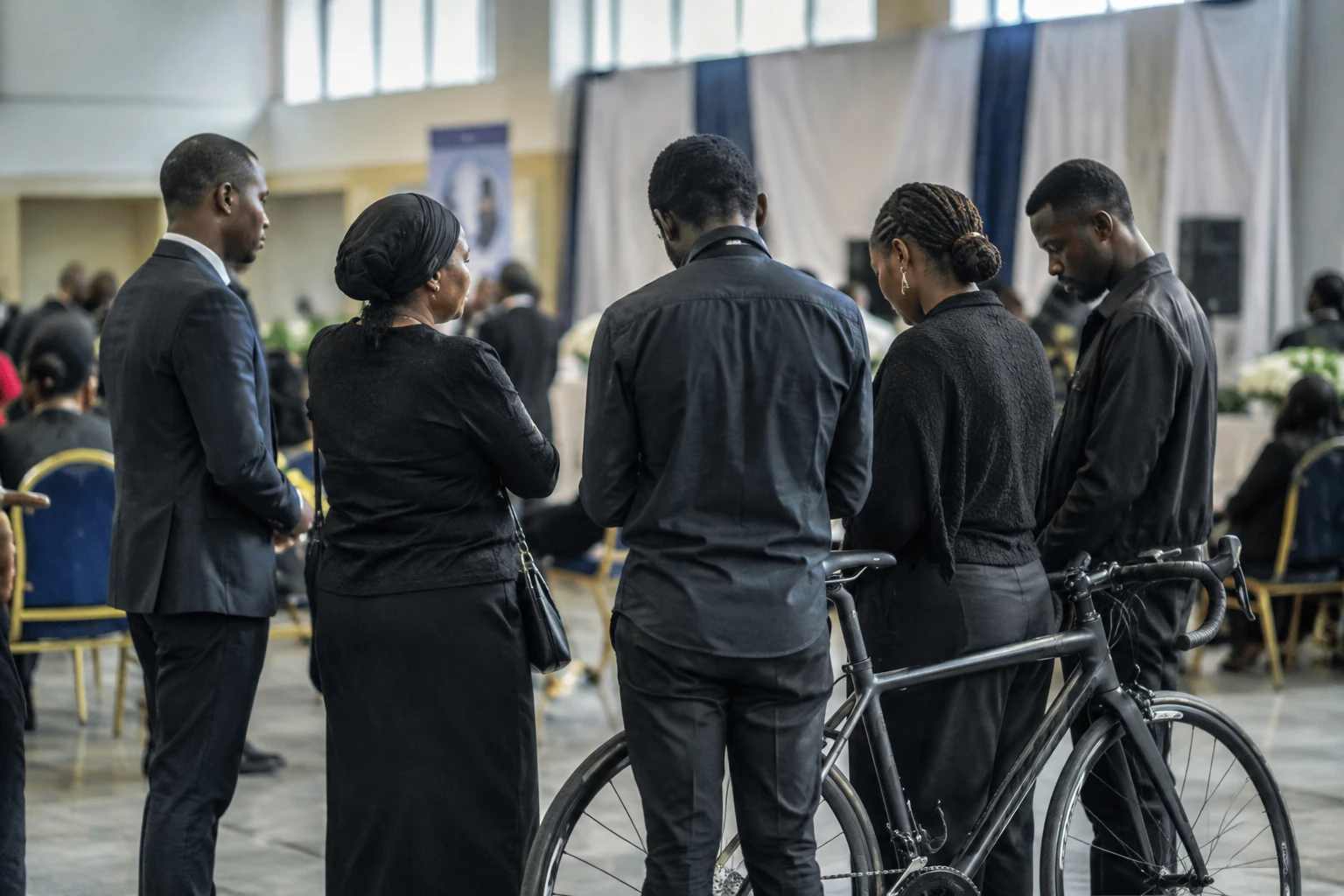
Can an interrupted journey continue to carry its message? In Kinshasa, the authorities honoured Miguel Mumbere Masaisai, a young cyclist who wanted to ride from Goma to Rabat to champion peace. But the reach of his project now depends on those who decide to carry it forward.
A national tribute in Kinshasa
On Thursday 22 October 2026, a ceremony was held at the Hôpital du Cinquantenaire in the capital of the Democratic Republic of the Congo. Miguel Masaisai was posthumously awarded the Gold Medal for Civic and Sporting Merit. Government members, elected representatives from North Kivu, his relatives and people from Goma living in Kinshasa paid tribute to him. Several Congolese media outlets reported on the ceremony and the distinction.
Sports Minister Didier Budimbu praised an athlete who had put his passion at the service of a message of peace. Speakers also called on young Congolese to keep the “Pedals for Peace” initiative alive beyond the death of its founder.
Born in Goma, in North Kivu, Miguel Masaisai had made a name for himself through his achievements in cycling, swimming and triathlon. In 2024, he notably swam across part of Lake Kivu, between the Cap Kivu Hotel and Kituku, according to biographical information published about him.
From Goma to Ouesso, a route beyond borders
His cycling project aimed to link Goma to Rabat, Morocco, over a route announced as approximately 14,000 kilometres long. He wanted to draw attention to the violence affecting the east of the DRC and champion peace and national unity. The journey was also due to take him through several African countries.
He set off from Goma in early May 2026, reaching Kinshasa before continuing his journey towards Brazzaville. On 18 September, he died in a road accident in Ouesso, in the north of the Republic of the Congo. The two countries should not be confused: Kinshasa is the capital of the DRC, while Brazzaville is the capital of the Republic of the Congo.
The athlete’s body was repatriated to Kinshasa on 25 September. The official ceremony on 22 October was therefore part of a tribute organised several weeks after the accident. The Congolese Cycling Federation and the Sports Ministry had announced the funeral and award programme.
Sport as a platform for expression
“Pedals for Peace” combined an endurance challenge with civic advocacy. Cycling enabled Miguel Masaisai to meet people along his route and bring visibility beyond national borders to a cause linked to the east of his country. His initiative did not replace political efforts or security measures. It did, however, offer a tangible way to make the aspiration of a young Congolese athlete heard.
This effort takes place in a region where conflicts and their consequences often extend beyond borders. The DRC is notably a member of the Southern African Development Community (SADC) and the East African Community (EAC), two regional organisations engaged in separate frameworks for cooperation. The cyclist’s route also linked cities in the DRC and the Republic of the Congo, separated by the Congo River but connected by human and economic exchanges.
The effects of violence in the east of the country are not the same for everyone. People in affected areas live with displacement and insecurity every day. In Kinshasa, displaced families, elected representatives and associations raise these issues in public, while national and regional actors discuss political and security responses. Masaisai’s message sought to connect these realities without reducing people in the east of the DRC to their experience of conflict alone.
Turning a legacy into action
An official tribute marks the state’s recognition. It does not, on its own, guarantee that the project will continue. The challenge now is to see whether clubs, young athletes or local organisations will take up “Pedals for Peace”, and in what form. The comments of Nathan Wadonge, a fellow traveller and cyclist, point in that direction: the initiative should not disappear with its founder.
The significance of this story goes beyond the ceremony itself. It is a reminder that young Africans can use sport to promote ideas and build ties between communities. For the DRC, the challenge will be to preserve this momentum while distinguishing a symbolic gesture from the political processes needed for peace. What happens next will depend less on medals than on the ability of Congolese actors to give Miguel Masaisai’s message a practical, lasting continuation.