Algeria
 Egypt
 Libya
 Morocco
 Sudan
 Tunisia
 Benin
 Burkina Faso
 Cabo Verde
 Côte d'Ivoire
 Ghana
 Guinea
 Guinea-Bissau
 Liberia
 Mali
 Mauritania
 Niger
 Nigeria
 Senegal
 Sierra Leone
 The Gambia
 Togo
 Cameroon
 Central African Republic
 DR Congo
 Equatorial Guinea
 Gabon
 Republic of the Congo
 São Tomé and Príncipe
 Burundi
 Comoros
 Djibouti
 Eritrea
 Ethiopia
 Kenya
 Madagascar
 Malawi
 Mauritius
 Mozambique
 Rwanda
 Seychelles
 Somalia
 South Sudan
 Tanzania
 Uganda
 Angola
 Botswana
 Eswatini
 Lesotho
 Namibia
 South Africa
 Zambia
 Zimbabwe
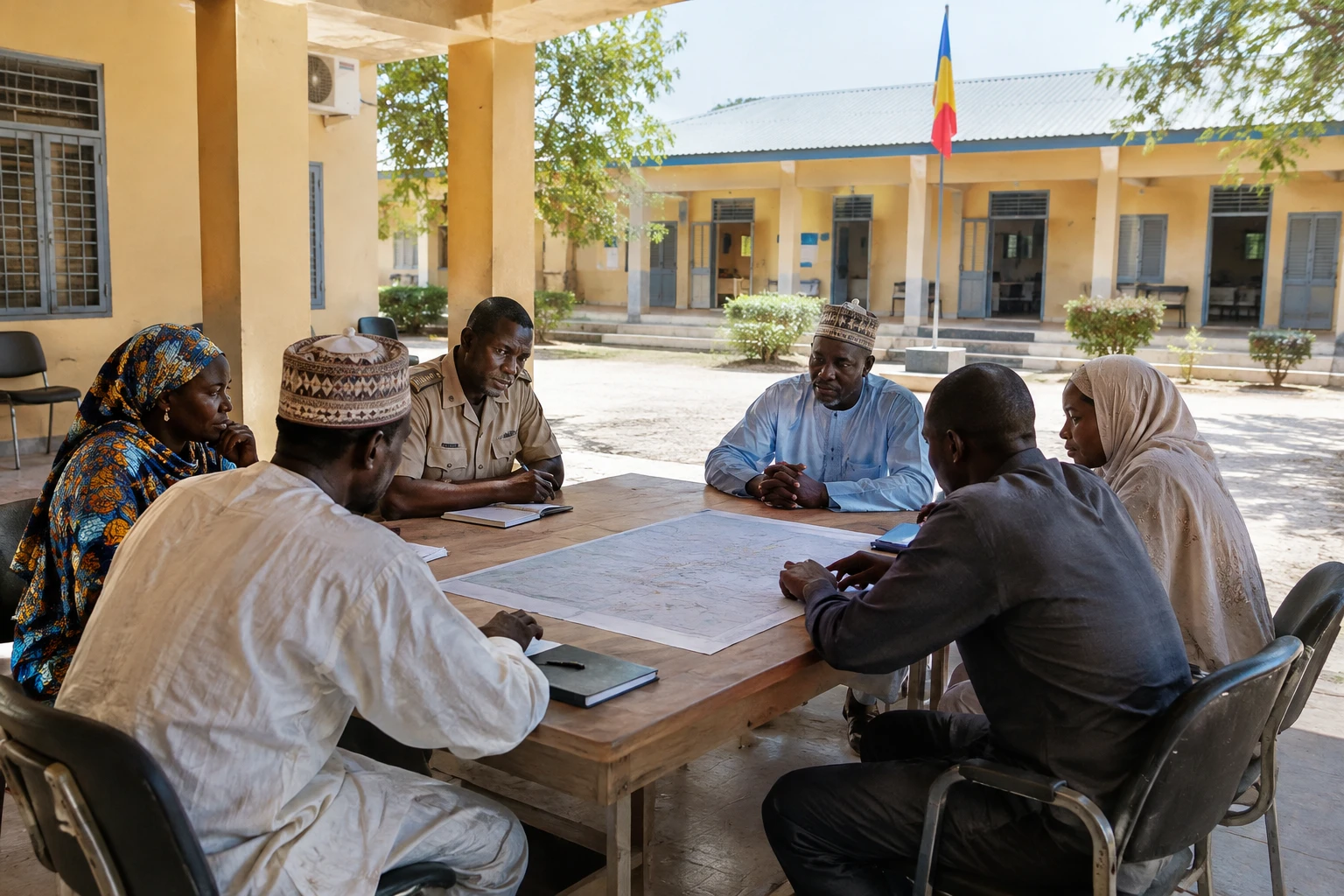
In Salamat, a route used by herds has ended in a heavy human toll. Beyond the clash itself, the episode raises a practical question for Chadian villages: how can land and water points be shared when pastoral routes cross fields?
A local dispute in a region under pressure
The violence took place on the night of Sunday 18 to Monday 19 October 2026, near Kouzi-Wahit, in the Mouraye sub-prefecture, Bahr-Azoum department. Salamat lies in south-eastern Chad, near the provinces of Sila and Ouaddaï, as well as the borders with Sudan and the Central African Republic.
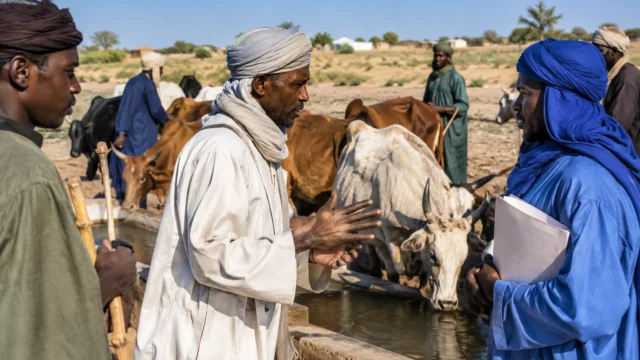
In this part of the country, farming and livestock rearing are essential activities, but both depend on the same land. Crops occupy the land for part of the year. Herds, meanwhile, move according to the seasons, access to pasture and the availability of water. A transhumance corridor is a route set aside or recognised to enable these movements. When its course is disputed, or animals cross cultivated plots, a local disagreement can quickly pit communities against one another.
Just days earlier, however, Salamat had seen an initiative promoting peaceful coexistence between farmers and herders in Bahr-Azoum department. This contrast highlights the limits of one-off meetings: they can open dialogue, but cannot by themselves resolve land disputes, demarcate routes or determine access to ponds.
Toll remains provisional as circumstances are investigated
At least 12 people were killed in the clash. Chadian authorities, cited by the Anadolu Agency, also reported three people seriously injured. Another local account puts the number of seriously injured at eight. The figures differ, so the number of injured should remain attributed and subject to change.
The first available information links the violence to a dispute over the passage of herds and the route of a transhumance corridor. At this stage, it does not make it possible to reconstruct precisely how the clash began or establish individual responsibility. Administrative authorities, provincial officials, judicial representatives and security forces travelled to the area to restore calm and assess the situation.
Published accounts do not all agree on the identity of the victims or the exact sequence of events. It is therefore preferable not to present as established claims that one group was particularly affected. The detailed circumstances and final toll remain to be confirmed.
Caution is also warranted over climate-related causes. Low rainfall can reduce available resources and shift pastoral routes, but the information available does not show that the rainfall deficit caused this particular clash. Farmers in the province nevertheless described in September the difficulties their crops faced because of scarce rainfall. This sheds light on pressure on livelihoods, without establishing a direct link to the violence.
Prevention mechanisms put to the test
The dispute involves immediate interests. For farming households, a damaged plot can jeopardise a harvest and the income it brings. For herders, a closed or impassable route can make it harder to reach pasture and water. In both cases, the consequences extend beyond those directly involved: local markets, relations between villages and seasonal movement can also be affected.
The response, therefore, cannot be limited to deploying security forces after the event. It also depends on rules that are understood locally: identified corridors, crossing schedules, procedures for compensation in the event of damage, and accessible mediation before tensions escalate. Traditional leaders, local authorities and community representatives can play a role in these arrangements, provided decisions are followed through and each party can make its interests heard.
A recent precedent underlines what is at stake. In June 2025, another communal confrontation in Mouraye reportedly left around 10 people dead, according to press reports. The available information is insufficient to establish a direct link between the two episodes. Their proximity nevertheless serves as a reminder that tensions over land and resources require sustained monitoring, not just intervention after each crisis.
Nationally, the violence forms part of a broader context of local conflicts. The United Nations Office for the Coordination of Humanitarian Affairs recorded 35 violent incidents resulting in casualties in Chad in the first half of 2026, with 81 deaths and 167 people injured. The agency said intercommunal conflicts accounted for 66% of the recorded cases. These figures cover several types of incident and should not be confused with a tally of conflicts between farmers and herders alone.
A Chadian and regional issue
Chad is a member of the Central African Economic and Monetary Community (CEMAC), which brings together six states through economic and monetary ties. But the management of pastoral movements and local conflicts is primarily the responsibility of Chadian authorities and the communities concerned. Proximity to Sudan and the Central African Republic nevertheless makes a regional approach to movements and border security important, although the available information does not allow these conflicts to be attributed to an external cause.
For N’Djamena, the challenge is to bring security, mediation and access to resources together. For the people of Salamat, the question is more immediate: being able to farm, move herds and access water without every dispute turning into a confrontation. The next developments to watch are confirmation of the toll, the authorities’ findings on the circumstances and the concrete measures taken to clarify or secure pastoral routes.
Information on the clash and the toll was cross-checked against reports by the Anadolu Agency, Panorama Papers and the Chadian news outlet Le N’Djam Post. The context of low rainfall was reported by Tchadinfos; the national figures for the first half of the year come from an Anadolu Agency report.