Algeria
 Egypt
 Libya
 Morocco
 Sudan
 Tunisia
 Benin
 Burkina Faso
 Cabo Verde
 Côte d'Ivoire
 Ghana
 Guinea
 Guinea-Bissau
 Liberia
 Mali
 Mauritania
 Niger
 Nigeria
 Senegal
 Sierra Leone
 The Gambia
 Togo
 Cameroon
 Central African Republic
 Chad
 DR Congo
 Equatorial Guinea
 Gabon
 Republic of the Congo
 São Tomé and Príncipe
 Burundi
 Comoros
 Djibouti
 Eritrea
 Ethiopia
 Kenya
 Madagascar
 Malawi
 Mauritius
 Mozambique
 Rwanda
 Seychelles
 Somalia
 South Sudan
 Tanzania
 Uganda
 Angola
 Botswana
 Eswatini
 Lesotho
 Namibia
 Zambia
 Zimbabwe
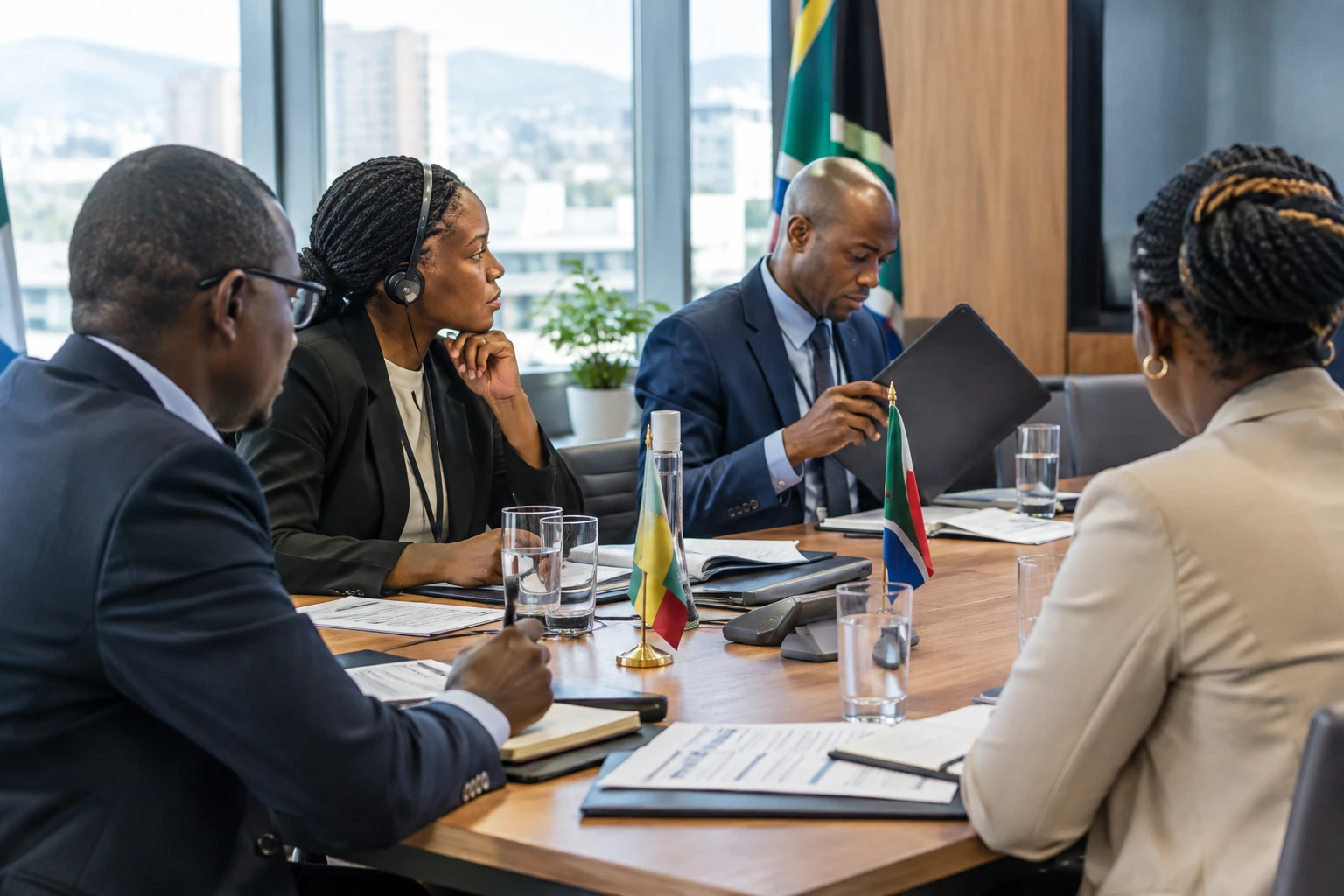
For South African businesses selling cars, car parts or agricultural products to the United States, the question is not just where to find other customers. They also need to know whether US trade rules will remain predictable. On 19 October 2026, Cyril Ramaphosa asked his government to prepare for the possible exclusion of South Africa from AGOA, the US programme that grants tariff benefits to certain products from sub-Saharan Africa.
An agreement extended, but access remains conditional
AGOA, or the African Growth and Opportunity Act, has opened the US market to a range of products from eligible African countries duty-free since 2000. The US Congress has extended the scheme until 31 December 2028. But the extension does not guarantee that every country will remain in it: the US executive can withdraw a country’s beneficiary status if it considers that the country no longer meets the criteria set out in the law.
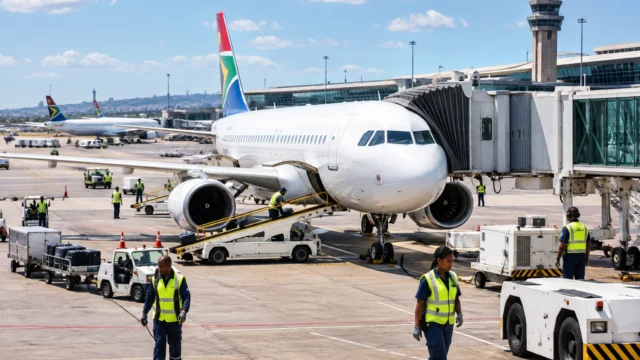
South Africa is an important beneficiary. According to the US Congressional Research Service, in 2024 it was the leading African supplier of non-oil AGOA products. Passenger vehicles and their parts accounted for 64% of its exports eligible under the agreement that year. These figures illustrate the industrial stakes, but do not mean that all South African exports to the United States depend on AGOA.
The political context is nevertheless complicating trade relations. Since Donald Trump’s return to the White House, Washington and Pretoria have clashed over several issues. The US administration has, in particular, made allegations of discrimination against Afrikaners, which the South African authorities have rejected. Tensions have also been fuelled by diplomatic disagreements and US trade measures.
Ramaphosa prepares several options
At a meeting with journalists in Johannesburg on Monday 19 October, the South African president presented possible exclusion as a risk to anticipate, not as a decision already made. He said the consequences could be “devastating”, while calling for possible effects and alternatives to be examined now. The government, he said, is continuing its discussions with Washington in parallel.
This caution comes as AGOA has changed status several times. The programme expired in September 2025 before being reinstated retroactively in February 2026, initially until the end of that year. Congress subsequently passed an extension until the end of 2028. The duration of the agreement and Pretoria’s eligibility are therefore two separate questions: the programme can continue to exist while a particular country risks being excluded from it.
Moreover, AGOA preferences should not be confused with the general tariffs imposed by Washington. Even a beneficiary country can face other surcharges. Pretoria announced a strategy in 2025 combining negotiations with the United States, market diversification, business support and the defence of local industry. The prospect of exclusion makes this strategy more urgent, without making alternative markets immediately accessible.
China appeals, but cannot replace a market overnight
Ramaphosa cited China as one avenue for diversification. Beijing has extended its duty-free access scheme to exports from African countries with which it has diplomatic relations. South Africa is among the countries concerned, subject to compliance with rules of origin and customs formalities. This opening could create opportunities, but it does not guarantee that South African exporters will find buyers or that their sales will make up for those lost in the United States.
The relationship with Beijing also has its own imbalances. China has become South Africa’s leading trading partner, but South African authorities and industry players have voiced concern about the gap between exports and imports. Local manufacturers have also criticised competition from Chinese products in the domestic market. Diversifying sales towards China could therefore help some exporters while increasing pressure on other sectors.
The impact of exclusion would also be uneven. Manufacturers and suppliers geared towards the United States might have to review their contracts, prices or supply chains. Workers in these industries would be exposed if orders fell. By contrast, large companies able to redirect their goods or negotiate across several markets have more room to manoeuvre than small producers and subcontractors.
A South African issue, a regional signal
For Pretoria, the response is not limited to Washington or Beijing. South Africa can also seek markets in the Southern African Development Community (SADC), the regional organisation that promotes economic cooperation among its members, as well as in the African Continental Free Trade Area (AfCFTA), which is intended to facilitate trade between African countries. But these frameworks cannot replace access to the US market in the short term for exports already organised around specific industrial supply chains.
The issue therefore goes beyond a face-off between two capitals. For other African beneficiary countries, the South African case is a reminder that trade preferences also depend on political decisions and eligibility criteria administered by Washington. The next developments to watch are twofold: the US executive’s position on Pretoria’s status, and the practical terms of AGOA’s extension until 2028. Until then, South African businesses will have to contend with political uncertainty on top of tariffs and competitive pressures.
Sources cross-checked: African Press Agency (APA), Daily Maverick, the US legislation extending AGOA, the South African Revenue Service and the South African government on its trade response.