
 Algeria
 Egypt
 Libya
 Morocco
 Sudan
 Tunisia
 Benin
 Burkina Faso
 Cabo Verde
 Côte d'Ivoire
 Ghana
 Guinea
 Guinea-Bissau
 Liberia
 Mali
 Mauritania
 Niger
 Senegal
 Sierra Leone
 The Gambia
 Togo
 Cameroon
 Central African Republic
 Chad
 DR Congo
 Equatorial Guinea
 Gabon
 Republic of the Congo
 São Tomé and Príncipe
 Burundi
 Comoros
 Djibouti
 Eritrea
 Ethiopia
 Kenya
 Madagascar
 Malawi
 Mauritius
 Mozambique
 Rwanda
 Seychelles
 Somalia
 South Sudan
 Tanzania
 Uganda
 Angola
 Botswana
 Eswatini
 Lesotho
 Namibia
 South Africa
 Zambia
 Zimbabwe
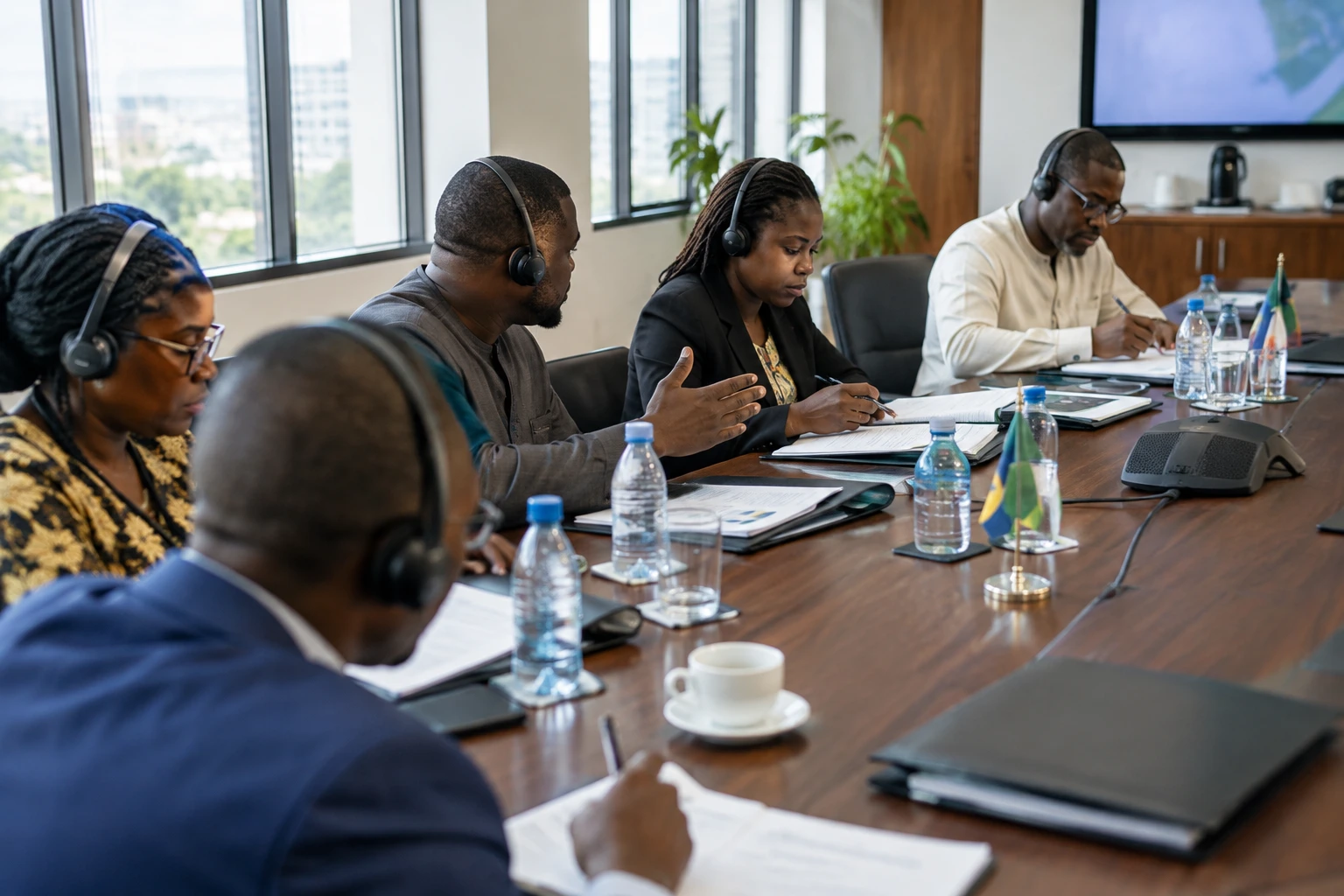
A case detected in Abuja is a reminder that an epidemic does not stop at borders. Nigeria’s immediate challenge is to trace people who may have been exposed quickly, while protecting health workers and keeping healthcare services accessible.
One patient isolated, 44 contacts identified
On Tuesday 20 October 2026, Nigeria’s Health Minister, Muhammad Ali Pate, announced the laboratory confirmation of an Ebola case in Abuja, the capital. The patient, a woman who recently arrived from Uganda, was treated at a private facility and placed in isolation. Authorities have begun monitoring 44 people who had been in contact with her, according to the minister and the Nigeria Centre for Disease Control and Prevention (NCDC). Nigerian public television reports the authorities’ announcement.
These 44 people are identified contacts, not confirmed cases. Monitoring is intended to help health teams quickly detect any possible symptoms and direct anyone concerned for examination. In the information available, the authorities have not publicly detailed how the contacts are divided among medical staff, patients, relatives and travellers.
The government has asked public and private health facilities to step up their vigilance. Detection, isolation, laboratory testing and infection prevention in medical facilities are at the heart of the response. For health workers, this means recognising possible symptoms and limiting exposure while providing care.
A regional warning, but not yet proof of local transmission
The Nigerian case was announced as an Ebola outbreak caused by the Bundibugyo virus is affecting the Democratic Republic of the Congo (DRC) and has led to imported cases in neighbouring countries. As of 6 October, the World Health Organization (WHO) said the DRC had recorded 8,728 confirmed cases and 4,205 confirmed deaths. These figures, which predate the Nigerian announcement, should not be confused with the higher toll cited in some reports on 19 October. The WHO report details the epidemiological situation in the DRC.
Kenya also reported a ninth confirmed case on 20 October, according to Kenyan health authorities, while the WHO had documented a first imported case in the country earlier in the month. This confirms the cross-border movement of infected or exposed people. But the Nigerian patient’s recent journey alone is not enough to establish where she contracted the virus or whether she transmitted the infection to anyone else. The latest on the ninth case reported in Kenya.
The NCDC had stepped up Nigeria’s preparedness after an imported case emerged in Kenya, in co-ordination with the Federal Ministry of Health, state authorities and services responsible for border health. The centre had then noted that no cases had been confirmed in Nigeria as of 6 October. The announcement on 20 October therefore marks a concrete change in the national situation, not retrospective confirmation of community transmission. The NCDC notice outlines the preparedness measures put in place.
The challenge: contain the risk without disrupting healthcare
Surveillance depends as much on laboratory capacity as on public trust. People who may have been exposed must be able to report symptoms and follow instructions without being stigmatised. Facilities, for their part, must apply appropriate protective procedures. An early warning makes it possible to act more quickly; imprecise communication, by contrast, can fuel fear or delay people seeking care.
The effects are not distributed in the same way. In Abuja, the priority is the investigation around the patient and the protection of medical teams. In other parts of Nigeria, vigilance must rely on local health facilities and referral pathways to centres capable of isolating and testing suspected cases. Travel between states and air links make national co-ordination necessary, but do not in themselves justify general restrictions.
The 2014 outbreak remains an important reference point, but not an automatic scenario. During the West African epidemic, Nigeria contained an introduction of the virus through case identification and contact tracing. The current context is different: the outbreak in the DRC is more extensive, and several countries are now monitoring imported cases. The NCDC had specifically highlighted preparedness, early detection and contact tracing as pillars of the response.
A test of co-ordination for West Africa
Nigeria is a member of the Economic Community of West African States (ECOWAS), which facilitates regional co-operation, particularly in health emergencies. The current epidemic also involves countries in Central and East Africa, so the response cannot rely on a single regional organisation. Rapid information-sharing between ministries, public health institutes and continental mechanisms, including Africa CDC, is becoming essential when travellers connect several outbreak zones.
For Abuja, the next decisive indicator will be the outcome of monitoring the 44 contacts: how many can be reached, how many will complete their monitoring period and whether new cases emerge. At the regional level, authorities will also need to track the evolution of cases in Kenya and the DRC, as well as diagnostic and treatment capacity. For now, one confirmed case in Nigeria calls for a swift and measured response; on its own, it does not support a conclusion that wider local spread is under way.



