Algeria
 Egypt
 Libya
 Morocco
 Sudan
 Tunisia
 Benin
 Burkina Faso
 Cabo Verde
 Côte d'Ivoire
 Ghana
 Guinea
 Guinea-Bissau
 Liberia
 Mali
 Mauritania
 Niger
 Nigeria
 Senegal
 Sierra Leone
 The Gambia
 Togo
 Cameroon
 Central African Republic
 Chad
 DR Congo
 Equatorial Guinea
 Gabon
 Republic of the Congo
 São Tomé and Príncipe
 Burundi
 Comoros
 Djibouti
 Eritrea
 Ethiopia
 Madagascar
 Malawi
 Mauritius
 Mozambique
 Rwanda
 Seychelles
 Somalia
 South Sudan
 Tanzania
 Uganda
 Angola
 Botswana
 Eswatini
 Lesotho
 Namibia
 South Africa
 Zambia
 Zimbabwe
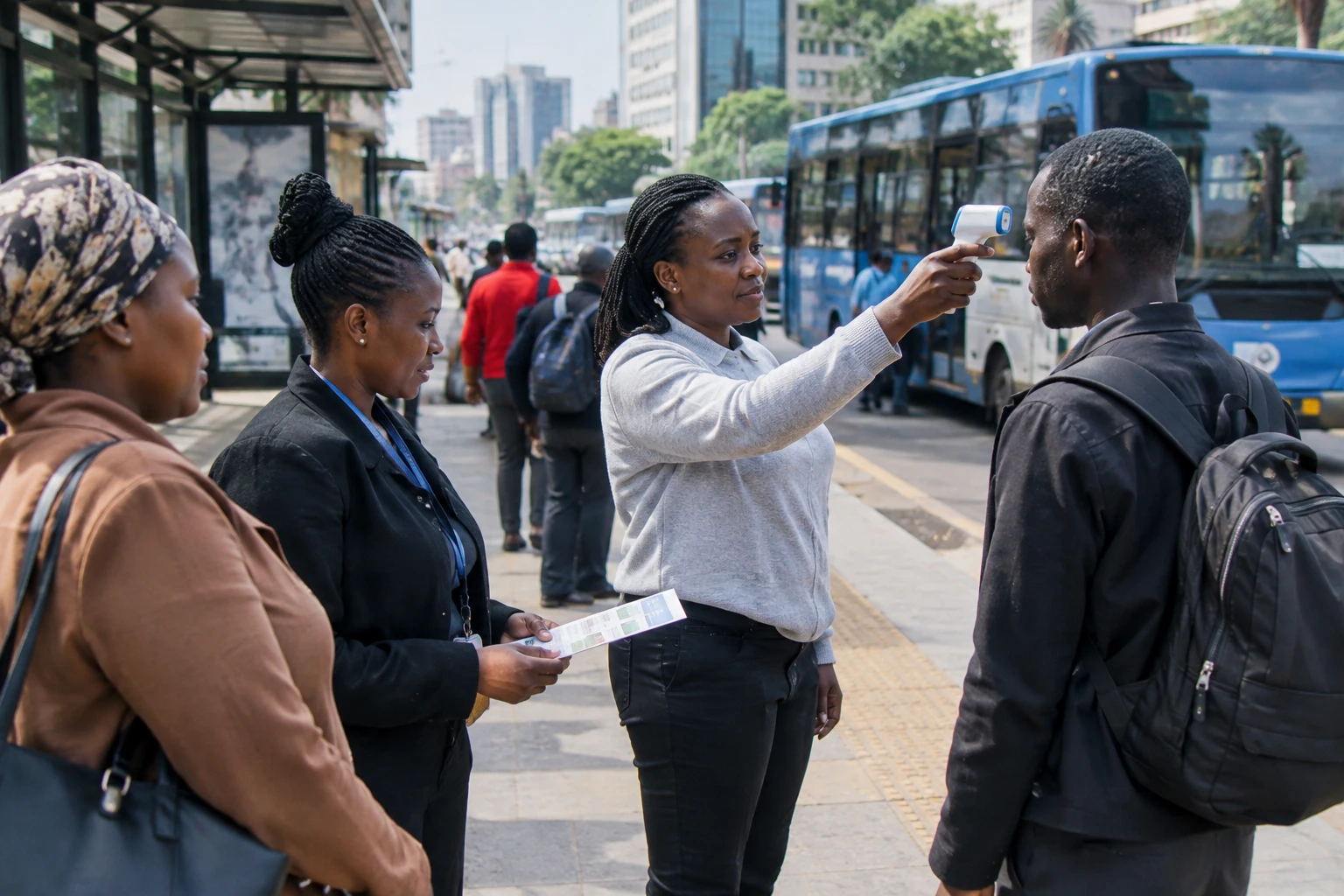
In Nairobi, contact tracing has become the main line of defence against wider transmission. Kenya confirmed an eighth Ebola case on Sunday 18 October, as authorities monitored people exposed to the first patient, who died in the capital on 5 October.
Infections under close surveillance
The new patient is a 49-year-old man. He has symptoms including fever, headaches and muscle pain. A hospital attendant, he is believed to have been in contact with the first patient, according to information released by Kenya’s health authorities.
This brings the number of confirmed infections in Kenya since the start of the month to eight. The first patient, a Kenyan who had returned from the Democratic Republic of the Congo (DRC), died in Nairobi on 5 October. Subsequent cases were linked to contact with him. As of 18 October, authorities had reported no known community transmission. This situation remains under observation: the absence of an identified case outside the chains of contact is not enough to rule out undetected transmission.
Health monitoring covers 130 identified contacts. On 18 October, 128 of them were in quarantine, while two were still being sought. Quarantine makes it possible to monitor for symptoms during the period of risk and limit contact if someone falls ill. Authorities have also stepped up checks at the country’s points of entry and put particular surveillance measures in place at Nairobi’s main airport.
Details of the eighth case and the tally of contacts were reported by separate sources, including the Associated Press and Kenyan daily The Standard. The World Health Organization (WHO) is also monitoring Kenya’s response and stresses the importance of quickly identifying cases and their contacts.
A regional epidemic linked to the Bundibugyo strain
Kenya’s first case was linked to the Bundibugyo virus disease epidemic in the DRC. This strain belongs to the Ebola virus family. It is transmitted mainly through direct contact with the blood or other bodily fluids of an infected person, or with contaminated objects. Border checks can help identify suspected cases, but contact tracing and the ability of health facilities to detect and isolate patients quickly remain essential.
In the DRC, the epidemic, declared in May 2026, has spread to several provinces, including Ituri, one of the main hotspots, and Nord-Ubangi, near the border with the Central African Republic. The WHO describes it as a public health emergency of international concern, calling for coordination beyond national borders. Tallies change as investigations and checks proceed: figures cited in initial reports should therefore not be presented as a definitive count without a reference date.
The Bundibugyo strain poses a particular challenge for medical teams. Vaccines and treatments authorised for other Ebola strains cannot automatically be assumed to be effective against it. The response therefore relies in particular on early detection, isolation, medical care, protection for healthcare workers and rigorous contact tracing. The WHO documents the outbreak in the DRC and the role of surveillance in its update on Bundibugyo virus disease.
Pressure points in Kenya’s response
The fact that the eighth patient worked in a health facility highlights the possible exposure of staff and other hospital workers. Teams must be able to follow protection protocols, identify symptoms and arrange care without further exposing patients. Clear communication also matters: it helps people who may have been in contact with a patient to report their situation without facing stigma.
The measures do not affect everyone in the same way. Travellers may face additional checks at airports and border posts. Healthcare workers, meanwhile, face increased occupational risk and a heavy surveillance workload. For people in quarantine, instructions must be accompanied by medical monitoring and accessible information. Across health services, the mobilisation of Ebola teams must also coexist with routine care.
Kenya is a transport hub in East Africa. Nairobi accounts for a significant share of air links and national institutions, while land routes connect the country with its neighbours. This geography justifies vigilance at the borders, but does not mean that all journeys or regions carry the same level of risk. The challenge is to target checks and maintain essential exchanges while quickly detecting suspected cases.
Vigilance beyond the borders
The response also has a regional dimension. Kenya is a member of the East African Community (EAC), an organisation bringing together several neighbouring countries and coordinating shared issues, including health and economic matters. An outbreak that crosses borders requires information-sharing, compatible surveillance systems and cooperation between health services. The WHO says the spread of the virus in the DRC has already led to stronger regional coordination.
For now, the key figure in Kenya is not just the total number of cases: it is the ability to trace and monitor exposed people, protect healthcare workers and quickly identify any chain of transmission. Further information about contacts still being sought, patients’ condition and any cases with no established link will help provide a clearer picture of how the situation is evolving.
The outbreak is also a reminder that a regional health alert does not stop at the border of the country where it emerges. For Nairobi and its East African partners, the quality of coordination, trust in health guidance and rapid circulation of verified information will be crucial to containing risks without fuelling fear.