Algeria
 Egypt
 Libya
 Morocco
 Sudan
 Tunisia
 Benin
 Burkina Faso
 Cabo Verde
 Côte d'Ivoire
 Ghana
 Guinea
 Guinea-Bissau
 Liberia
 Mali
 Mauritania
 Niger
 Nigeria
 Senegal
 Sierra Leone
 The Gambia
 Togo
 Central African Republic
 Chad
 DR Congo
 Equatorial Guinea
 Gabon
 Republic of the Congo
 São Tomé and Príncipe
 Burundi
 Comoros
 Djibouti
 Eritrea
 Ethiopia
 Kenya
 Madagascar
 Malawi
 Mauritius
 Mozambique
 Rwanda
 Seychelles
 Somalia
 South Sudan
 Tanzania
 Uganda
 Angola
 Botswana
 Eswatini
 Lesotho
 Namibia
 South Africa
 Zambia
 Zimbabwe
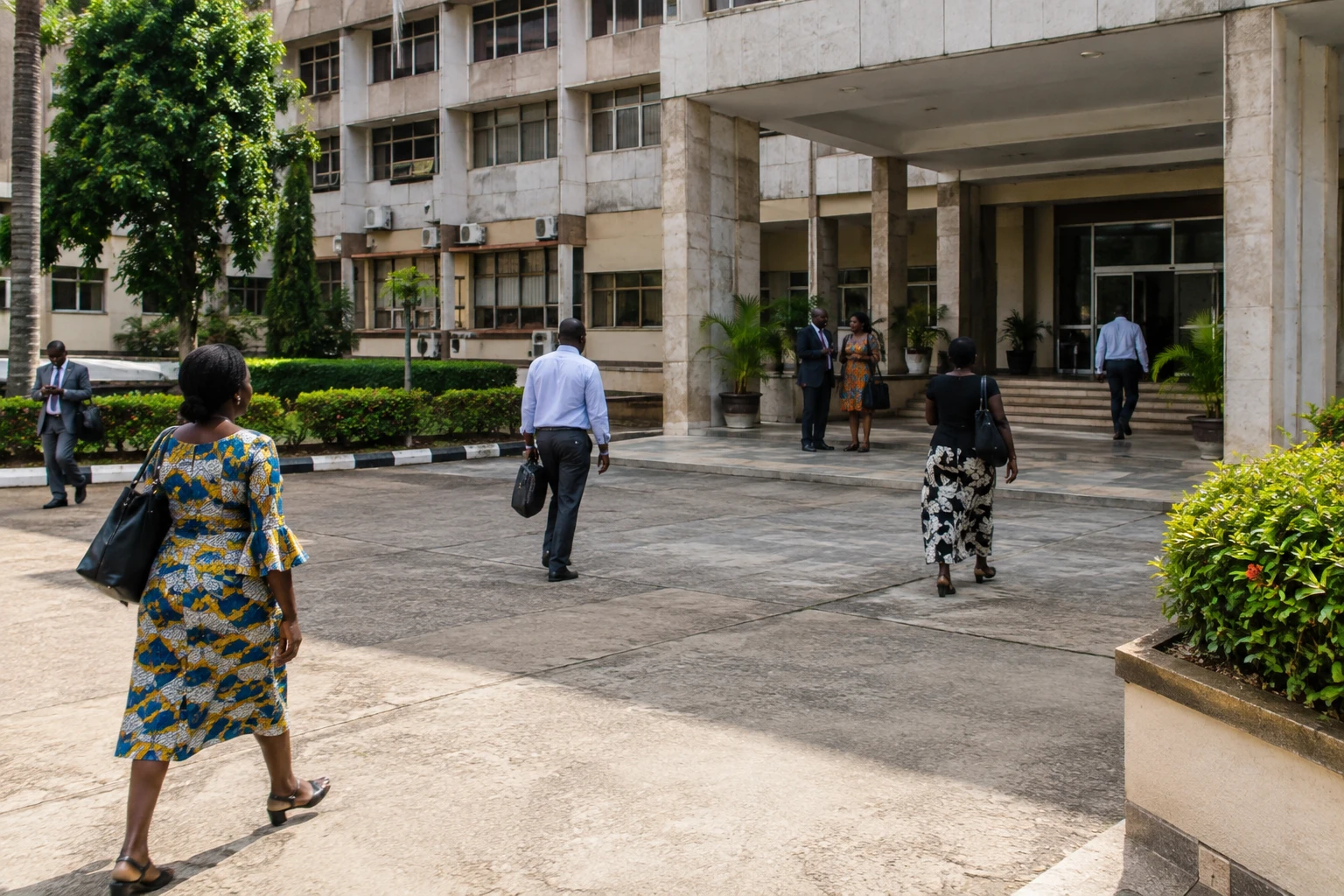
A novel cannot decide an election or replace an investigation. But it can make visible the effects of power on families, careers and the choices of those who live with its decisions. That is the wager of Cameroonian writer Hemley Boum in Nos vies sauvages, a work of fiction that makes women’s trajectories resonate with Cameroon’s political tensions.
When politics enters private lives
Published in August 2026 by Gallimard, the novel features several female characters confronted with power relations, compromises and thwarted democratic aspirations. Fiction thus gives a central place to what institutional debates sometimes leave in the shadows: everyday choices, silences and relationships damaged by a long-standing political system. In an interview with Afrique Magazine, Hemley Boum explains the link between collective history and personal experience.
The book is neither a report on the Cameroonian administration nor a documentary chronicle of the presidential election. It is a literary work. Its characters and their journeys are fictional, even when the story echoes identifiable events or political realities. This distinction matters: the novel offers a sensitive reading of the country, not proof of the facts it evokes.
The novelist revisits a long period in the country’s political history. Paul Biya has led Cameroon since 1982. This longevity raises questions of succession, the renewal of the elite and political representation, without by itself summing up Cameroonian society as a whole. In Yaoundé, where the main national institutions are concentrated, these issues take on a direct political dimension. In the regions, their effects mix with diverse experiences, depending on local realities and access to services, jobs and public decision-making.
The 2025 presidential election, a still-sensitive episode
The presidential election was held on 12 October 2025. The Constitutional Council declared Paul Biya the winner on 27 October, with 53.66% of the vote, according to the official results reported at the time. His rival Issa Tchiroma Bakary contested the result and claimed victory. Tensions and demonstrations followed in several cities. The Associated Press reported the announcement of the result and the clashes that followed; a United Nations report on the election period also describes the disputes and calls for mobilisation. Accounts of events and accusations made by the various camps should be attributed to their authors.
This context gives the novel particular resonance, but does not justify conflating its characters with real actors. Above all, it is a reminder that elections are not confined to polling day. Trust in institutions, the ability to challenge a result and citizens’ safety during demonstrations also weigh on democratic life.
Cameroon’s political trajectory cannot be understood solely through relations between the government and the opposition. It is also shaped by the mobilisations of the early 1990s, the evolution of multiparty politics and recurring debates about representation. These landmarks belong to a complex national history. They justify neither reducing the country to a permanent crisis nor presenting its institutions as beyond criticism.
Different effects for different actors and regions
For political leaders, the longevity of those in power raises the question of succession and of institutions’ ability to bring about renewal. For opposition groups, it highlights the difficulties of building common strategies and securing recognition for their demands within a contested electoral framework. For citizens, the issues translate more concretely into trust in the vote, freedom of expression and the possibility of taking part in public life without fear.
The consequences are not the same from one region to another. The capital, Yaoundé, is home to the centre of the state, while Douala accounts for a large share of economic activity and trade. People in other cities and rural areas, meanwhile, face different realities in terms of infrastructure, employment and access to public services. Workers in the informal economy, numerous in urban centres, are particularly exposed to disruption during periods of tension and days of mobilisation. It would, however, be excessive to attribute a uniform experience to them.
Hemley Boum’s focus on women also broadens the political question. The female characters are not merely witnesses to decisions made by others. Their choices, alliances and disagreements shape the narrative. This approach invites consideration of women’s place in institutions, social movements and the spaces where power relations are negotiated, without suggesting that a novel can represent every Cameroonian experience.
Regional resonance, without conflating different trajectories
Cameroon is a member of the Economic and Monetary Community of Central Africa (CEMAC), which brings together six states in economic and monetary cooperation. This membership places the country within a regional grouping, but does not mean its political debates are interchangeable with those of its neighbours. Cameroon’s institutional choices remain primarily national; their effects may nevertheless matter in regional discussions about stability, the movement of people and cooperation between states.
The novel thus connects with a broader question: how does a society preserve its aspirations when the same leaders and networks remain in the foreground for a long time? This question runs through several countries on the continent, but the answers vary according to their history, institutions and power dynamics. Cameroon should be understood on its own trajectory, rather than treated as an automatic symbol of all Central Africa.
The book’s significance ultimately lies in this connection between the intimate and the political. It does not predict the country’s future or propose an institutional programme. It tells the story of how power can weigh on people’s lives, while leaving readers to assess the gap between individual experience, collective memory and public discourse. After the contested 2025 presidential election, the next stages in institutional life and the ability of those involved to maintain a space for peaceful debate will remain decisive.