Algeria
 Egypt
 Libya
 Morocco
 Sudan
 Tunisia
 Benin
 Burkina Faso
 Cabo Verde
 Côte d'Ivoire
 Ghana
 Guinea
 Guinea-Bissau
 Liberia
 Mali
 Mauritania
 Niger
 Nigeria
 Senegal
 Sierra Leone
 The Gambia
 Togo
 Cameroon
 Central African Republic
 Chad
 DR Congo
 Equatorial Guinea
 Gabon
 Republic of the Congo
 São Tomé and Príncipe
 Burundi
 Comoros
 Djibouti
 Eritrea
 Ethiopia
 Madagascar
 Malawi
 Mauritius
 Mozambique
 Rwanda
 Seychelles
 Somalia
 South Sudan
 Tanzania
 Uganda
 Angola
 Botswana
 Eswatini
 Lesotho
 Namibia
 South Africa
 Zambia
 Zimbabwe
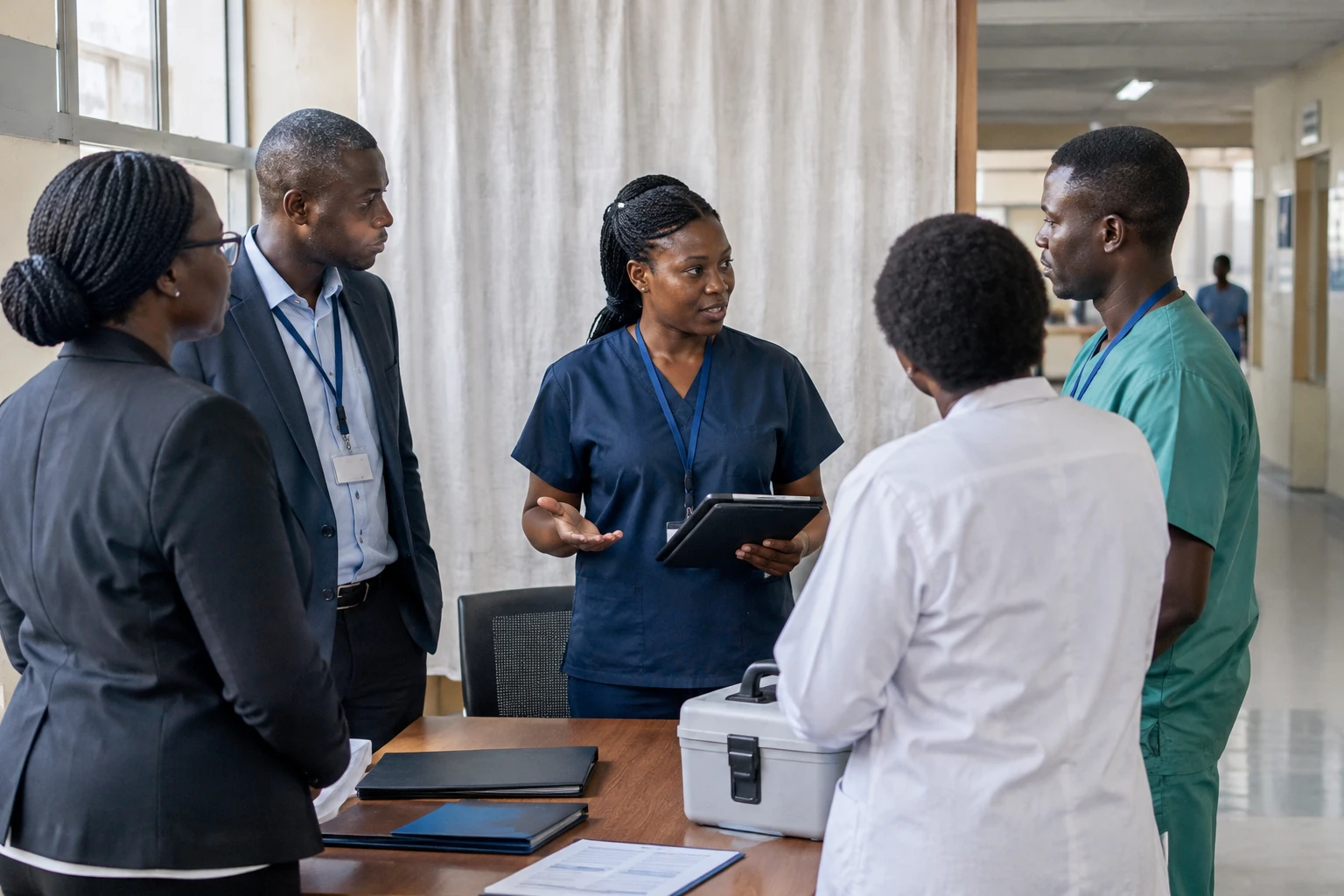
In Nairobi, the response to Ebola is also playing out far from isolation wards: in the monitoring of close contacts, healthcare settings and travel between countries. Kenya’s third case, detected in a woman already in quarantine, is testing health services’ ability to break chains of transmission without disrupting everyday life.
A chain of contacts tracked from Nairobi
Kenya’s Ministry of Health confirmed a third Ebola virus infection on Friday 16 October 2026. The patient, aged 65, is a close relative of the first two patients. She had been in quarantine since 6 October. After developing symptoms, including a fever and sore throat, she was isolated and tested positive. The authorities say she is receiving care. The World Health Organization (WHO) confirms that she fell ill while already in quarantine.
All three cases are linked to the first patient, a Kenyan who returned from the Democratic Republic of the Congo (DRC). He died in Nairobi on 5 October after testing positive. His journey took him through Uganda before he arrived in the Kenyan capital. The second case, a 39-year-old man from the same family, was announced on 14 October. Kenya’s health authorities and the WHO describe the two subsequent infections as cases detected among monitored contacts, rather than evidence of community transmission.
According to figures released by the ministry, 130 people were identified as contacts of the first patient. By 16 October, 127 had been traced and placed in quarantine, representing 97.7% of the total. The remaining three had yet to be located. The ministry says no community transmission has been observed. This assessment describes the known situation on that date; it depends on the ongoing identification of exposed people and test results.
A cross-border outbreak, a specific virus
The outbreak behind the imported case is taking place in the DRC, where the Bundibugyo virus has been identified. In its situation report of 8 October, the WHO had already reported that the outbreak was spreading in the east of the country. Figures change as investigations and laboratory confirmations proceed: it is therefore better to distinguish dated updates from figures released by the Congolese authorities, rather than cite a total here that may no longer reflect the situation on the day.
Bundibugyo is a distinct strain from the Ebola viruses targeted by some existing vaccines. As of 16 October, the WHO says there is no licensed vaccine or specific licensed treatment for this strain; trials are under way in the DRC. Care relies in particular on clinical management and support for vital functions. This distinction matters: “Ebola” refers to several related viruses, and the medical tools available are not automatically interchangeable from one strain to another.
The first patient’s journey also shows that public health borders do not coincide with national borders. He left the DRC, travelled through Kampala and then flew to Nairobi. Kenya shares busy road and air links with several countries in the region. In this area, surveillance depends as much on the work of local teams as on the rapid flow of alerts between capitals, border posts and hospitals.
Monitoring people is central to the response
Quarantining close contacts before symptoms appear gives teams a practical opportunity: to detect infections quickly and limit contact during the monitoring period. But tracing every exposed person takes time and staff. Family members, healthcare workers and travellers linked to the first case face different constraints. For people in isolation, access to care, information and everyday necessities must accompany public health instructions.
The response also draws on resources beyond hospital services. The WHO reports that Kenya had prepared its response since May 2026 and that nearly 5,000 health workers had been trained to recognise the disease and provide care safely. The country has also stepped up screening at points of entry. These measures must protect patients and staff without treating travellers as suspects or indiscriminately blocking trade, which is essential to economic activity in Nairobi and the regions.
Public communication plays an equally practical role. Clear messages about symptoms, what to do and how to report cases can encourage people to seek care early. By contrast, imprecise information risks fuelling fear or stigmatising families and people returning from the DRC. Trust therefore depends on consistency between official announcements, accessible services and respect for confidentiality.
A challenge for East Africa
Kenya is a member of the East African Community (EAC), a regional organisation bringing together countries linked by frequent trade and travel. In this context, Nairobi cannot manage the alert alone. Coordination with Uganda and the DRC, as well as with regional bodies and the WHO, makes it possible to share information on contacts and cross-border movements. The African Union, through its health institutions, also has a role in continental preparedness and coordination.
Uganda’s recent experience shows the importance of regional monitoring in an outbreak that crosses borders. The WHO had declared the country free of this infection at the end of August, before the new imported case in Kenya brought the issue of travel surveillance back into focus. This does not mean the two situations are identical: authorities must rely on each country’s own epidemiological data and update their measures according to the contacts actually identified.
In the short term, the indicators to watch are the outcome of efforts to trace the three contacts still being sought, the health of the two patients receiving treatment and any emergence of cases with no known link to the first family. As of 16 October, the available information describes three linked cases and no reported community transmission, according to Kenya’s authorities. The strength of this assessment will be measured by the continuity of contact tracing and the rapid sharing of data between Kenya, its neighbours and regional health teams.