Algeria
 Egypt
 Libya
 Morocco
 Sudan
 Tunisia
 Benin
 Burkina Faso
 Cabo Verde
 Côte d'Ivoire
 Ghana
 Guinea
 Guinea-Bissau
 Liberia
 Mali
 Mauritania
 Niger
 Nigeria
 Senegal
 Sierra Leone
 The Gambia
 Togo
 Cameroon
 Central African Republic
 Chad
 DR Congo
 Equatorial Guinea
 Republic of the Congo
 São Tomé and Príncipe
 Burundi
 Comoros
 Djibouti
 Eritrea
 Ethiopia
 Kenya
 Madagascar
 Malawi
 Mauritius
 Mozambique
 Rwanda
 Seychelles
 Somalia
 South Sudan
 Tanzania
 Uganda
 Angola
 Botswana
 Eswatini
 Lesotho
 Namibia
 South Africa
 Zambia
 Zimbabwe
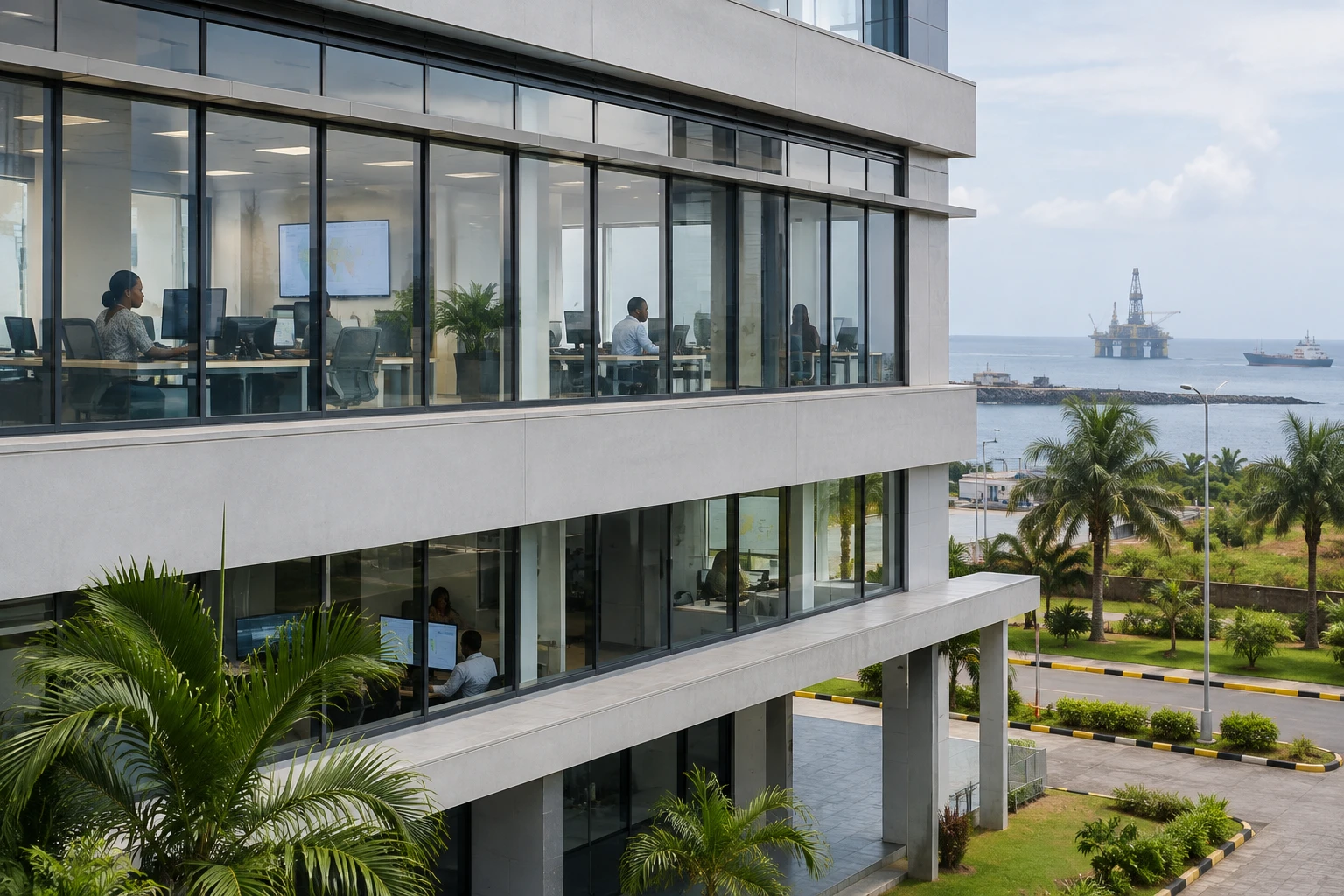
At Dussafu, off the coast of Gabon, the bet is not measured solely in oil discovered. It will also depend on the ability to turn these reserves into steady volumes, as production from the permit has slowed markedly since 2025.
BW Energy is banking on an expanded drilling campaign and facilities already in place. The stakes extend beyond the operator: oil remains a major resource for Gabon’s public finances, but its benefits also depend on production-sharing arrangements, local activity and revenue management.
Dussafu, a shared asset in an oil-producing region
The Dussafu permit is offshore, in southern Gabon. It is operated by BW Energy, which holds a 73.5% stake. Panoro Energy owns 17.5%, and state-owned Gabon Oil Company holds the remaining 9%. This ownership structure brings together a foreign operator, a private partner and a national company.
Development relies on two complementary facilities. The MaBoMo platform receives production from several wells and sends it by pipeline to the BW Adolo, a vessel that processes, stores and offloads the oil. Reusing this equipment can limit costs and speed up the connection of new wells.
The permit is part of the CEMAC economy, the Economic and Monetary Community of Central Africa, which brings six states together around a regional currency and market. For Gabon, Dussafu matters in a sector where changes in oil production weigh on public revenue and exports. But the effects on everyday economic life are not automatic: they vary according to redistribution mechanisms and the activities that develop around the project.
Two wells pave the way for new producers
On 15 October 2026, BW Energy announced positive results from two appraisal wells, Hibiscus 10P1 and 10P2. An appraisal well helps determine the size and characteristics of an accumulation before a decision is made on whether it can be exploited. The results could support two additional producing wells.
Well 10P2 encountered a 30-metre oil column in the Gamba reservoir. 10P1 intersected a 16-metre column on a separate structure. The operator estimates that the two discoveries could represent between 8 and 9 million recoverable barrels in total. This estimate is a technical projection, not a volume already extracted or sold.
According to data released by the company, the future well associated with 10P2 could produce more than 5,000 barrels per day at start-up. BW Energy also estimates that investment in this well could be recovered in less than a year. These indications remain the operator’s forecasts and will depend, among other things, on actual results after production begins and on economic conditions.
The MaBoMo Phase 2 campaign initially comprises four planned production wells. A fifth is now to target the 10P2 area. The company is aiming for first oil in the first quarter of 2027. Ultimately, it is targeting total production of 30,000 to 45,000 barrels per day for the permit.
The figure should be treated with caution. It is a target for Dussafu as a whole, not the share accruing to BW Energy. The group holds 73.5% of the permit. Moreover, the capacity of the BW Adolo is an operational constraint: overall field production had already approached 40,000 barrels per day in early 2025, according to information available on the project.
Expected growth must first offset the decline
The new wells come after a fall in production. In the second quarter of 2026, BW Energy’s net share of Dussafu stood at 19,300 barrels per day, compared with 26,600 a year earlier. These figures do not represent total field production: they correspond to the share attributed to the company.
This decline gives a sense of the challenge. The new wells will first have to offset the natural decline of some wells and technical interruptions before delivering a sustained increase. BW Energy also plans to replace an electric submersible pump in an existing Hibiscus well. The operation aims to support the flow from an ageing well, while the new drilling builds a production bridge.
For the partners, the attraction is to extend the life of an asset already connected to infrastructure. For Gabon, Gabon Oil Company’s shareholding gives the state a direct stake in the permit. This alone, however, is not enough to determine public revenue or benefits for workers and local businesses: these also depend on the production-sharing contract, costs and volumes actually sold.
The timetable adds another milestone. BW Energy expects first oil from the nearby Bourdon field in the first quarter of 2028. Further appraisal work is planned in the area. Dussafu and Bourdon thus form a phased development programme that relies on existing infrastructure rather than building an entirely new system.
Milestones to watch in Central Africa
The drilling campaign launched in 2026 will show whether the appraisal well results do indeed translate into commercial production. Key milestones will be the start-up planned for 2027, the ramp-up of the new wells and the BW Adolo’s ability to process the additional volumes.
The project is also of interest to Gabon’s regional partners. In an oil-based economy, increased extraction can support exports and revenue, but it does not remove the need to diversify activities. Direct jobs on an offshore project remain concentrated in technical operations; wider effects depend on local procurement, services and the public use of revenues.
In Libreville, the challenge will therefore be as much about production as its economic impact. For BW Energy, the five announced wells offer a route to recovery. For Gabon, their significance will be judged by the volumes actually produced, the revenue generated and how value is shared between the state, partners and the local economy.