Algeria
 Egypt
 Libya
 Morocco
 Sudan
 Tunisia
 Benin
 Burkina Faso
 Cabo Verde
 Côte d'Ivoire
 Ghana
 Guinea
 Guinea-Bissau
 Liberia
 Mali
 Mauritania
 Niger
 Nigeria
 Senegal
 Sierra Leone
 The Gambia
 Togo
 Cameroon
 Central African Republic
 Chad
 DR Congo
 Equatorial Guinea
 Gabon
 São Tomé and Príncipe
 Burundi
 Comoros
 Djibouti
 Eritrea
 Ethiopia
 Kenya
 Madagascar
 Malawi
 Mauritius
 Mozambique
 Rwanda
 Seychelles
 Somalia
 South Sudan
 Tanzania
 Uganda
 Angola
 Botswana
 Eswatini
 Lesotho
 Namibia
 South Africa
 Zambia
 Zimbabwe
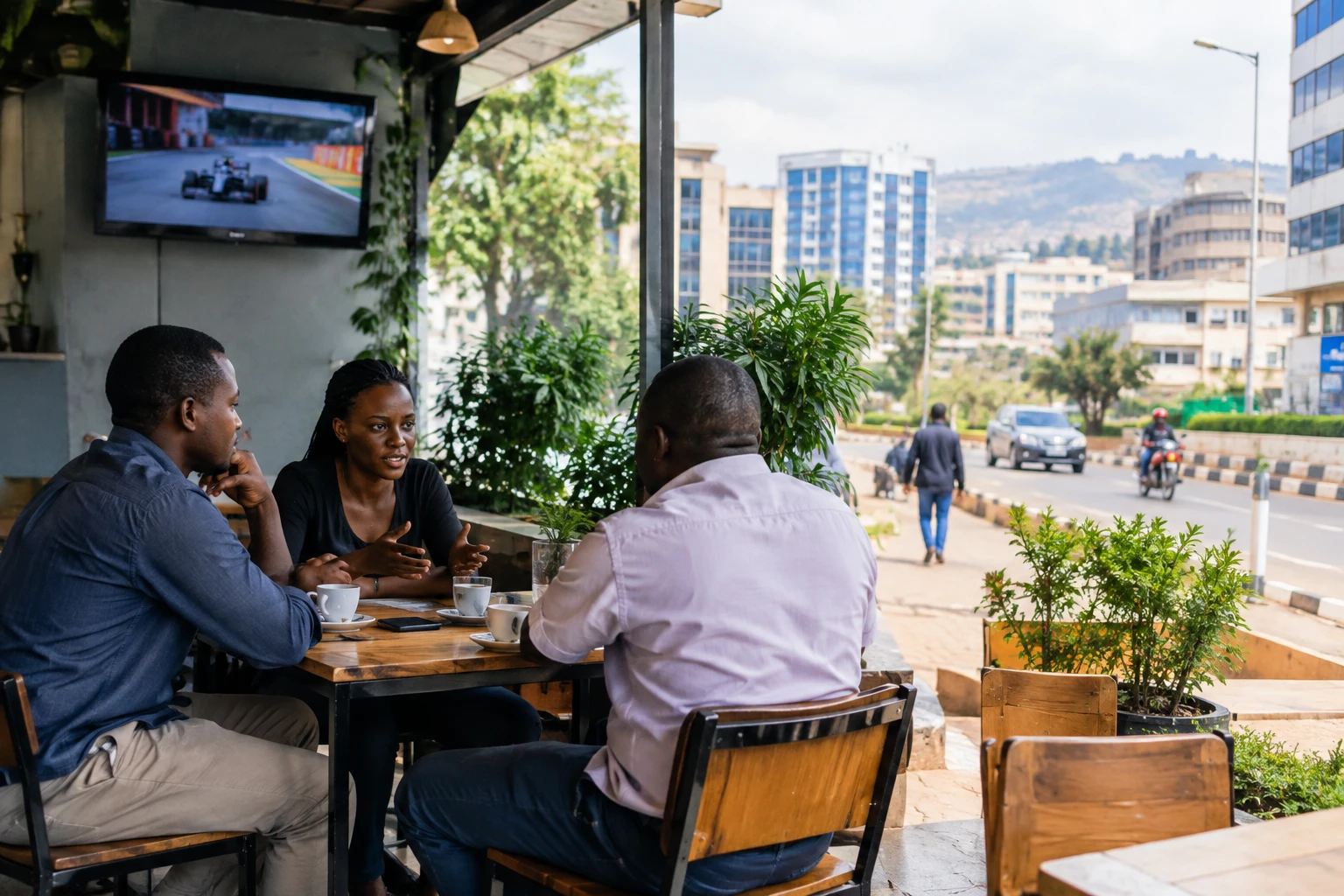
Can a Grand Prix celebrate Formula 1’s return to Africa without becoming entangled in the region’s political tensions? The question came to the fore after a race in Rwanda was announced and challenged by the Democratic Republic of the Congo (DRC), whose government accuses Kigali of supporting M23 in the east of the country.
A sporting project at the heart of a regional rivalry
Formula 1 has not held a Grand Prix on the continent since 1993, the year of the last race at Kyalami in South Africa. The announced return therefore reflects a sporting and economic ambition shared by several African countries, but also competition to attract investment, visitors and major brands.
Rwanda has made international sport a tool for raising its profile. Partnerships with European football clubs have already linked their image to the “Visit Rwanda” brand. A Formula 1 race would extend this strategy and put Kigali at the centre of a global event. South Africa, which is also backing a bid to bring the sport back, remains in contention to host a race.
But the issue goes beyond the choice of a circuit. The DRC and Rwanda are neighbours in the Great Lakes region, where political tensions and armed clashes have regularly had cross-border consequences. Kinshasa accuses Kigali of backing the March 23 Movement (M23), an armed group active in eastern Congo. Rwanda rejects the accusation and presents its security measures as a response to threats from armed groups operating near its border.
An announcement looking to the early 2030s
On Tuesday 13 October 2026, Rwandan President Paul Kagame announced the project alongside Stefano Domenicali, chief executive of Formula 1, and Mohammed Ben Sulayem, president of the Fédération Internationale de l’Automobile (FIA), which oversees global motor sport. A ten-year agreement provides for a race from the early 2030s.
The circuit is to be built at Bugesera, south-east of Kigali. The first race therefore still depends on the construction of this infrastructure and its compliance with sporting requirements. The announcement sets out a prospect, not a precise start date. The agreement provides for a race in Africa for the first time in more than three decades.
The following day, Thursday 15 October, the DRC’s foreign minister, Thérèse Kayikwamba Wagner, reiterated her opposition. She said the event risked “polishing the image of an authoritarian leader” and described Rwanda hosting the race as “morally indefensible”. She says she warned F1 officials in February 2025. Kinshasa instead backs South Africa’s efforts to secure the Grand Prix.
Formula 1, for its part, defends the value of its partnerships with host countries. It says its races can generate economic, social and cultural value, while insisting that its standards and principles of integrity must be respected by promoters. This position addresses criticism of the event’s role, but does not resolve the political dispute between the two neighbours.
International image, local returns
For Kigali, a Formula 1 race could attract visitors, businesses and investment. Building a circuit would involve public contracts and suppliers. The benefits, however, will depend on the money spent, the jobs actually created and the share going to Rwandan businesses and workers. At this stage, no detailed financial assessment is available to measure these returns.
The impact would also vary by area. Activities linked to the event would be concentrated around Bugesera and the capital. Residents affected by construction would have a direct interest in knowing the land requirements, compensation arrangements and jobs on offer. Meanwhile, the effects on small businesses, public services and state finances will depend on the model chosen to fund the project.
For the DRC, the protest is a matter of reputational diplomacy: Kinshasa is seeking to prevent Rwanda’s sporting and commercial partnerships from being detached from accusations linked to the conflict in eastern Congo. It is a strategy already used against football sponsorship deals. It gives Congo’s position an international platform, but does not replace security negotiations or mechanisms for verifying facts on the ground.
The conflict also exacts a human cost on people in the DRC’s eastern provinces. Displacement, insecurity and disrupted activity affect families, traders and local services, far removed from the potential benefits of sports tourism in Kigali. Diplomatic tensions must therefore not obscure residents’ daily realities or turn either government’s accusations into established facts without attribution.
A continental issue, not a choice between two countries
The competition between Rwanda and South Africa raises a broader question: who sets the terms for the return of global sport to Africa? Promoters seek reliable infrastructure, assured funding and a stable timetable. Host countries, meanwhile, want to turn international exposure into lasting activity. Local communities expect tangible returns, not just a showcase for their government.
Kinshasa’s criticism puts the responsibility of sporting organisations when choosing their partners in the spotlight. It does not, however, mean that F1 should automatically exclude every country facing political controversies. Rather, it makes a transparent discussion necessary about selection criteria, promoters’ commitments and the monitoring of economic and social effects.
The next step will be preparing the Bugesera circuit and confirming a timetable. At the same time, the continuation of South Africa’s bid could sustain African competition to host a race. For Congolese and Rwandans alike, the question is whether this international visibility can bring verifiable benefits without erasing regional tensions or contested responsibilities.