Algeria
 Egypt
 Libya
 Morocco
 Sudan
 Tunisia
 Benin
 Burkina Faso
 Cabo Verde
 Côte d'Ivoire
 Ghana
 Guinea
 Guinea-Bissau
 Liberia
 Mali
 Mauritania
 Niger
 Nigeria
 Senegal
 Sierra Leone
 The Gambia
 Togo
 Cameroon
 Central African Republic
 Chad
 DR Congo
 Equatorial Guinea
 Gabon
 Republic of the Congo
 São Tomé and Príncipe
 Burundi
 Comoros
 Djibouti
 Eritrea
 Ethiopia
 Kenya
 Madagascar
 Malawi
 Mauritius
 Mozambique
 Rwanda
 Seychelles
 Somalia
 South Sudan
 Tanzania
 Uganda
 Angola
 Eswatini
 Lesotho
 Namibia
 South Africa
 Zambia
 Zimbabwe
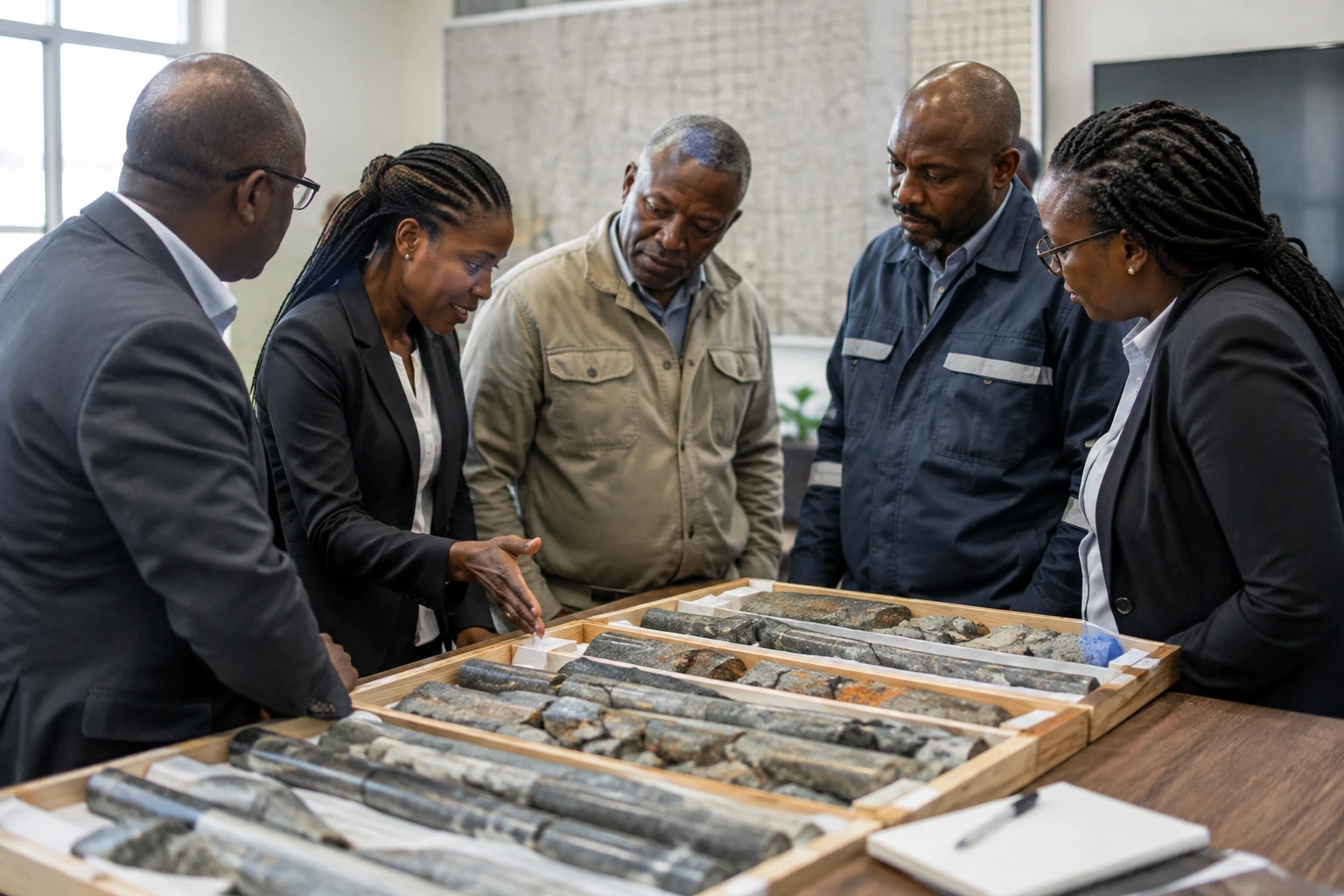
Can a drilling programme turn a geological hypothesis into a sustainable mining operation? For Serval Resources, a London-listed exploration company, the answer depends first on its ability to fund its work, and then on what the subsoil of Namibia, Botswana and Côte d’Ivoire reveals.
Three sites, three stages of exploration
On 15 October 2026, Serval announced that it had conditionally raised £6.5 million, or about $8.6 million, through a share issue. The announced amount is intended to support its projects in the three countries. These are not mines in production: the programmes aim to identify and assess copper indications.
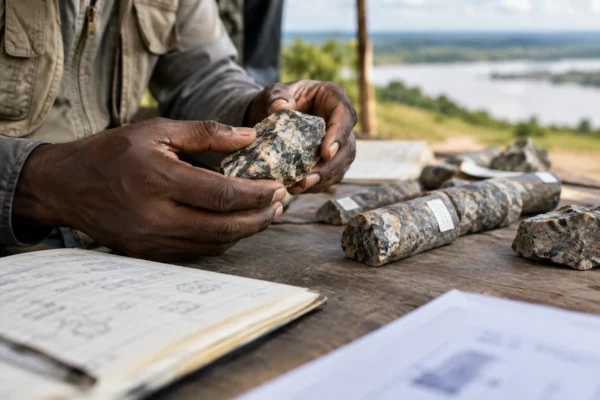
In Namibia, the company plans about 20,000 metres of drilling in the Kaoko Basin. It describes the programme as a step towards a first mineral resource estimate, which it hopes to establish in 2027. This timetable is a company target, not a confirmed discovery.
In Botswana, work is intended to refine targets on Serval’s licences ahead of an initial programme of about 3,000 metres of drilling. In Côte d’Ivoire, the company plans to continue preliminary exploration at Duékoué. Planned spending and timing may change depending on results and the necessary approvals.
The 14 October announcement detailed a multi-part transaction: a firm placing, a further placing and a subscription. The following day, a market notice confirmed the close of the bookbuild and a conditional raise of £6.5 million. Admission of the first shares was expected by 16 October at the latest, subject to customary conditions. The financial confirmation therefore says nothing about geological results.
The competition for copper is shifting
The projects are part of a mining landscape that extends beyond the Copperbelt, the major copper-producing province running through Zambia and south-eastern Democratic Republic of the Congo. Botswana and Namibia are also seeking to develop their copper resources, while Côte d’Ivoire is diversifying a mining sector in which gold plays a major role.
The three countries do not form a single economic basin. Namibia and Botswana are in Southern Africa and belong to the Southern African Development Community (SADC), which brings together states in the region. Côte d’Ivoire is in West Africa and is a member of ECOWAS, the Economic Community of West African States. Infrastructure, mining authorities and markets are therefore not the same.
Global demand is strengthening investor interest. S&P Global estimates that copper consumption could rise from about 28 million tonnes in 2025 to 42 million in 2040. Its scenario points to a potential shortfall of 10 million tonnes in 2040 if supply does not increase sufficiently. This is a projection, not a shortage that has already been observed. The International Energy Agency also highlights the difficulties of increasing mine supply, notably because of declining ore grades and development delays.
These prospects guarantee neither the future price of copper nor the profitability of any particular project. Between a mineralised indication and a mine, companies must still prove the deposit’s size and quality, assess costs, obtain permits and fund infrastructure. Drilling is a step towards understanding a site, not a promise of production.
Funding exploration is not enough to create local value
For exploration companies, a fundraising allows work to continue without waiting for a mine to begin production. For host countries, the stakes arise even before any potential extraction: the quality of geological data, transparency in permitting, compliance with environmental standards and the participation of local expertise in operations.
Immediate benefits vary by location. Drilling teams and contractors can create temporary activity near the sites. Sustainable jobs, tax revenues and infrastructure, however, generally materialise only after several stages of development. Communities near the licences are directly affected by access to land, water and transport routes; any benefits to capital cities or the national economy do not automatically reach them.
Co-operation between Abidjan and Gaborone offers another perspective on this trend. In July 2026, Côte d’Ivoire’s mining ministry announced an agreement with Botswana covering exploration, training and mining governance, among other areas. The initiative shows that exchanges between African countries can also focus on expertise and resource management, beyond the search for foreign capital.
For the three countries, the central question is therefore not just the potential volume of copper, but their ability to turn a discovery into a regulated activity that creates local value. Botswana already has substantial mining experience, notably in diamonds; Namibia and Côte d’Ivoire are each seeking, in their own contexts, to expand or consolidate their industries.
The next steps will be decisive
In the short term, milestones to watch include the actual receipt of the funds, the start of drilling in Namibia and progress with work in Botswana and at Duékoué. The data will then need to show whether the targets warrant further campaigns. No results announced as part of the fundraising yet support a conclusion that an economically viable deposit exists.
At regional level, these projects are a reminder that the diversification of African mining exploration is not confined to established copper producers. But competition to attract investment also brings a negotiating challenge: states and affected communities will seek verifiable information, environmental safeguards and a more sustainable share of the value created. Only under these conditions can exploration move beyond the mere promise of new resources.
For details of the fundraising, Serval Resources’ financial announcement sets out the terms and planned funding. The market scenario is presented in S&P Global’s study of global copper supply and demand.