Algeria
 Egypt
 Libya
 Morocco
 Sudan
 Tunisia
 Benin
 Burkina Faso
 Cabo Verde
 Côte d'Ivoire
 Ghana
 Guinea
 Guinea-Bissau
 Liberia
 Mali
 Mauritania
 Niger
 Senegal
 Sierra Leone
 The Gambia
 Togo
 Cameroon
 Central African Republic
 Chad
 DR Congo
 Equatorial Guinea
 Gabon
 Republic of the Congo
 São Tomé and Príncipe
 Burundi
 Comoros
 Djibouti
 Eritrea
 Ethiopia
 Kenya
 Madagascar
 Malawi
 Mauritius
 Mozambique
 Rwanda
 Seychelles
 Somalia
 South Sudan
 Tanzania
 Uganda
 Angola
 Botswana
 Eswatini
 Lesotho
 Namibia
 South Africa
 Zambia
 Zimbabwe
A project announced at several billion dollars does not become a factory, power plant or job simply by being included in a portfolio. In West Africa, the test for the Summit on Integration and Investment (WAIIS) will therefore be concrete: will the capital announced in Lagos finance projects capable of clearing regulatory, financial and technical hurdles?
The question is directly relevant to Nigeria. Its position in regional trade, banking sector and industrial capacity can influence cross-border investment. But local businesses, workers and agricultural producers will not automatically benefit from the announcements. Everything will depend on the contracts, infrastructure and rules that follow.
An initiative launched in a region undergoing change
The Economic Community of West African States (ECOWAS), created to promote economic integration and co-operation among its members, is going through a period of tension. Burkina Faso, Mali and Niger left the organisation on 29 January 2025. ECOWAS has nevertheless said that trade and investment with these countries will continue to be handled under certain regional arrangements while lasting provisions are awaited.
Their departure complicates the goal of an integrated West African market. Businesses must contend with uncertainty over the movement of goods, customs procedures and the predictability of rules. WAIIS, led by Sierra Leonean President Julius Maada Bio, aims to bring governments, project developers and investors together around four sectors: energy and industrialisation, strategic minerals, agro-industry and digital transformation.
The summit’s presentation documents describe a platform that is intended to support projects beyond official meetings. This is a central issue: regional trade depends not only on political announcements, but also on roads, electricity grids, payments and stable rules. ECOWAS sets out the institutional consequences of the withdrawal of the three Sahelian countries, while the WAIIS website outlines the priorities of the 2026 summit.
In Lagos, projects to be turned into financing
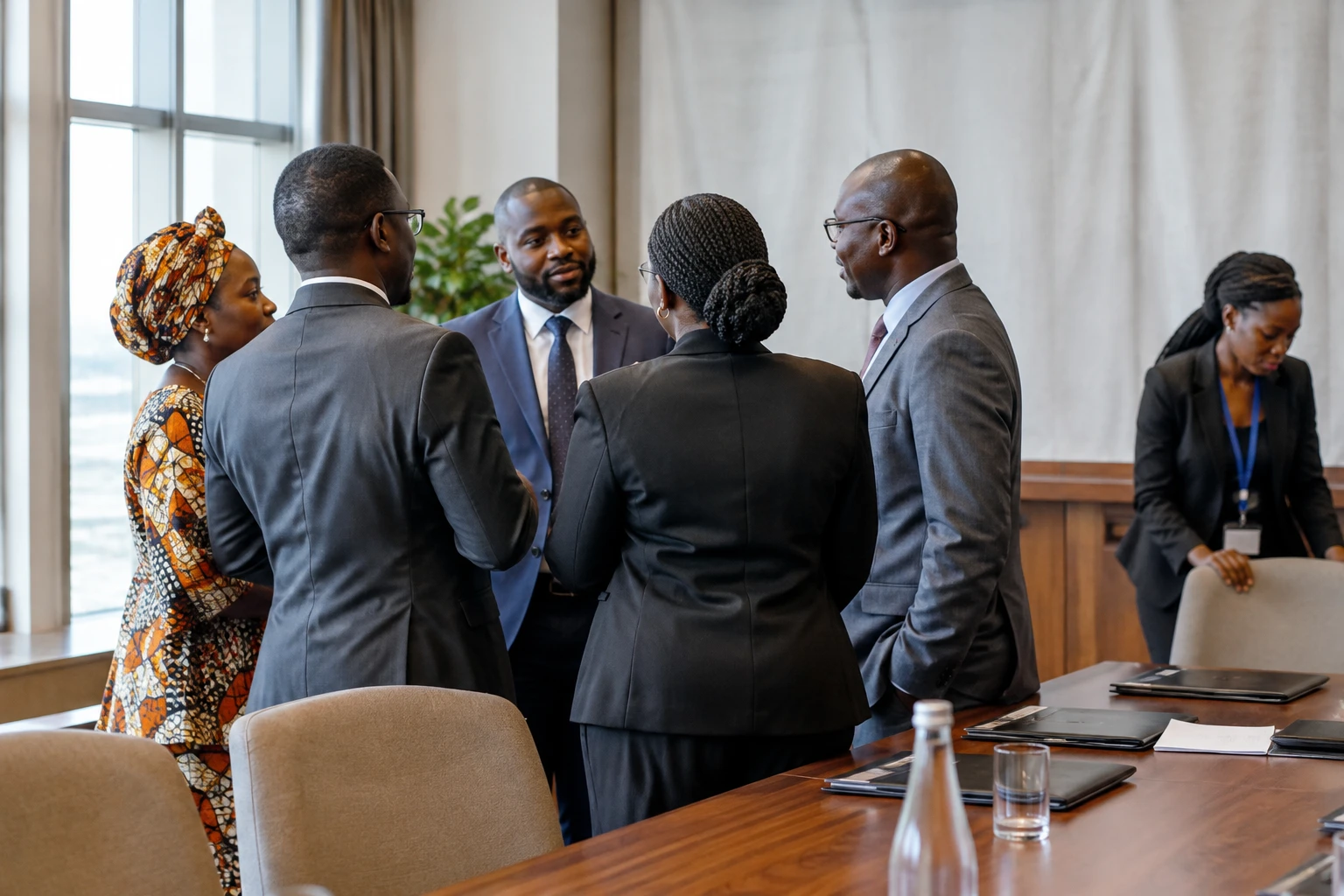
In Lagos, the WAIIS Private Sector Advisory Council held its second meeting, co-chaired by Julius Maada Bio and Tony Elumelu, head of Heirs Holdings. Babajide Sanwo-Olu, governor of Lagos State, also took part. The meeting aimed to move discussions from principles to mobilising investors and identifying the obstacles that prevent some projects from securing financing.
According to Kandeh Kolleh Yumkella, the summit’s special envoy, the portfolio presented comprises 26 projects selected from 170 proposals. Their value is said to exceed $10 billion and could reach $15 billion before the summit due to be held in Freetown on 17 and 18 November 2026. These figures were provided by the organisers: the public information consulted does not allow independent verification of the selection, the stage of preparation or the financing needs of each project.
This distinction matters. An identified project is not necessarily financed, and an aggregate figure does not specify the investment timetable or its distribution between countries and sectors. The next steps will need to clarify the guarantees sought, the partners already committed and the conditions required to conclude transactions.
The council brings together regional financial institutions, including the Africa Finance Corporation, Afreximbank, Africa50 and the Central Bank of West African States. Their presence could facilitate the preparation and financing of cross-border projects. It does not, however, guarantee their completion: developers still have to demonstrate their viability, and public authorities must provide a clear regulatory framework.
Financing alone is not enough to create local benefits
Speakers at the Lagos meeting highlighted energy as a prerequisite for industrialisation. Dangote Group, in particular, advocated a regional electricity corridor, while financial officials discussed the ability of African banks to support major investments. The Dangote refinery, in Lagos State, was presented as an example of the potential role of domestic and regional capital.
But the expansion of grids and industries also raises questions about how benefits are distributed. Large groups need reliable electricity and stable rules. Small businesses, self-employed workers and agricultural producers, meanwhile, need affordable access to infrastructure, credit and markets. Without appropriate arrangements, investment can concentrate its benefits in a few urban hubs or value chains dominated by large companies.
For Nigeria, the question is therefore as much about the benefits as the volume of capital. The jobs announced will depend on the skills employed, purchases from local suppliers and the place given to processing on the continent. In agro-industry and minerals, for example, more local processing can create value, but requires infrastructure, technology and coherent trade agreements.
Tony Elumelu stressed the need for predictable public policy, regulatory efficiency and security for long-term investment. These conditions are the responsibility of governments as much as businesses. Authorities must also account for commitments, concessions granted and the expected effects on people in the areas concerned.
Freetown, the first point at which to take stock
The Freetown summit is due to bring leaders, investors and businesses together around the four priority sectors. The meeting will be an initial opportunity to clarify which projects have financial partners, what public decisions are still needed and what implementation deadlines have been set. The official WAIIS calendar also lists preparatory activities ahead of the meeting.
The regional reach of the projects will be measured by their ability to connect several economies, not just by their announced value. In an ECOWAS weakened by the withdrawal of three countries, energy infrastructure, trade and logistics corridors can sustain shared economic interests. But their effectiveness will also depend on dialogue with states that are no longer part of the organisation.
For Nigerians, as for people in the other countries concerned, the outcome will not be measured solely by the communiqués from Freetown. It will be necessary to track the financing actually disbursed, contracts awarded, energy capacity created and lasting jobs generated. The summit can open doors; implementation will show whether they lead to more tangible economic integration.