Algeria
 Egypt
 Libya
 Morocco
 Sudan
 Tunisia
 Benin
 Burkina Faso
 Cabo Verde
 Côte d'Ivoire
 Ghana
 Guinea
 Guinea-Bissau
 Liberia
 Mali
 Mauritania
 Niger
 Nigeria
 Senegal
 Sierra Leone
 The Gambia
 Togo
 Cameroon
 Central African Republic
 Chad
 DR Congo
 Equatorial Guinea
 Gabon
 Republic of the Congo
 São Tomé and Príncipe
 Burundi
 Comoros
 Djibouti
 Eritrea
 Ethiopia
 Kenya
 Madagascar
 Malawi
 Mauritius
 Mozambique
 Rwanda
 Seychelles
 Somalia
 Tanzania
 Uganda
 Angola
 Botswana
 Eswatini
 Lesotho
 Namibia
 South Africa
 Zambia
 Zimbabwe

Gunfire has spread into Rumbek, forcing families to seek refuge in neighbouring villages. The fighting also reached the hospital, where the wounded were arriving in large numbers. This flare-up in Lakes State is a reminder that in South Sudan, everyday security depends as much on the presence of public forces as on the ability to prevent local reprisals.
A provisional toll in the heart of Lakes State
The clashes pitted armed youths from the Pakam and Nyang communities against each other in the Rumbek area. The Pakam are associated with Rumbek North County, and the Nyang with Rumbek Centre County. Both communities belong to the Dinka group. South Sudan’s Ministry of Information reported about 70 deaths, including four soldiers. It said the toll still needed to be verified.
The fighting began on Friday 9 October, following violence reported the previous day in Nyangkot, on the outskirts of Rumbek. Gunfire then hit several neighbourhoods in the state capital. Residents fled to nearby places, including Ronga, Cueiadukan and Adol. Local civil society described departures in the thousands, while the authorities said they had regained control of the town. South Sudanese outlet Sudans Post reports the government’s preliminary toll.
Figures differ slightly in the initial statements: some officials put the death toll at 71, while the ministry and other accounts say about 70. The exact number of civilian casualties has not been disclosed in detail. The toll should therefore be treated as provisional, not as a definitive count.
Health services also came under pressure. A clinical officer at Rumbek State Hospital said the facility had received more than 50 wounded people, most of them suffering gunshot injuries. The United Nations Mission in South Sudan (UNMISS) deployed a rapid reaction force made up of Nepali peacekeepers. The mission said its troops had helped protect the hospital and humanitarian facilities, and had carried out patrols. UNMISS has detailed its response in Rumbek.
Long-standing tensions, with no confirmed trigger
The immediate cause of the 9 October clashes remains unknown. This uncertainty matters: general explanations cannot establish who started the gunfire, or under what circumstances. The authorities have urged communities to avoid reprisals. They have also announced stepped-up patrols and arrests, although those measures alone will not be enough to resolve the disputes.
In Lakes State, rivalries over cattle, grazing land and water points overlap with cycles of revenge. Cattle are a central economic and social resource for pastoralist families. But thefts and raids can prompt armed retaliation, drawing civilians into a spiral that local arrangements sometimes struggle to contain. UNMISS has documented mediation efforts and tensions linked to herd movements in the region. A UN prevention programme describes these factors in cattle camps.
The consequences extend beyond deaths and injuries. Displaced families temporarily lose access to their homes, belongings and sometimes their livelihoods. Traders, patients and humanitarian workers have to contend with dangerous journeys. At the hospital, rumours of attacks even prompted some wounded people to leave before receiving treatment, according to accounts gathered by the Associated Press. Patrols can reduce the immediate danger, but residents’ return also depends on lasting guarantees and trust in the security forces.
A local issue amid national tensions
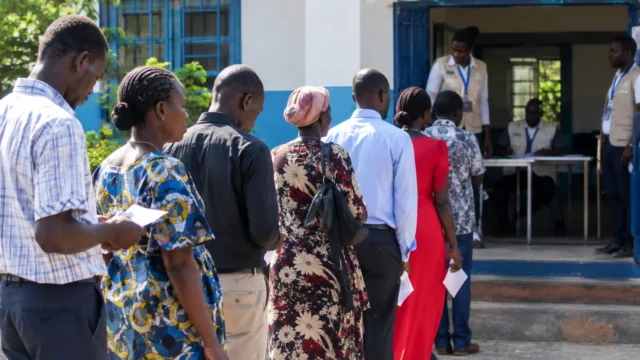
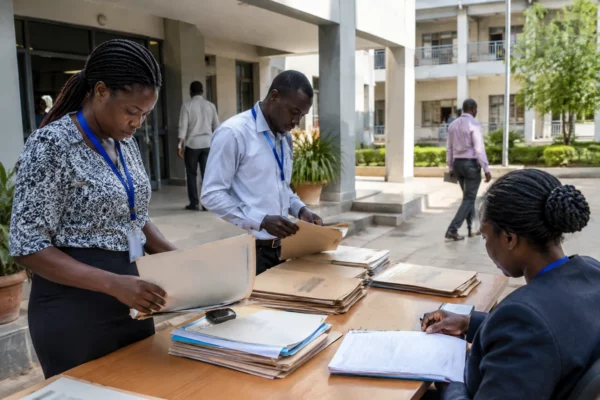
The violence comes at a politically sensitive time. South Sudan is preparing for its first national elections since independence, declared in 2011. The vote is scheduled for 22 December 2026, after several postponements. On 22 September, President Salva Kiir dissolved the transitional government and established an interim administration. The authorities present the vote as a major institutional milestone, but holding it also depends on security and organisational conditions on the ground. The National Elections Commission confirms the scheduled election date.
In Rumbek, insecurity is therefore weighing on residents already facing displacement, as well as on institutions’ ability to provide services and maintain a local presence. South Sudanese news agency SSBC reported that the government had confirmed 71 deaths in the clashes. Analysts and civil society representatives quoted by the Associated Press, for their part, say unresolved tensions and vacant administrative posts can undermine prevention efforts. These are attributed assessments, not proof that the political reshuffle caused the fighting.
The country is a member of the Intergovernmental Authority on Development (IGAD), a regional organisation in East Africa involved in peace and cooperation issues. The episode’s regional significance stems in particular from the risk of displacement and the need to maintain mediation mechanisms. But the main issues lie first and foremost in relations between communities, local authorities and South Sudanese security forces.
Security will be measured after the patrols
The return to calm announced by the authorities is a first step. The next indicators will be a consolidated death toll, the actual return of families and investigations capable of establishing responsibility. It will also be important to see whether arrests and patrols are accompanied by local dialogue, the management of disputes over cattle and the impartial protection of residents.
For South Sudanese people in Lakes State, the credibility of institutions is also tested in these local crises: preventing known tensions from escalating, treating the wounded and enabling displaced people to return without fear of further attacks. With the scheduled election two and a half months away, the authorities’ ability to guarantee everyday security will be a concrete test, far beyond the capital, Juba.