Algeria
 Egypt
 Libya
 Morocco
 Sudan
 Tunisia
 Benin
 Burkina Faso
 Cabo Verde
 Côte d'Ivoire
 Ghana
 Guinea
 Guinea-Bissau
 Liberia
 Mali
 Mauritania
 Niger
 Nigeria
 Senegal
 Sierra Leone
 The Gambia
 Togo
 Cameroon
 Central African Republic
 Chad
 DR Congo
 Equatorial Guinea
 Republic of the Congo
 São Tomé and Príncipe
 Burundi
 Comoros
 Djibouti
 Eritrea
 Ethiopia
 Kenya
 Madagascar
 Malawi
 Mauritius
 Mozambique
 Rwanda
 Seychelles
 Somalia
 South Sudan
 Tanzania
 Uganda
 Angola
 Botswana
 Eswatini
 Lesotho
 Namibia
 South Africa
 Zambia
 Zimbabwe
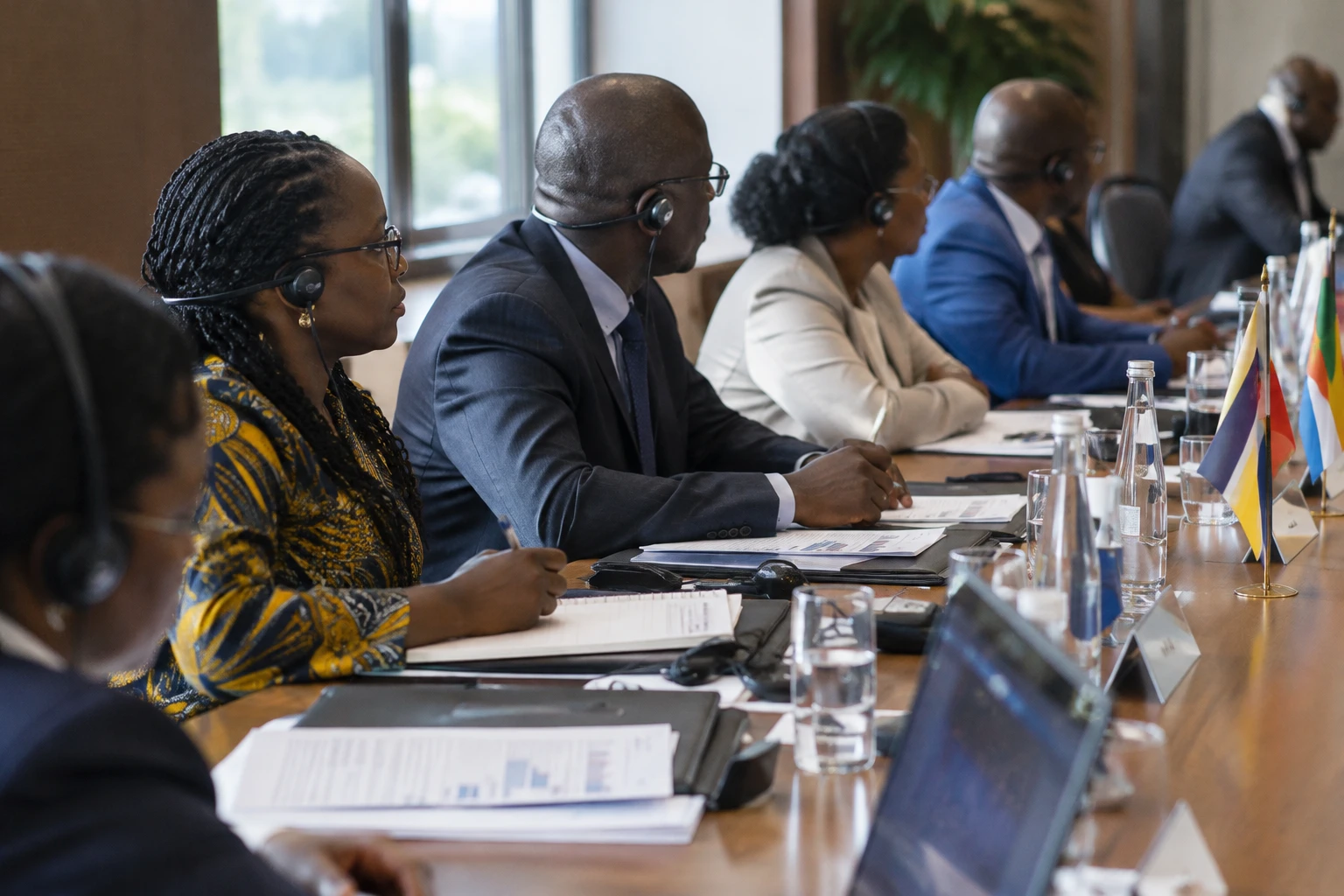
In Libreville and Port-Gentil, power cuts are a reminder that adding power plants is not enough: electricity must also be delivered and service must be reliable. Gabon’s new Minister for Universal Access to Water and Energy takes office as several projects are due to be completed by the end of the year.
Political transition amid an energy project
Olivier Mouckocko was appointed to head the ministry in a reshuffle announced on Sunday 11 October 2026. He succeeds Philippe Tonangoye, who was still presenting energy policy matters to the Council of Ministers just a few days earlier. Mouckocko thus becomes the fourth person to hold the portfolio since September 2023, according to the count reported in the available material.
The change comes after a period of political transition that began with the August 2023 coup. President Brice Clotaire Oligui Nguema has since made access to water and electricity a priority of his programme. In his speech to the nation on 16 August 2026, he also acknowledged the limitations of the networks and called on investors to contribute to the transmission and distribution of essential services.
The challenge extends beyond Gabon. The country is a member of the Economic and Monetary Community of Central Africa (CEMAC), which brings together six states in economic and monetary cooperation. Reliable electricity matters to households, but also to businesses, public authorities and regional activities that depend on a regular supply.
Power plants are expected, but not yet operational
The first milestone concerns nine dual-fuel turbines, which can run on two types of fuel. Their combined capacity is 255 megawatts (MW). According to the Gabonese Press Agency, they have been delivered and are expected to enter service around mid-November 2026, after a delay of about three months.
Seven turbines supplied by AKSA Enerji are to be installed at the Akournam and Port-Gentil power plants, operated by the Gabonese Energy and Water Company (SEEG). The other two, delivered by Solar Energy Sustainable Services, are destined for Port-Gentil and Lambaréné. Delivery is one step; the impact on power cuts will depend on whether they are actually brought into service and on the capacity of local grids to carry the electricity generated.
The second milestone is the Kinguélé Aval hydroelectric dam, with a planned capacity of 35 MW. As of 8 October, civil engineering work was 95% complete, according to the Council of Ministers’ report carried by Gabon’s public news agency. The three turbines are expected to enter service between October and December, after connection to the grid. Two authorisations are still required before operations can begin.
The authorities expect the Kinguélé complex, once completed, to supply more than half of the electricity consumed in Greater Libreville. This projection shows the scale of the stakes, but does not in itself guarantee an immediate improvement: connection times, authorisations and distribution to users will remain decisive.
SEEG to make way for two companies
The third issue is institutional. The government plans to split SEEG into two state-owned companies: La Gabonaise des Eaux and Électricité du Gabon. The roadmap presented to board members sets 1 January 2027 as the date the new entities will begin operations. Until then, SEEG is to continue day-to-day management through 31 December 2026.
The transfer involves more than changing the operator’s name. Assets, contracts, debts, responsibilities and resources must be apportioned to avoid any interruption to service. The government has announced a programme of 20 priority actions, including the certification of accounts for the past five financial years. This step is intended to clarify the financial position ahead of the split.
Gabon’s private sector has offered to contribute to the reform. On 7 October, the Federation of Gabonese Businesses met the minister then in office, Philippe Tonangoye. Its president, Alain-Claude Kouakoua, called for national expertise to be mobilised. Such participation could bring valuable skills, but continuity of service and transparency in the transfer will remain essential criteria for users.
The test will also be outside the capital
The effects of energy reform are not felt evenly. Greater Libreville accounts for a large share of demand, while secondary cities and rural areas also depend on networks that are sometimes less robust. Formal businesses need a predictable supply; small shops and households, which have fewer backup options, are directly affected by outages.
For Olivier Mouckocko, the immediate challenge will therefore be to bring three timelines together: the commissioning of the turbines, the completion and connection of Kinguélé Aval, and then the transfer of SEEG. New capacity can only be judged by whether it is actually available and by the quality of the service delivered.
At CEMAC level, the Gabonese case illustrates a challenge shared across Central Africa: turning investment in generation into electricity that people can actually access. The dates to watch are the turbines’ expected commissioning in mid-November, the completion of Kinguélé Aval by December and the launch of the two companies planned for 1 January 2027.