Algeria
 Egypt
 Libya
 Morocco
 Sudan
 Tunisia
 Benin
 Burkina Faso
 Cabo Verde
 Côte d'Ivoire
 Ghana
 Guinea
 Guinea-Bissau
 Liberia
 Mali
 Mauritania
 Niger
 Nigeria
 Senegal
 Sierra Leone
 The Gambia
 Togo
 Cameroon
 Central African Republic
 Chad
 DR Congo
 Equatorial Guinea
 Gabon
 Republic of the Congo
 São Tomé and Príncipe
 Burundi
 Comoros
 Djibouti
 Eritrea
 Ethiopia
 Kenya
 Madagascar
 Malawi
 Mauritius
 Mozambique
 Rwanda
 Seychelles
 South Sudan
 Tanzania
 Uganda
 Angola
 Botswana
 Eswatini
 Lesotho
 Namibia
 South Africa
 Zambia
 Zimbabwe
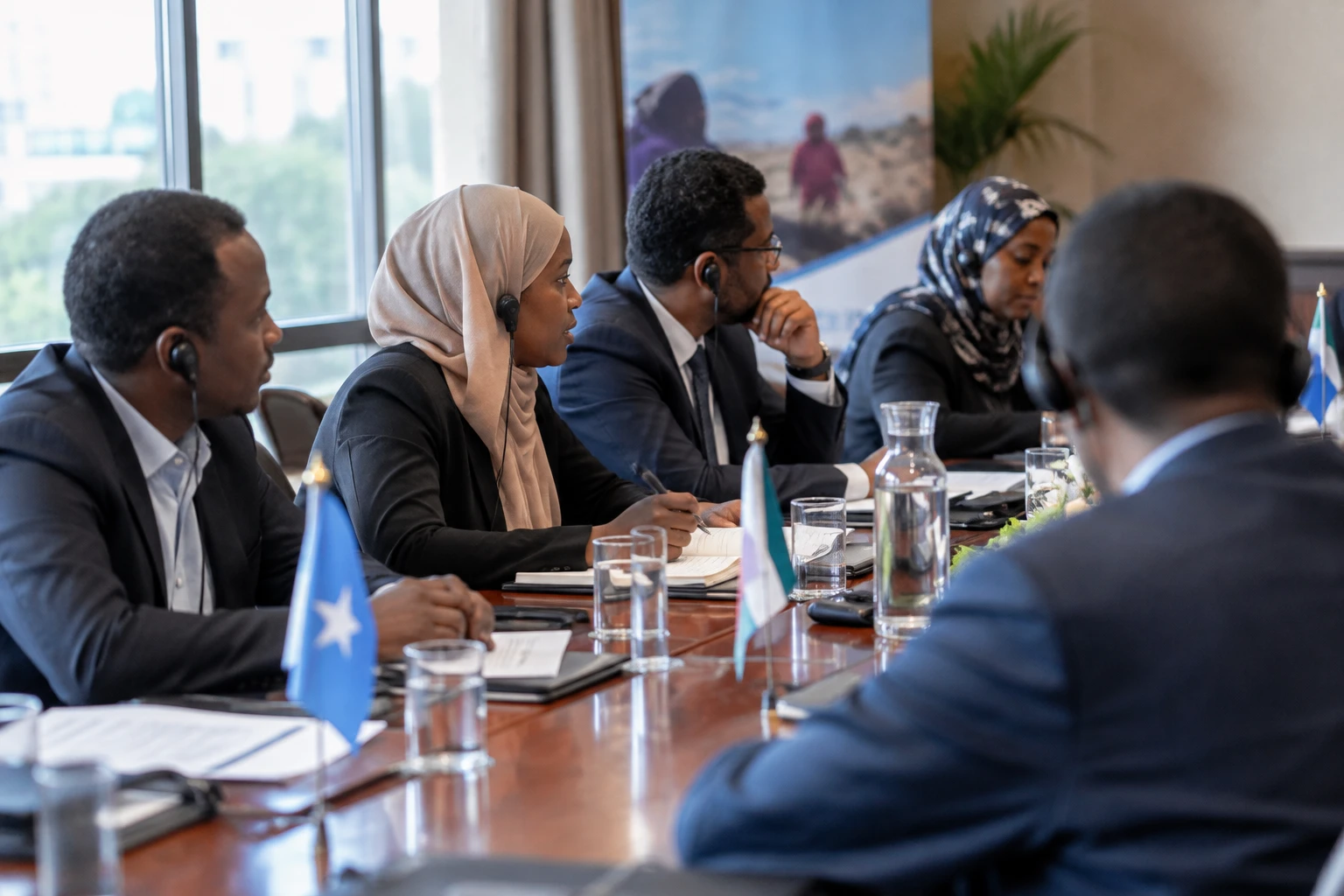
In Kismayo, reaching a service able to treat a severely malnourished child can take several days on foot. For rural and displaced families in southern Somalia, the distance to care is now compounded by another emergency: centres and aid programmes are short of resources, while needs remain high.
In the south, access to care becomes a matter of life and death
Somalia is experiencing another period of acute food insecurity, after years of climate shocks, displacement and insecurity. Irregular rains and drought have undermined livelihoods, while conflict and access difficulties are hampering aid deliveries. In the Horn of Africa, IGAD — the regional cooperation organisation — has also warned of the risk of flooding during the October to December 2026 rainy season, under the expected influence of El Niño. These events can occur in succession: drought followed by rain that may damage roads, shelters and crops.
Internal displacement is adding to the pressure. Families leave their homes when resources and essential services become inaccessible, often settling in sites where water, sanitation and healthcare remain limited. In Kismayo, in the Jubaland regional state, Ali Adan Ali, an official responsible for refugees and internally displaced people, says that more than 25,000 displaced households have received no assistance since 2023 because of a lack of funding. This figure and period are attributed to his testimony; the data consulted do not allow them to be independently confirmed.
Geography also matters. Families living far from towns have to travel long distances to reach a health centre. Residents of displacement sites, meanwhile, are more dependent on services already under pressure. Rain and floods can cut off roads and isolate both groups, but displaced households often have fewer resources to cope with an interruption to healthcare or food aid.
Nearly 1.92 million children affected in one year
An analysis by the IPC, the Integrated Food Security Phase Classification, estimates that 1.92 million Somali children aged 6 to 59 months will need treatment for acute malnutrition between July 2026 and June 2027. Of these, 433,000 may suffer from severe acute malnutrition, the most dangerous form. These projections, published by the IPC, are also cited by UNICEF and the World Food Programme.
These figures refer to children already affected or at risk during the period in question; they do not mean that all cases are present at the same time. More than half of the expected total are in the south, according to information reported from the field. Infections, including measles, increase the risks for children whose nutritional status is already fragile. A lack of safe water and sanitation facilities also encourages diseases that complicate their treatment.
In Kismayo, a mother, Halima Abdullahi Ibrahim, walked for three days with her three-year-old daughter, Asho Hassan Abdi, to reach the referral hospital, nearly 90 kilometres from their village. The child, who had oedema associated with severe malnutrition, was admitted to a stabilisation centre. The case illustrates the real cost of distance: the time needed to reach a specialist service can weigh heavily when a young child’s condition is deteriorating.
Funding determines the reach of the response
The response does not rely solely on hospitals. It also depends on screening in communities, referrals to specialist centres, supplies of therapeutic food and continuity of care. UNICEF is calling for better coordination between community health workers, local authorities, the federal government and humanitarian organisations. But coordination cannot replace the resources needed to keep teams and services running.
The IPC’s forecasts explicitly link reduced funding to a diminished response capacity. In practice, the consequences are not the same for everyone: a family near a hospital may still find an open service, while a rural or displaced household has to overcome several obstacles before reaching one. Humanitarian officials also fear that floods could make some roads impassable and cause further displacement just as nutritional needs are rising.
The forecast rainy season therefore calls for preparation that brings together nutrition, health, water, sanitation and road access. IGAD has urged its member states to strengthen emergency plans and anticipate needs related to flooding. For Somalia, the next period to watch is October to December 2026: the intensity of the rains and the ability to maintain access to services will shape how the situation develops.
This crisis primarily affects Somali communities, but it also tests regional cooperation in the Horn of Africa. IGAD can facilitate early warning and cross-border preparedness; the response for children will nevertheless depend on national and local decisions, as well as funding that is actually available. Future assessments will need to show whether care is reaching remote villages and displacement sites, beyond the major urban centres.