Algeria
 Egypt
 Libya
 Morocco
 Sudan
 Tunisia
 Benin
 Burkina Faso
 Cabo Verde
 Côte d'Ivoire
 Ghana
 Guinea
 Guinea-Bissau
 Liberia
 Mali
 Mauritania
 Niger
 Nigeria
 Senegal
 Sierra Leone
 The Gambia
 Togo
 Cameroon
 Central African Republic
 Chad
 DR Congo
 Equatorial Guinea
 Gabon
 Republic of the Congo
 São Tomé and Príncipe
 Burundi
 Comoros
 Djibouti
 Eritrea
 Kenya
 Madagascar
 Malawi
 Mauritius
 Mozambique
 Rwanda
 Seychelles
 Somalia
 South Sudan
 Tanzania
 Uganda
 Angola
 Botswana
 Eswatini
 Lesotho
 Namibia
 South Africa
 Zambia
 Zimbabwe
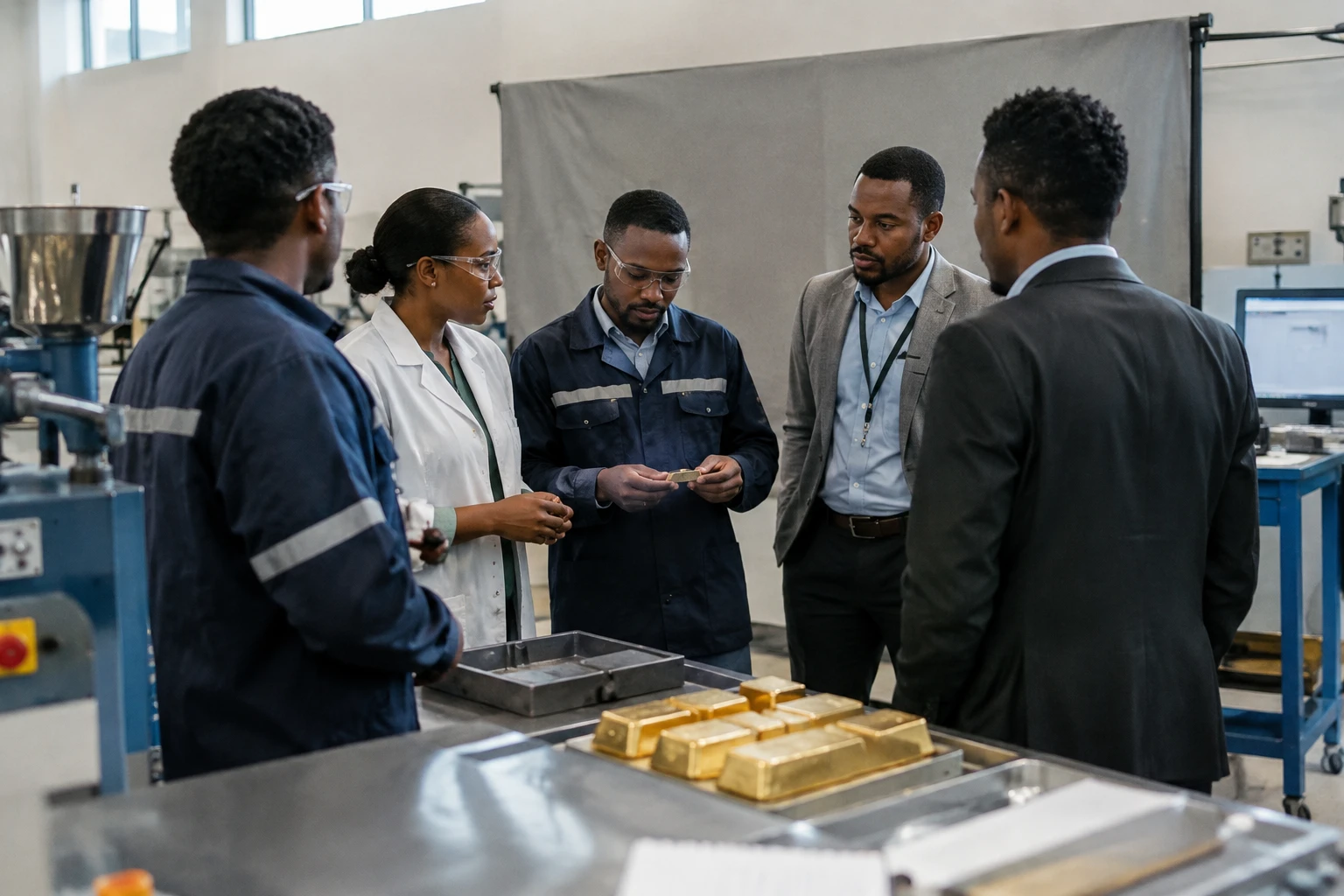
A refinery can turn gold into certified bars. But to become a regional hub, Ethiopia will also have to persuade producers and traders to send their metal there — and show that its origin can be verified.
This ambition is unfolding in an East Africa where several countries are seeking to capture more value from the gold trade. Ethiopia’s national refinery was inaugurated on 10 October 2026 in the Bole Lemi Special Economic Zone in Addis Ababa. IGAD, the regional cooperation organisation for the Horn of Africa, is one of the forums where cross-border trade and security issues intersect.
A new phase for Ethiopia’s gold sector
The National Precious Metals Refinery is a partnership between Ethiopian Investment Holdings, which owns 51% of the project, and Sam Precious Metals, which holds 49%, according to Ethiopia’s state-run ENA. The government says the facility will be able to process more than 600 tonnes of precious metals a year at full capacity. This figure refers to announced capacity, not a volume already processed.
The refinery is to process, assay and cast gold into bars for export. It is also expected to produce gold and silver bars and coins. By accepting foreign suppliers, Addis Ababa hopes to make Ethiopia a regional processing hub, beyond its own production. The authorities have not, however, made public the refining fees or the terms applicable to imported gold.
The project comes after a sharp rise in Ethiopian exports. The International Monetary Fund estimates that they increased from just over four tonnes in 2023-24 to 39 tonnes in 2024-25. It cautions, however, against interpreting the entire increase as an equivalent rise in mining output: the return of metal to official channels and the sale of accumulated stocks also played a part.
This distinction matters when assessing the plant’s future supply. A refinery may have modern equipment without receiving enough metal to operate at full capacity. The Kurmuk mine, being developed by Canadian group Allied Gold, is among the projects that could support domestic production. The company is targeting annual output of 240,000 to 270,000 ounces in 2027, a figure that remains a forecast.
Regional competitors already in place
Ethiopia is entering a market in which other countries have already invested in refining or exports. According to World Bank data published in WITS, Rwanda exported about $519m worth of gold in 2025. This figure measures the declared value of exports, but cannot by itself establish what share came from Rwandan mines and what share was imported and then re-exported.
In Tanzania, state-owned Stamico reported in January 2026 that the Mwanza plant was processing between 50 and 100 kilograms a day, against announced capacity of 480 kilograms. Tanzanian daily The Citizen reports that the company cited a shortage of raw materials and obstacles at border crossings. The example is a reminder that industrial capacity alone does not guarantee sufficient supply.
Uganda has also become an important player in regional trade. The Bank of Uganda reportedly estimated gold export earnings at $5.8bn for the year ending in November 2025, according to press reports. This amount should not be confused with the value of gold mined in the country: some Ugandan flows involve imported metal that is refined or re-exported. The value figures and their scope should therefore be interpreted with caution.
Competition is not based on equipment alone. Taxes, border delays, transport costs and confidence in certification also influence the choice of refining location. Rwanda changed the tax treatment of minerals processed locally in 2024, according to the available information. In Ethiopia, measures announced in February 2026 provide tax and customs benefits on certain equipment imported for export-oriented refineries. These measures do not, by themselves, specify the tax regime for foreign suppliers.
Traceability, a condition for trust
The origin of the metal is another challenge. In an analysis published in September 2024, Chatham House described illicit gold routes through Ethiopia and Uganda, with shipments going to the United Arab Emirates. The investigation does not allow the assumption that gold processed by the new refinery would be illicit. It does, however, highlight the importance of checks capable of distinguishing declared supplies from opaque flows.
Formalisation can benefit artisanal miners and public authorities: clearer access to the market, recorded sales and better-tracked tax revenues. But it depends on rules that are enforceable in practice, credible checks and competitive prices. If formalities or levies make official channels less attractive, metal may continue to travel along informal routes.
The benefits will not be the same for everyone. The state may seek export revenues and increased industrial activity. Refining companies want steady volumes. For artisanal miners, the issue is also whether they can sell on accessible and transparent terms. Residents of mining regions will not automatically benefit from national revenues: this will depend, among other things, on jobs, local procurement and the redistribution of income.
A test for East African gold trade
The plant’s start-up will therefore be more revealing than its announced capacity alone. The first contracts, actual processing volumes and checks on origin will show whether Ethiopia can attract regional gold without weakening traceability. It will also be important to observe how the authorities balance incentives for investors with their obligations to ensure oversight and transparency.
Across East Africa, the stakes go beyond competition between refineries. Countries in the region are seeking to retain more stages of the value chain, while metal crosses several borders before reaching international markets. For Addis Ababa, the new facility offers an industrial opportunity. Its position will now depend on its ability to bring together three conditions: a steady supply, competitive rules and verifiable origin.