Algeria
 Egypt
 Libya
 Morocco
 Sudan
 Tunisia
 Benin
 Burkina Faso
 Cabo Verde
 Côte d'Ivoire
 Ghana
 Guinea
 Guinea-Bissau
 Liberia
 Mali
 Mauritania
 Niger
 Nigeria
 Senegal
 Sierra Leone
 The Gambia
 Togo
 Cameroon
 Central African Republic
 Chad
 DR Congo
 Equatorial Guinea
 Gabon
 Republic of the Congo
 São Tomé and Príncipe
 Burundi
 Comoros
 Djibouti
 Eritrea
 Ethiopia
 Madagascar
 Malawi
 Mauritius
 Mozambique
 Rwanda
 Seychelles
 Somalia
 South Sudan
 Tanzania
 Uganda
 Angola
 Botswana
 Eswatini
 Lesotho
 Namibia
 South Africa
 Zambia
 Zimbabwe
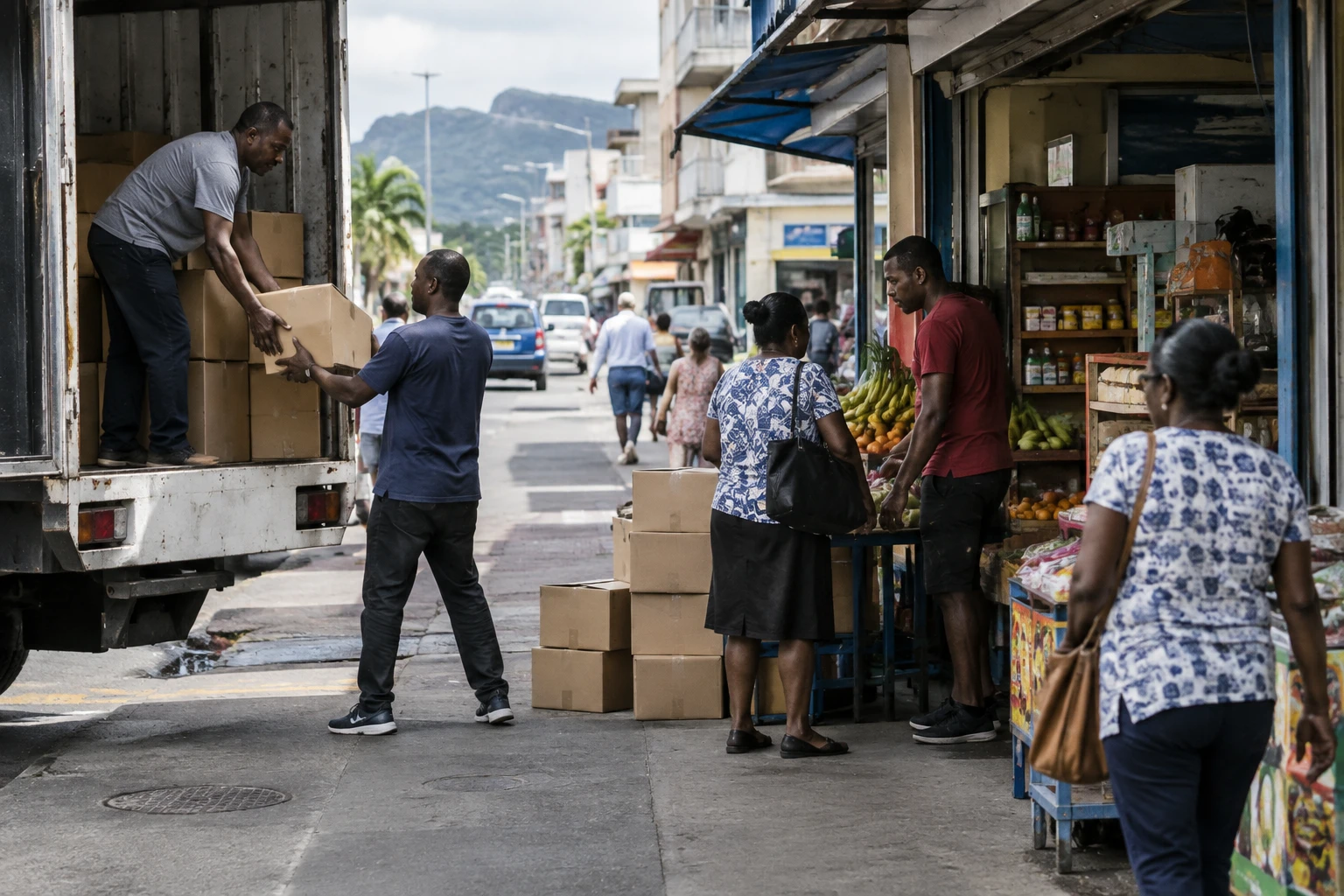
From Port Louis, Mauritian groups are looking towards Nairobi, Antananarivo and other regional markets. Their expansion responds to a simple reality: a small island cannot, by itself, offer limitless opportunities to growing businesses. But internationalisation is not merely an escape route. It is also turning Mauritius into a base for groups operating across several African economies.
An island economy connected to several regions
Mauritius belongs to the Southern African Development Community (SADC), which brings together 16 countries, and the Common Market for Eastern and Southern Africa (COMESA). The island is thus part of cooperation and trading areas that link, in particular, the Indian Ocean, Southern Africa and East Africa. These regional frameworks do not guarantee commercial success, but they provide a context for the strategy of Mauritian businesses.
This trajectory extends a longstanding presence in the region. CIEL Group, for example, developed operations in Madagascar in the 1990s, then in East Africa in the following decades. Its businesses include textiles, finance, healthcare and agro-industry. At the same time, major groups must contend with the limits of a small domestic market and with risks specific to each country: currency movements, competition, regulation and purchasing power.
Figures confirm a change in scale
Companies’ published results illustrate the growing weight of their activities outside the island. For the financial year ended in June 2025, IBL reported revenue of 120.8 billion Mauritian rupees, up 19% year on year. The group says that 54% of its revenue now comes from international operations, particularly in East Africa, Réunion and the Seychelles. These are figures provided by the company, describing its scope and accounting method.
CIEL, for its part, announced revenue of 38 billion Mauritian rupees and profit after tax of 3.8 billion for the 2025 financial year. The group attributes its performance to several activities, including healthcare in Uganda and Mauritius, banking in Madagascar, textiles in India and hospitality in Mauritius. These results show geographical diversification, but do not mean that every subsidiary or market contributes equally to growth.
In Kenya, IBL holds a majority stake in Naivas, a supermarket chain of Kenyan origin. The retailer said it had opened its 114th store, while an IBL Group publication reported 112 stores in October 2025. The discrepancy is a reminder that the number of outlets changes rapidly and depends on the date used. The figure should therefore not be presented as a fixed total.
Investing abroad without abandoning Mauritius
For groups, expansion can spread revenue across several markets and allow them to replicate established expertise. Retail, financial services, healthcare and textiles draw on skills developed in Mauritius and then adapted to local conditions. Operations can also connect businesses across countries, for example by pooling purchasing, logistics or management expertise.
However, this approach does not automatically benefit the entire Mauritian population. Shareholders may gain from diversified revenue, while workers on the island may find professional opportunities and regional roles. But the benefits will depend on where jobs are located, investment decisions and the groups’ ability to maintain their Mauritian operations. IBL says it retains a significant presence in the country, where it employs more than 19,500 people, according to its own figures.
In host markets, the effects play out differently. The opening of supermarkets can widen consumer choice and create formal jobs. It also puts local chains and small shops up against large-scale, organised competition. In Kenya, Naivas works with local suppliers, according to the company; the scale and distribution of these benefits nevertheless need to be assessed using independent data on employment, local purchasing and prices.
Growth through acquisitions also brings risks: debt, the integration of teams, compliance with national rules and exposure to currency fluctuations. Mauritian groups do not necessarily succeed in every market they enter. Their knowledge of the region can be an advantage, but it does not replace market analysis or local partnerships.
A testing ground for African economic integration
This expansion gives Mauritius a distinctive role: that of an island economy serving as a base for businesses operating in several African countries. It is part of regional trade, but this does not make the island a member of the East African Community, where Kenya is located. SADC and COMESA are the relevant regional frameworks for Mauritius, while groups must negotiate access to each market in practice.
What happens next will depend less on expansion announcements than on whether those operations can be consolidated. Future financial results will make it possible to measure the actual contribution of foreign subsidiaries, their profitability and their effect on employment. For Mauritius, the challenge will be to turn this regional presence into skills, sustainable activity and local revenue. For host countries, the central question will remain how much value is created locally and what links are forged with local businesses and workers.