Algeria
 Egypt
 Libya
 Morocco
 Sudan
 Tunisia
 Benin
 Burkina Faso
 Cabo Verde
 Côte d'Ivoire
 Ghana
 Guinea
 Guinea-Bissau
 Liberia
 Mali
 Mauritania
 Niger
 Nigeria
 Senegal
 Sierra Leone
 The Gambia
 Togo
 Cameroon
 Central African Republic
 Chad
 DR Congo
 Equatorial Guinea
 Gabon
 Republic of the Congo
 São Tomé and Príncipe
 Burundi
 Comoros
 Djibouti
 Eritrea
 Ethiopia
 Kenya
 Madagascar
 Malawi
 Mauritius
 Mozambique
 Rwanda
 Seychelles
 Somalia
 South Sudan
 Tanzania
 Uganda
 Angola
 Botswana
 Eswatini
 Lesotho
 Namibia
 South Africa
 Zimbabwe
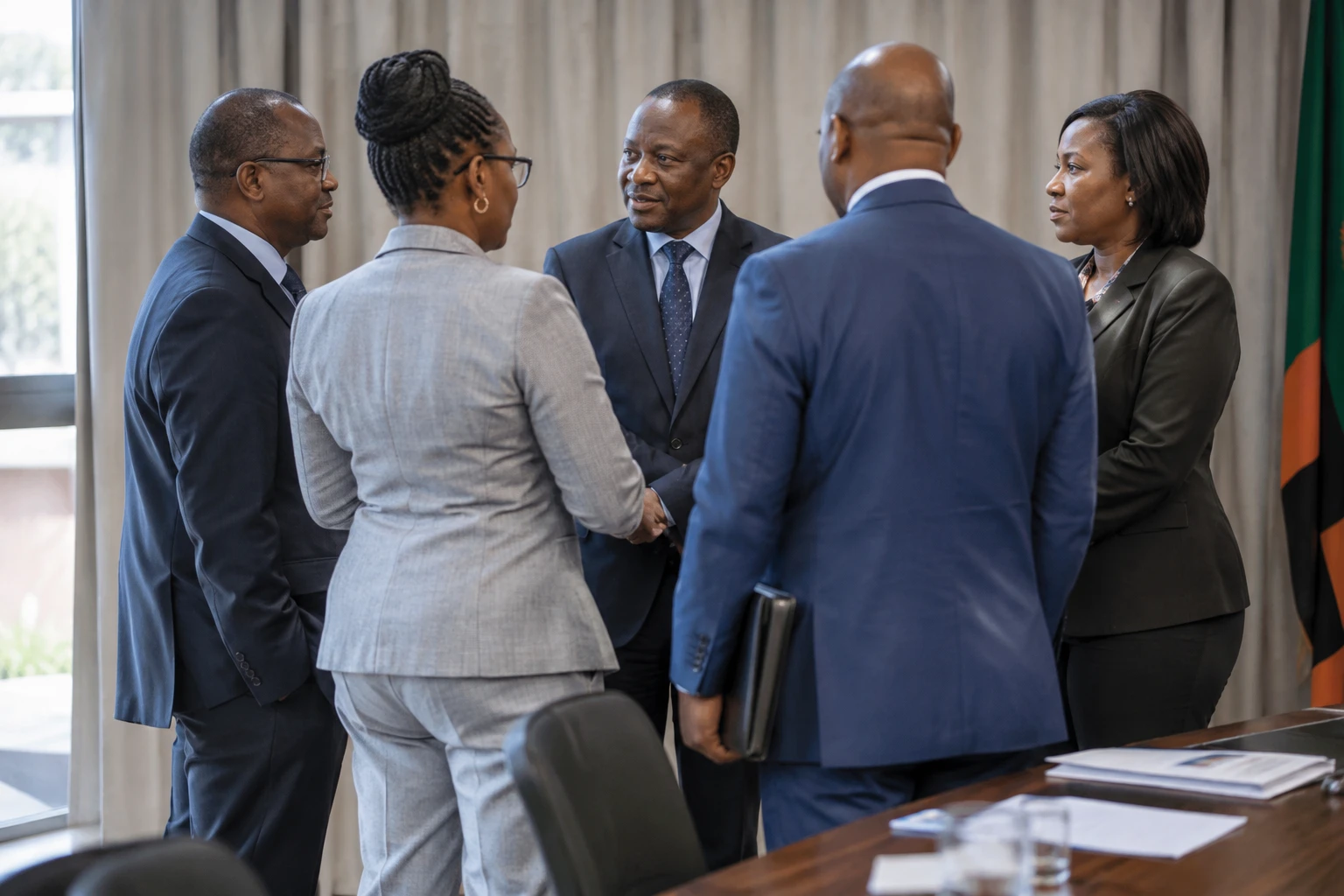
For Zambia, the challenge is not simply to post faster growth. It is to turn activity in the mines, fields and export sector into sustainable public revenue, without increasing spending or undermining purchasing power.
A forecast to treat with caution
A preliminary financing agreement with the International Monetary Fund (IMF) and estimated growth of 5.6% in 2026 were reported by Zambian media in early October. But these claims call for an important caveat: the IMF’s official publications consulted do not yet confirm the new agreement or this forecast. In May 2026, the Fund had instead cut its growth projection to 4.3%, citing weaker mining output, the normalisation of harvests after an exceptional year and energy constraints.
The 5.6% figure should therefore be presented as a reported estimate, not as a forecast officially endorsed by the IMF. The difference from the 4.3% announced in May is considerable. It could reflect a more recent update, but the public information consulted does not make it possible to establish the method or assumptions behind it.
An economy driven by mining and agriculture
Zambia’s growth depends heavily on sectors exposed to fluctuations in output and external markets. Copper remains central to exports and foreign-currency earnings. Agriculture also features in the outlook, but its results can vary with production conditions and the country’s needs.
This structure can create a gap between economic activity and public finances. An increase in exports does not automatically translate into sufficient tax revenue. The yield depends in particular on prices, output, taxation and the state’s ability to collect the taxes due.
According to information reported on discussions with the IMF, VAT receipts and fuel taxes are said to have fallen short of forecasts. Spending by the Food Reserve Agency, meanwhile, is said to have exceeded the amounts budgeted. These points could not be corroborated here against a recent official publication, so they should remain attributed rather than be presented as a definitive assessment.
The budget, a pressure point for households
The measures under consideration illustrate the difficult choices facing the authorities. Ending a temporary cut in fuel taxes could boost public revenue, but also raise transport costs and some prices. The effects may differ between households, businesses and regions, particularly where travel depends heavily on roads.
Cutting investment deemed non-priority is intended to contain spending. But the composition of these cuts matters as much as their scale: investment that improves access to electricity, transport or services can support economic activity over the medium term. Budgetary trade-offs therefore shape both the trajectory of debt and the conditions for growth in practice.
The authorities are said to be targeting a primary budget surplus of 3% of gross domestic product in 2029. This balance compares public revenue and expenditure excluding interest on debt. The target assumes an increase in domestic revenue and the rationalisation of tax exemptions. Its achievement will also depend on budget execution and how spending evolves.
Lower inflation does not mean lower prices
One indicator, however, is confirmed by a national statistical source: annual inflation reached 6.1% in September 2026, down from 6.2% in August, according to the Zambia Statistics Agency. This means that the average price level was 6.1% higher than in September 2025. It does not mean that prices fell.
This figure is within the Bank of Zambia’s target range of 6–8%, also cited by the IMF in May. Gross international reserves of $6.1bn reported for September have not, however, been confirmed by a second independent publication consulted. The amount therefore remains attributed.
A programme still subject to approval
Available accounts refer to a staff-level agreement for a 36-month Extended Credit Facility worth about $1.47bn. The facility is a financing mechanism for countries facing prolonged balance-of-payments difficulties. An agreement between teams does not yet amount to approval: the announced programme would remain subject to prior actions and a decision by the Fund’s Executive Board.
The previous programme, approved in 2022, ended after its final review by the IMF Executive Board in January 2026. The Fund said at the time that the agreement had lasted 38 months. The transition from a completed programme to possible new financing makes continuity of reforms particularly important. The final terms and timetable for the new agreement remain to be publicly confirmed.
A regional issue too
Zambia is a member of the Southern African Development Community (SADC), which brings together states in the region around goals of economic integration and development. Its exports, transport corridors and mining trade extend beyond national borders. More firmly grounded growth could therefore matter for regional trade, but forecasts and financing announcements are not enough to measure its effects.
The next development to watch is the publication of official information confirming or clarifying the agreement with the IMF: its amount, conditions, prior actions and timetable for Board review. Until then, the 5.6% rate remains a reported estimate, while the budgetary pressures described make it important to distinguish expected growth from the state’s actual fiscal room for manoeuvre.