Algeria
 Egypt
 Libya
 Morocco
 Sudan
 Tunisia
 Benin
 Burkina Faso
 Cabo Verde
 Côte d'Ivoire
 Ghana
 Guinea
 Guinea-Bissau
 Liberia
 Mali
 Mauritania
 Niger
 Nigeria
 Senegal
 Sierra Leone
 The Gambia
 Togo
 Cameroon
 Central African Republic
 Chad
 DR Congo
 Equatorial Guinea
 Gabon
 Republic of the Congo
 São Tomé and Príncipe
 Burundi
 Comoros
 Djibouti
 Eritrea
 Ethiopia
 Madagascar
 Malawi
 Mauritius
 Mozambique
 Rwanda
 Seychelles
 Somalia
 South Sudan
 Tanzania
 Uganda
 Angola
 Botswana
 Eswatini
 Lesotho
 Namibia
 South Africa
 Zambia
 Zimbabwe
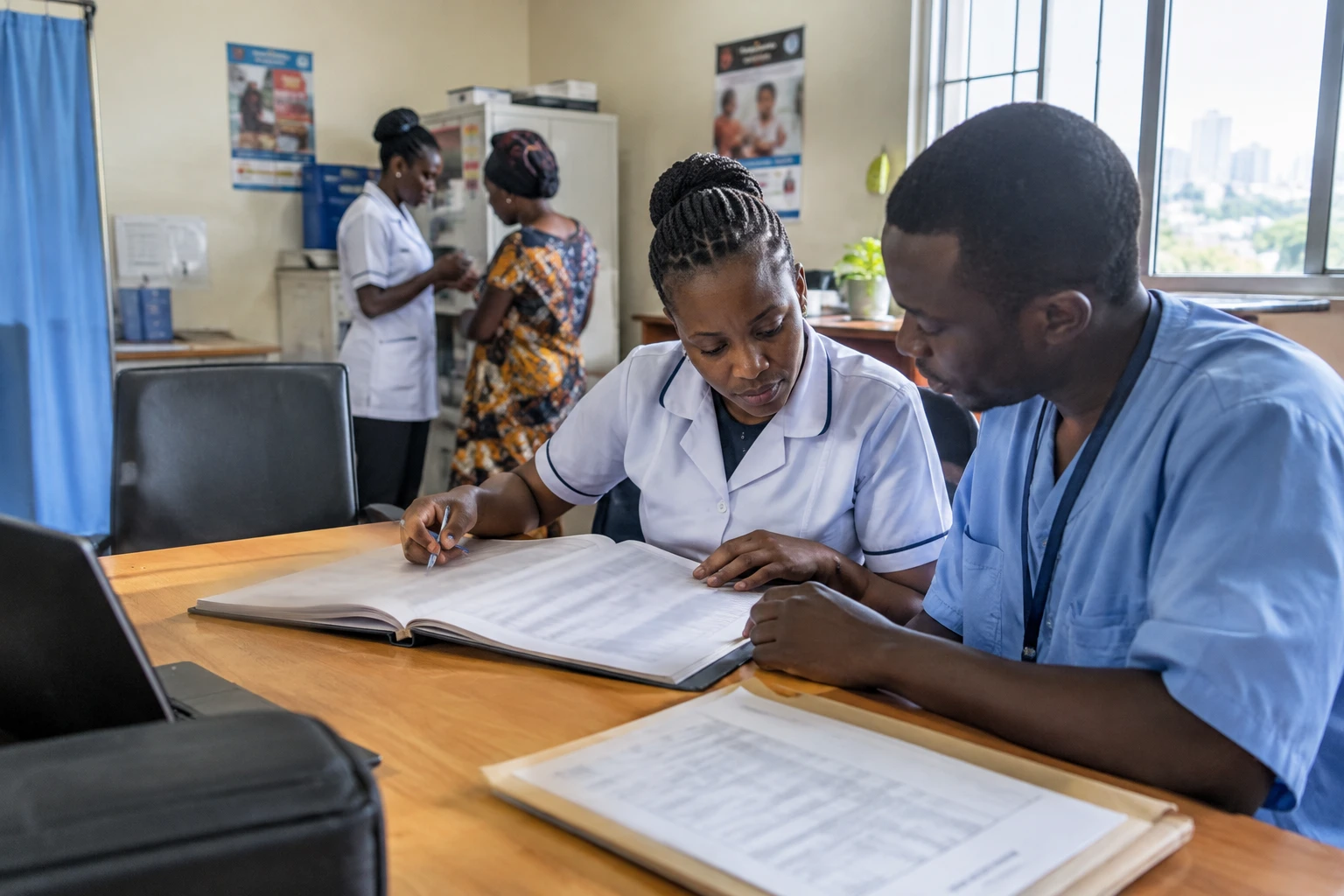
For Kenya, its first confirmed Ebola case raises a very practical question: how do you detect an infection when the early symptoms resemble common illnesses and people cross several borders to seek treatment? In Nairobi, authorities are trying to trace the contacts of a man who died after arriving from the Democratic Republic of the Congo (DRC).
An imported case, contacts to trace
Kenya’s Ministry of Health confirmed the country’s first recorded Ebola case on 6 October 2026. The man, an adult Kenyan citizen who lived in the DRC, died in Nairobi on 5 October. Tests confirmed an infection with Bundibugyo virus, an Ebola strain distinct from the one targeted by some vaccines already authorised. The World Health Organization (WHO) says two Kenyan laboratories confirmed the result. The WHO’s update on the Kenyan case and the regional outbreak.
According to the authorities, the patient had started feeling unwell about a month earlier and had received treatment at several facilities in the DRC. He then travelled overland to Kampala, Uganda, before flying to Nairobi, where he arrived on 3 October. The WHO believes he may have contracted the virus in a health facility or in the community while seeking care for another problem. This hypothesis is based on the duration of his illness, which is unusual for an infection with Bundibugyo virus.
Kenya’s Ministry of Health said 57 people linked to the case had been identified. Those being monitored include relatives, healthcare workers and passengers on the flight. The authorities have stepped up surveillance at points of entry and contact tracing. The measures are intended to detect any secondary cases quickly, not to establish that local transmission has already occurred.
Health Minister Aden Duale said Kenya was not experiencing a local outbreak at that point. The distinction matters: an imported case means an infected person has crossed the border, while local transmission means the virus is subsequently spreading within the country. Investigations must nevertheless continue before the actual risk can be assessed. The Kenyan ministry’s update on contact tracing and preparedness.
Symptoms that are hard to recognise
The patient’s medical journey highlights a familiar challenge for health teams: early symptoms such as fever, fatigue, sore throat or aches can resemble those of other infections. In its statement, the WHO says the initial symptoms of Bundibugyo virus disease are non-specific. Laboratory diagnosis is therefore essential, particularly in areas where other febrile illnesses are also circulating.
The virus is transmitted through direct contact with the blood or other bodily fluids of an ill person, or with contaminated objects. The incubation period can range from two to 21 days. The WHO says there is currently no licensed vaccine or specific treatment for the Bundibugyo strain. Rapid isolation, supportive care, protection for healthcare workers and contact monitoring therefore remain central to the response.
Official guidance urges residents to remain calm, rely on verified information and avoid contact with the bodily fluids of an ill person or with a body after a suspected death. Caution must go hand in hand with clear communication: rumours or widespread fear can make it harder for people to seek care and for health teams to do their work.
A regional emergency, not just a Kenyan one
The case comes amid a major outbreak in the DRC. As of 6 October, the WHO had recorded 8,728 confirmed cases and 4,205 deaths across 64 health zones in seven provinces. Ituri province remains the worst affected, but outbreaks have also occurred in North Kivu, Haut-Uélé and other provinces. These figures exceed the preliminary tally of more than 8,400 cases and 4,000 deaths reported a few days earlier: counts change as cases are confirmed. Figures reported in early October on the outbreak in the DRC.
Uganda, a stop on the patient’s journey, had declared the end of its own Bundibugyo virus disease outbreak on 28 July, after the required monitoring period passed without a new local case. The case detected in Kenya is a reminder, however, that declaring an outbreak over does not eliminate the risk of importation while the virus continues to circulate elsewhere in the region. Uganda’s official declaration that the outbreak was over.
This regional spread is testing cooperation among the countries of the East African Community (EAC), an organisation that includes Kenya, Uganda, Tanzania, Rwanda, Burundi, South Sudan, the DRC and Somalia. On 6 October, EAC health ministers discussed the sharing of health information, surveillance and the supply of medical products. The challenge is practical: tracking movements, sharing laboratory results and enabling health teams to operate on both sides of borders. The EAC’s regional decisions on health security.
What happens next will depend in particular on monitoring people who have been exposed and on health services’ ability to identify any new symptoms quickly. For Nairobi, the immediate challenge is to contain the risk without unnecessarily disrupting travel or healthcare. Across East Africa, the case is a reminder that a health alert does not stop at a border: early detection and trust between communities and healthcare workers matter as much as checks at airports.