Algeria
 Egypt
 Libya
 Morocco
 Sudan
 Tunisia
 Burkina Faso
 Cabo Verde
 Côte d'Ivoire
 Ghana
 Guinea
 Guinea-Bissau
 Liberia
 Mali
 Mauritania
 Niger
 Nigeria
 Senegal
 Sierra Leone
 The Gambia
 Togo
 Cameroon
 Central African Republic
 Chad
 DR Congo
 Equatorial Guinea
 Gabon
 Republic of the Congo
 São Tomé and Príncipe
 Burundi
 Comoros
 Djibouti
 Eritrea
 Ethiopia
 Kenya
 Madagascar
 Malawi
 Mauritius
 Mozambique
 Rwanda
 Seychelles
 Somalia
 South Sudan
 Tanzania
 Uganda
 Angola
 Botswana
 Eswatini
 Lesotho
 Namibia
 South Africa
 Zambia
 Zimbabwe
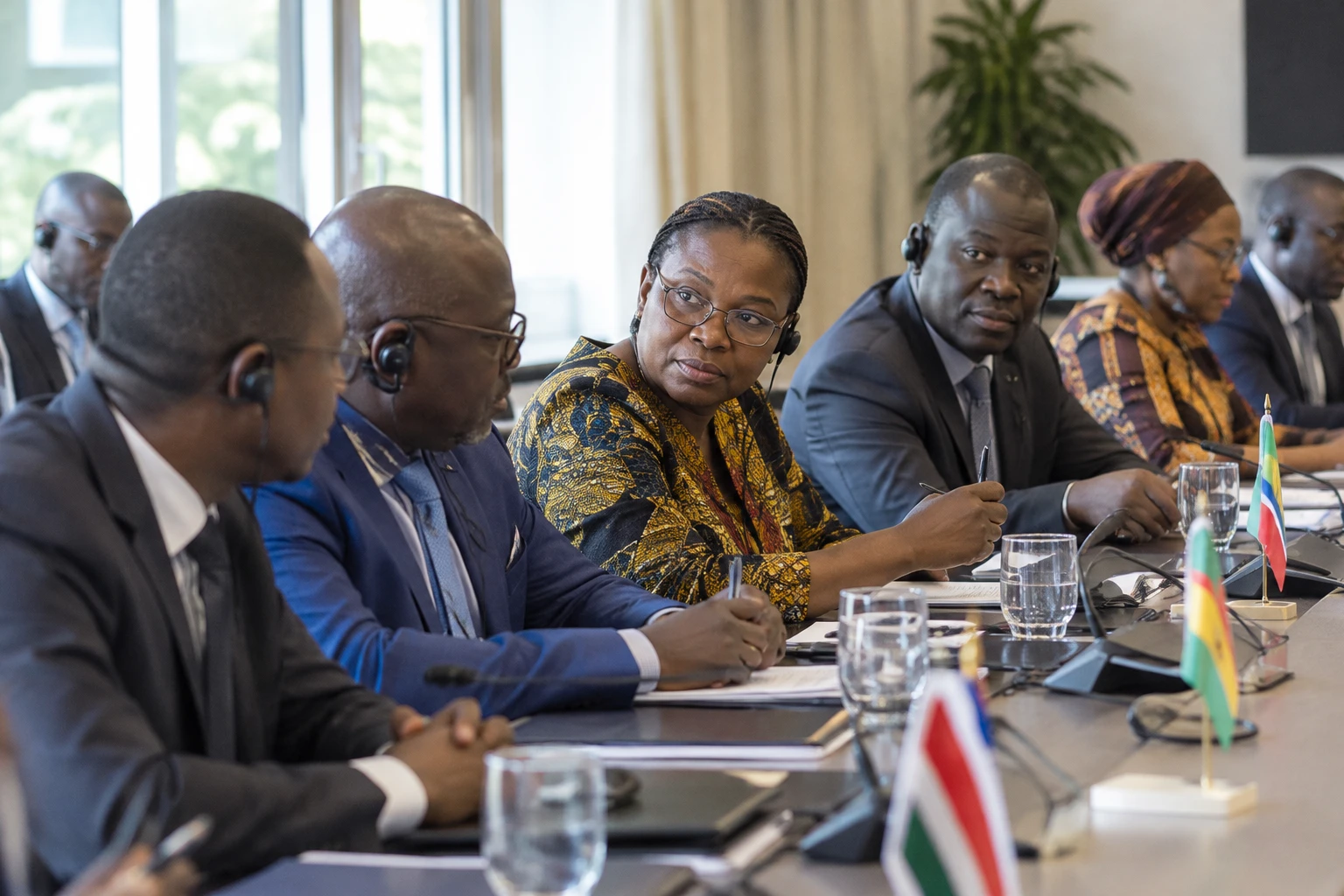
In Porto-Novo, the second ordinary congress of Les Démocrates is taking place as the party faces two concrete questions: who will lead it, and how can it regain a place in Benin’s political debate after a difficult election year? The answers will shape its ability to remain a structured opposition force.
A party to rebuild after a difficult election cycle
Les Démocrates opened its congress on Saturday 10 October 2026 in Porto-Novo. The congress is due to end on Sunday 11 October. It follows Thomas Boni Yayi’s withdrawal from the party presidency and the subsequent appointment of Nourénou Atchadé as its leader in March. Atchadé is therefore already leading the party; the congress is a further statutory step, not his initial appointment as president.
The meeting also comes after the 2026 general elections. The party was unable to field a candidate in the presidential election on 12 April. The Constitutional Court confirmed Romuald Wadagni’s victory, with 94.27% of the vote, according to the final results reported by the Associated Press. Les Démocrates also failed to win representation in the National Assembly after January’s legislative elections, according to Beninese coverage at the time.
This institutional setback reduces the levers available to a parliamentary opposition to question the government and influence the consideration of legislation. It does not, by itself, show how much support the party retains among voters. The turnout at the congress, which the party says exceeded 2,000 participants, offers an indication of its grassroots presence, but is no substitute for an independent electoral measure.
Departures expose internal divisions
On the eve of the congress, Éric Houndété, a former vice-president of the party, and several members announced their departure. The number of people resigning varies across available reports, so it should not be presented as a definitive tally. The disagreement nevertheless reveals genuine tensions over leadership and the handling of internal differences.
The leadership’s public response has been to play down the impact of the departures and note that some officials had been suspended. This account should be understood as the position of a party official, not as an independent finding about the reasons for the resignations. The congress thus provides a forum in which members can arbitrate disputes, but also a platform where divisions risk becoming more visible.
At the opening, Nourénou Atchadé called for unity, solidarity and responsibility among party members to be restored. He also spoke of the need to improve the party’s governance mechanisms. The choice of leaders and the resolutions adopted will show whether this call translates into new rules and practices.
Beyond Porto-Novo, the stakes for political pluralism
The national context matters. Benin has just undergone a change at the head of state: Romuald Wadagni succeeded Patrice Talon after the April election. But the main opposition party did not take part in the presidential election, having failed to meet the candidacy requirements, according to information published during the vote. The contrast between institutional continuity and the opposition’s limited presence in institutions is fuelling debate about the rules governing access to political competition.
Les Démocrates’ difficulties are therefore both internal and institutional. A contested leadership weakens its ability to unite supporters; the lack of representation reduces the means of putting the party’s proposals before national institutions. For members, the challenge is to keep the organisation active between elections. For voters, the question is broader: what avenues remain for making a political alternative heard and holding those in power to account?
The announced presence of delegations from Côte d’Ivoire and Nigeria, among other countries, gives the congress a regional dimension, without making it a meeting of ECOWAS. This organisation, which brings together West African states and monitors issues including governance and stability, is the relevant regional framework for placing democratic debates in context. Exchanges between parties can foster political ties, but leadership choices and electoral rules remain primarily the responsibility of Benin’s institutions.
The previous congress of Les Démocrates was held in Parakou on 14 and 15 October 2023. Three years later, the party is meeting in the political capital to redefine its priorities after election defeats, the departure of its founder from the presidency and further resignations. A change of venue alone is not enough to signal renewal: that will depend on the decisions taken and their implementation in local branches.
Decisions expected, followed by the test on the ground
The congress is to consider resolutions and renew or confirm internal responsibilities. At the time the available information was cross-checked, a second independent source had not yet published the final outcome of the proceedings or details of the decisions. It would therefore be premature to claim that a new president had been elected or that the departures had been resolved.
What happens next will be measured less by closing statements than by the party’s ability to maintain its structures, clarify its disciplinary procedures and reconnect with citizens beyond its leadership. In a political system where recent election results have left Les Démocrates outside national institutions, the congress is an organisational test. It does not guarantee the party’s return, but will partly determine the means at its disposal to prepare for one.
For Benin and its West African neighbours, the stakes go beyond the internal rivalries of one party. The vitality of a political system is also reflected in the ability of opposition parties to organise, take part in elections and hold power publicly to account. The next indicators will be the resolutions actually implemented, the handling of disagreements and the place Les Démocrates can regain in future contests.