Algeria
 Egypt
 Libya
 Morocco
 Sudan
 Tunisia
 Benin
 Burkina Faso
 Cabo Verde
 Côte d'Ivoire
 Ghana
 Guinea
 Guinea-Bissau
 Liberia
 Mauritania
 Niger
 Nigeria
 Senegal
 Sierra Leone
 The Gambia
 Togo
 Cameroon
 Central African Republic
 Chad
 DR Congo
 Equatorial Guinea
 Gabon
 Republic of the Congo
 São Tomé and Príncipe
 Burundi
 Comoros
 Djibouti
 Eritrea
 Ethiopia
 Kenya
 Madagascar
 Malawi
 Mauritius
 Mozambique
 Rwanda
 Seychelles
 Somalia
 South Sudan
 Tanzania
 Uganda
 Angola
 Botswana
 Eswatini
 Lesotho
 Namibia
 South Africa
 Zambia
 Zimbabwe
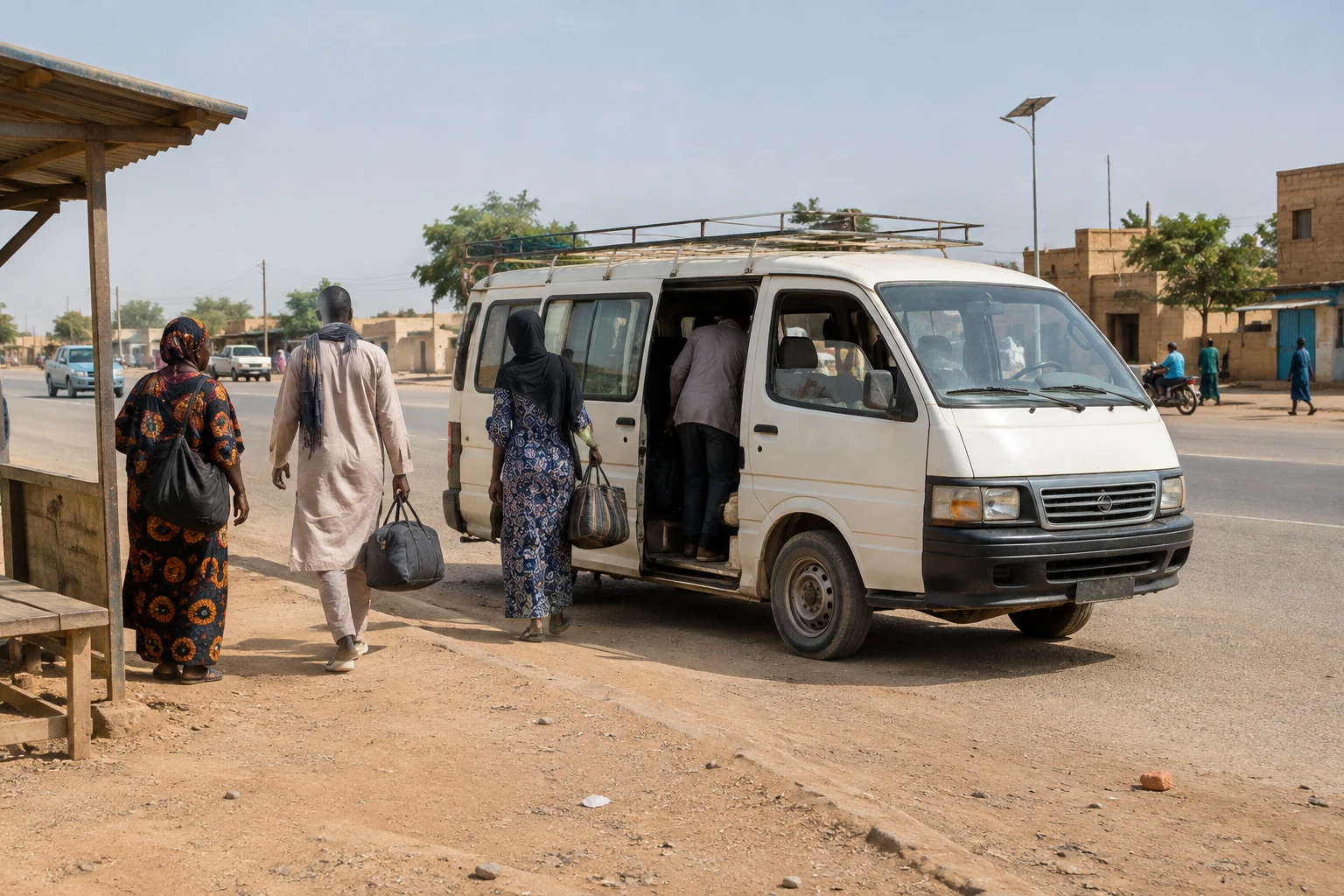
In Kidal, the return of the Malian army raises a question that goes beyond control of a fort or the flag flying over a building: what does the presence of the state mean when almost the entire population has fled? For the authorities in Bamako, the soldiers’ arrival marks a recapture of territory. For displaced residents, security, healthcare and schools remain the conditions for returning.
A city at the heart of northern power struggles
Kidal holds a particular place in Mali’s political history. The city and its region have experienced several rebellions since independence, notably in 1963, then in 1990, 2006, 2012 and 2014. The army’s capture of the city in November 2023, following the withdrawal of the United Nations Multidimensional Integrated Stabilization Mission in Mali, had already been presented by the transitional authorities as a symbol of the restoration of sovereignty.
That control did not prevent another shift in power. On 25 April 2026, coordinated attacks targeted several Malian localities. The Azawad Liberation Front (FLA), an independence movement, and fighters from Jama’at Nusrat al-Islam wal-Muslimin (JNIM), affiliated with al-Qaeda, then took Kidal. The army withdrew amid a wider offensive that also claimed the life of Defence Minister Sadio Camara, according to information reported by the Associated Press.
This succession of captures and withdrawals highlights the limits of a purely military reading of events. It forms part of a longstanding national crisis and a Sahelian region where armed groups move across borders. Mali is a member of the Economic Community of West African States (ECOWAS), although its relations with the organisation have become severely strained since the coups and the establishment of military-led transition.
Forces return, but no immediate advance north
On Tuesday 6 October 2026, the Malian Armed Forces (FAMa) entered Kidal with the support of their Russian partners in Africa Corps. The Senegalese Press Agency reports that several sources confirmed the FLA’s prior withdrawal. The Malian army had announced the launch of large-scale air-and-ground operations in the region as part of a reorganisation of Operation Dougoukoloko.
Accounts differ on the circumstances of the entry. The Malian authorities present it as the result of a military operation conducted with their partners. The FLA, for its part, described its departure as a “strategic retreat” and said it wanted to preserve its human and logistical capabilities. The Associated Press also reports that the movement disputed the account of a capture following fighting and denounced the use of air assets. These statements remain those of the parties to the conflict.
In the days that followed, soldiers patrolled the city and its outskirts. Available reports describe a phase of securing the area and clearing mines, rather than an immediate advance towards positions further north. The Tessalit camp, abandoned during the events of April, and the area around Tinzaouatène, near the Algerian border, remain under surveillance. The army has also announced further strikes in the region, including near Takalot and Talhandak. The toll and effects of these strikes have not been independently established in the information cross-checked here.
This caution matters. Control of the urban centre does not in itself mean that roads, villages and border routes are secure. Nor is it enough to establish that armed groups have given up on returning. The situation can change rapidly, while residents remain exposed to fighting, displacement and supply disruptions.
Residents absent, services to be rebuilt
The city is described as almost empty. A former municipal councillor cited in available reports estimates that only about 100 people remain, out of a previous population estimated at 30,000. This figure was not confirmed by a second independent source in the research conducted; it should therefore be treated as an attributed estimate, not an official count.
People have left because of years of insecurity and fears of recent bombardments. Some residents are said to have sought refuge in Algeria and Mauritania, while others have been displaced to the Gao region. In July, the International Organization for Migration was already recording 8,444 people displaced after the 25 April attacks, mainly between Kidal, Anéfis and Gao. This earlier figure does not by itself measure departures in recent days, but it shows that population displacement began well before the army’s return.
For families, returning therefore depends on more than the flag flying over the city. Residents interviewed point to the need for a school, a health centre and a functioning administration. Water or electricity can sometimes be replaced with temporary solutions; access to healthcare and education is harder to improvise. The government communiqué of 6 October promises the gradual return of the administration and basic social services, but the effective redeployment of officials and the resumption of services remain to be verified.
The contrast is stark between the event’s symbolic significance for the authorities and civilians’ everyday experience. The government can point to the army’s return to an important city. Displaced people, meanwhile, must weigh the risks of the journey, the possibility of resuming work and the availability of essential services. Markets and businesses cannot operate sustainably if roads remain uncertain and much of the customer base has left the region.
Holding Kidal: the challenge beyond the declared victory
The recapture of Kidal represents a political gain for Bamako, but the presence of soldiers alone does not guarantee lasting security. Étienne Fakaba Sissoko, spokesperson for the opposition coalition Framework of Forces for Refoundation (CFR), recognises the army’s presence in the city while stressing that the state must also provide justice and public services and build trust with residents. He calls for dialogue with Malian actors, including armed groups. This is a political position, distinct from that of the transitional authorities.
The next steps will therefore involve several fronts: securing access routes, limiting risks to civilians, enabling services to return and preventing further displacement. The issue also concerns neighbouring countries, particularly Algeria and Mauritania, where Malians have sought refuge. At regional level, the fragility of border areas is a reminder that military operations do not stop at a city’s limits.
The return of Malian forces to Kidal re-establishes an official presence in a highly symbolic city. But stabilisation will not be measured by territorial control alone. It will also depend on whether residents can return without fearing renewed violence and find tangible services in place. For now, patrols have resumed; civilian life remains largely absent.