Algeria
 Egypt
 Libya
 Morocco
 Sudan
 Tunisia
 Benin
 Burkina Faso
 Cabo Verde
 Côte d'Ivoire
 Ghana
 Guinea
 Guinea-Bissau
 Liberia
 Mali
 Mauritania
 Niger
 Nigeria
 Senegal
 Sierra Leone
 The Gambia
 Togo
 Cameroon
 Central African Republic
 Chad
 DR Congo
 Equatorial Guinea
 Gabon
 Republic of the Congo
 São Tomé and Príncipe
 Comoros
 Djibouti
 Eritrea
 Ethiopia
 Kenya
 Madagascar
 Malawi
 Mauritius
 Mozambique
 Rwanda
 Seychelles
 Somalia
 South Sudan
 Tanzania
 Uganda
 Angola
 Botswana
 Eswatini
 Lesotho
 Namibia
 South Africa
 Zambia
 Zimbabwe
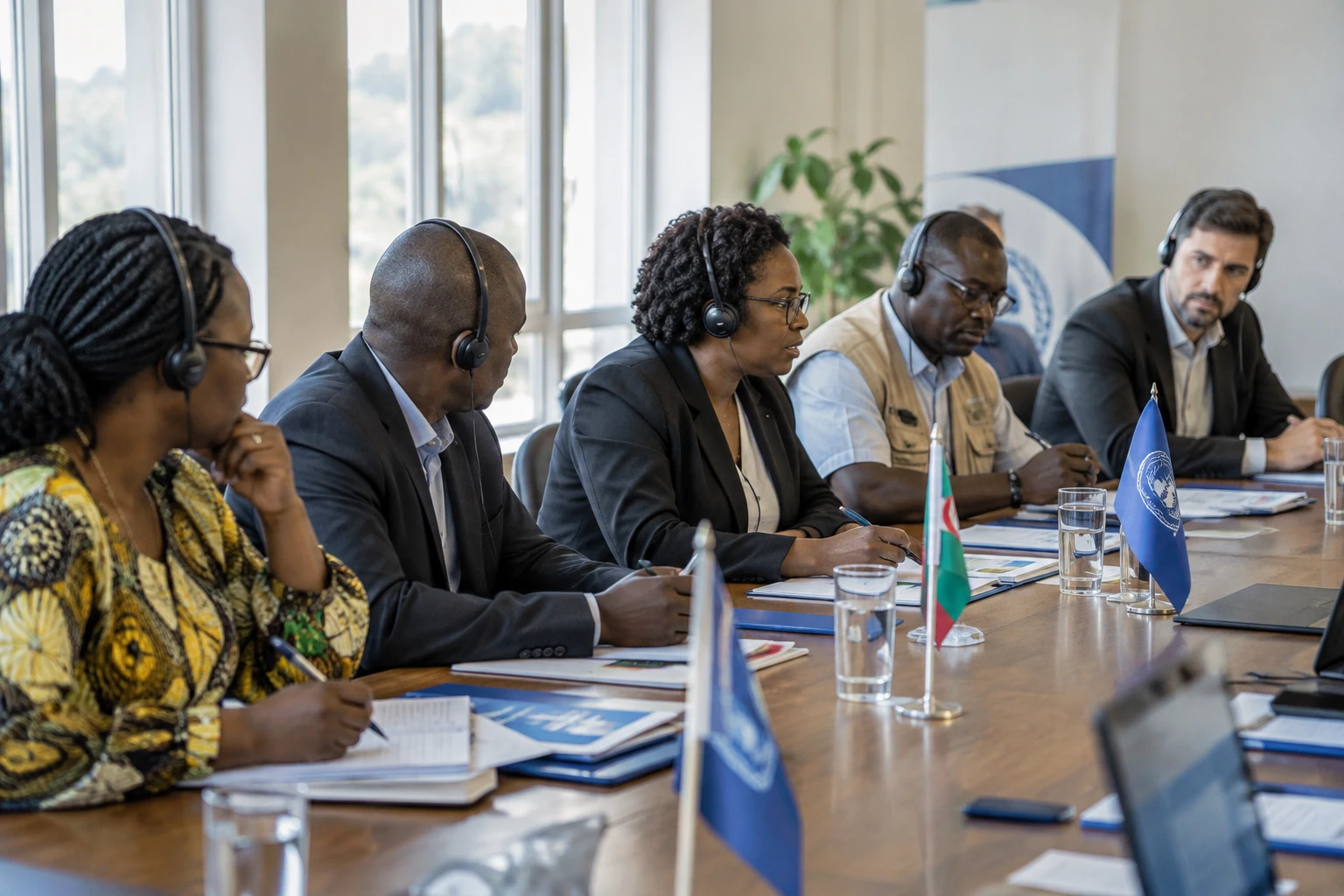
For a refugee family, a reduced monthly allowance means more than fewer meals. It also leaves less room to cope with bad weather, replace a damaged shelter or meet children’s needs. In Burundi, the continuity of food assistance depends on funding that remains uncertain.
Support extended, but without lasting guarantees
At the time described, the World Food Programme (WFP) estimated that it needed more than $30 million to fund assistance from January to the following June. The agency said it needed about $5 million a month for refugees in Burundi, including $1 million for the Busuma site in the east of the country.
On 24 July, WFP had warned that a lack of resources could halt distributions as early as October. Contributions from some donors, under the auspices of the Burundian government, ultimately helped avert an immediate cut-off. Jean de Lestrange, then the agency’s head of partnerships and communications, said the mobilisation guaranteed continuity for only a few months.
Figures reported at the time put assistance at 38,000 Burundian francs per person per month, equivalent to about $12 according to the exchange rate cited then. This is a monthly allowance, not a daily food ration. Its purchasing power also depends on local prices and each household’s particular needs.
Nayonde Mbirizi, a 40-year-old Congolese refugee, described the assistance at the time as derisory and said tents had been weakened by the winds. Her testimony highlights a practical issue: food security and the quality of shelter rise or fall together, particularly when families have few resources.
Busuma at the heart of a regional response
Burundi hosts people who have fled violence in the eastern Democratic Republic of the Congo (DRC). The Busuma site, in eastern Burundi, was among the main locations cited in the figures at the time. The numbers of people present and of returns to the DRC are snapshots of a changing situation and should not be read as current data.
At the time, the United Nations High Commissioner for Refugees (UNHCR) reported more than 22,000 returns to the DRC and more than 33,000 refugees still in Busuma. A delegation from the European Union, Switzerland and the European Civil Protection and Humanitarian Aid Operations department (ECHO) visited the site to assess needs. UNHCR’s deputy representative in Burundi spoke of discussions with the Burundian authorities and WFP on other solutions.
The regional situation has since seen further displacement. WFP says nearly 70,000 people fled to Burundi from eastern DRC between January and June 2025. In March 2026, UNHCR reported more than 33,000 spontaneous returns to the DRC in one month, following the reopening of the border on 23 February. These developments show why estimates in a dated article cannot be applied to the current situation. WFP data on displacement and assistance in Burundi and UNHCR’s update on March 2026 returns record these changes.
Funding at stake for refugees and host communities
When funds run short, the first consequences are felt in the frequency or level of assistance households receive. Humanitarian teams are also affected, having to make trade-offs between food needs, shelter, health and protection. At a site such as Busuma, these choices have different effects depending on family size, the condition of tents and the ability to earn an income.
The response involves several actors: the Burundian government, WFP for food assistance, UNHCR for protection and coordination, as well as donors and organisations working on the ground. External funding remains crucial, but the organisation of reception also falls to the national authorities. Coordination does not remove budget constraints; it helps determine who receives what assistance, and where.
For Burundian communities near the sites, the arrival of refugees can also increase demand for local services and resources. This does not mean refugees are responsible for the area’s difficulties. Rather, it underscores the importance of a response that takes account both of displaced people and of the populations living around reception sites.
Update the data before making decisions
Burundi is a member of the East African Community (EAC), a regional framework for cooperation between neighbouring countries. Displacement from eastern DRC also affects other states in the region and requires coordination on protection, borders and voluntary returns. At African Union level, the issue highlights the potential gap between commitments to solidarity and the resources actually mobilised for forced displacement.
What happens next will therefore depend on two factors: developments in movements between the DRC and Burundi, and partners’ capacity to fund predictable assistance. The amounts, allowances and population figures reported here relate to the period covered by the original information. More recent data confirm that Busuma’s population and humanitarian needs have changed since then. To avoid confusion, operational decisions should be based on dated, up-to-date figures rather than on an old assessment presented as current.