Algeria
 Egypt
 Libya
 Morocco
 Sudan
 Tunisia
 Benin
 Burkina Faso
 Cabo Verde
 Côte d'Ivoire
 Ghana
 Guinea
 Guinea-Bissau
 Liberia
 Mali
 Mauritania
 Niger
 Senegal
 Sierra Leone
 The Gambia
 Togo
 Cameroon
 Central African Republic
 Chad
 DR Congo
 Equatorial Guinea
 Gabon
 Republic of the Congo
 São Tomé and Príncipe
 Burundi
 Comoros
 Djibouti
 Eritrea
 Ethiopia
 Kenya
 Madagascar
 Malawi
 Mauritius
 Mozambique
 Rwanda
 Seychelles
 Somalia
 South Sudan
 Tanzania
 Uganda
 Angola
 Botswana
 Eswatini
 Lesotho
 Namibia
 South Africa
 Zambia
 Zimbabwe
In Bindin, in Nigeria’s Zamfara State, gold draws workers to pits where neither their numbers nor their safety are guaranteed. After gunfire on 5 and 6 October, the available accounts give two very different versions. This uncertainty also reveals how exposed artisanal mining remains to armed groups and how difficult it is to regulate.
Disputed death toll, facts still incomplete
Local authorities reported 17 deaths: five miners killed at a gold-mining site, followed by 12 soldiers during an exchange of fire in the village. The toll was reported by AFP. Local councillor Abdullahi Musa Mutunji described the attack as retaliation, after a miner allegedly killed an armed man who was threatening him.
A different account, gathered by Reuters from witnesses, reported at least 25 soldiers killed in an attack on a military camp on 5 October. The following day, the assailants allegedly opened fire on a pit where about a thousand people were working. A village chief and relatives of victims put the number of miners killed at at least 100. Reuters said it had been unable to confirm this toll. The army and the Zamfara government did not respond to requests for comment reported by the agency.
The accounts differ both on the chronology and the number of victims. In the absence of an independent count, the toll of 17 deaths attributed to local authorities must therefore be distinguished from the much higher figures reported to Reuters by witnesses and relatives. None of this information, on its own, establishes the final toll.
Without a register, counting at the mines is harder
Artisanal sites host workers whose numbers fluctuate from day to day. Many come from nearby villages and are not listed on any register. After an attack, the count then depends on families, local officials and those who have been able to reach the site. This makes verification particularly difficult when victims are scattered or communications are limited.
Bindin is in Maru district, in north-western Nigeria. The village was already at the centre of an alert in April: Muhammad Shehu Daligent, commander of the Zamfara community guard, said at the time that armed groups controlled Bindin and were forcing residents to mine gold. He also said that anyone there was either a bandit or an accomplice. This generalisation, attributed to its author, does not distinguish civilian workers from armed actors.
Accounts from October also mention a military presence in the area. But the available information does not specify when the post was established or how it was co-ordinated with the community guard. The latter reports to the state government; the army falls under the federal authorities in Abuja. Two chains of responsibility therefore coexist, though how they are connected on the ground is not documented here.
Mine closures did not end extraction
The tragedy is part of a mining economy that is difficult to formalise. In April 2019, the federal government suspended mining activities in Zamfara, citing the link between illegal gold mining and insecurity. Extraction nevertheless continued in several areas, outside the legal framework. According to a study by the Global Initiative Against Transnational Organized Crime, the closure also made artisanal miners more dependent on armed groups that control access to the pits.
The study reports that, since November 2022, miners and gold buyers at sites in Bukkuyum and Maru have paid armed groups a share of their income, sometimes described as a “protection tax”. The payment mainly appears to secure access to the sites; it does not guarantee safety. This practice illustrates the dilemma facing workers who contend both with the lack of formal authorisation and with levies imposed by those who wield local power.
On 22 December 2024, federal Minister of Solid Minerals Dele Alake announced the lifting of the ban, citing improved security. The official mining cadastre portal subsequently announced the reopening of the process for issuing licences and regularising activities in Zamfara. Regulatory activity restarting, however, is not enough to show that sites have become safe or that miners can obtain permits and work without coercion.
A challenge for security and local governance
Bindin’s vulnerability is not new. In November 2016, an attack on a gold-mining site at Gidan Ardo, also in Maru district, killed dozens of miners. The exact number varies between accounts and sources. A study by GI-TOC and ACLED reports 36 deaths, while other counts cited in the study put the number of victims at 40. This discrepancy is a reminder that uncertainty over death tolls is not unique to the October attack.
The issue goes beyond the presence of armed forces. In April 2025, Governor Dauda Lawal encouraged miners in Maru to register and referred to support to help them obtain federal permits, including by forming co-operatives. Yet the available information does not show how many workers have actually been registered or whether this initiative has changed the conditions for accessing the pits.
Data compiled by the European Union Agency for Asylum, drawing on sources including Amnesty International, indicate that 725 villages in Zamfara, across 13 of the state’s 14 local government areas, were under the control of criminal groups in May 2025. This figure describes a situation of control reported by those sources; it does not mean that all localities face the same forms of pressure or violence.
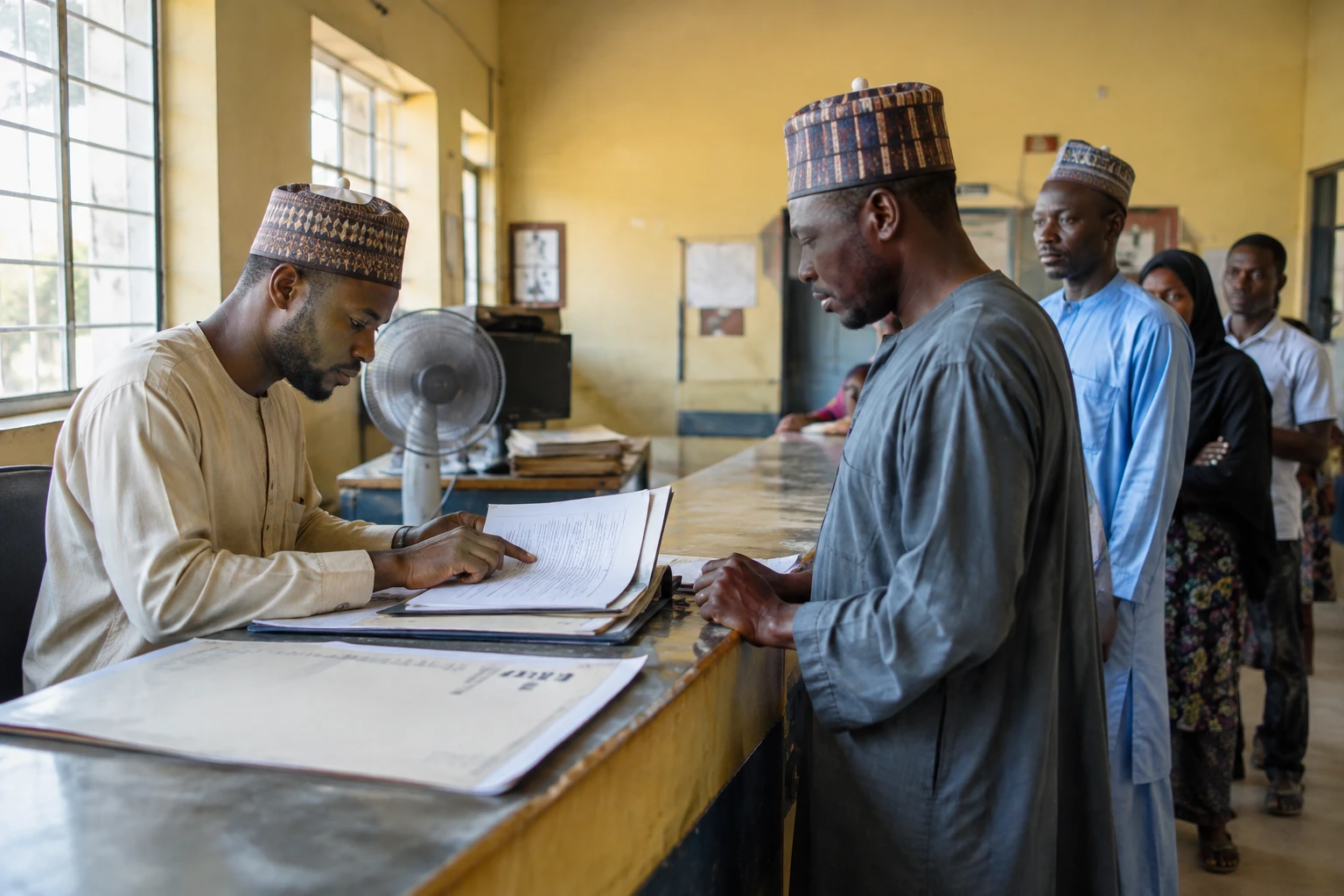
For workers and their families, formalisation can provide access to licences and public protection. But it also requires administrations to register miners and enforce the rules in areas where armed groups impose their own conditions. Across West Africa, the case of Zamfara is a reminder that regulating mineral resources touches on local incomes, security and control of territory. In Bindin, the first point to follow remains the establishment of a verifiable death toll and the authorities’ ability to clarify who protects the sites and under whose responsibility.