Algeria
 Egypt
 Libya
 Morocco
 Sudan
 Tunisia
 Benin
 Burkina Faso
 Cabo Verde
 Côte d'Ivoire
 Ghana
 Guinea
 Guinea-Bissau
 Liberia
 Mali
 Mauritania
 Niger
 Nigeria
 Senegal
 Sierra Leone
 The Gambia
 Togo
 Cameroon
 Central African Republic
 Chad
 DR Congo
 Equatorial Guinea
 Gabon
 Republic of the Congo
 São Tomé and Príncipe
 Burundi
 Comoros
 Djibouti
 Eritrea
 Ethiopia
 Madagascar
 Malawi
 Mauritius
 Mozambique
 Rwanda
 Seychelles
 Somalia
 South Sudan
 Tanzania
 Uganda
 Angola
 Botswana
 Eswatini
 Lesotho
 Namibia
 South Africa
 Zambia
 Zimbabwe
A multi-leg journey was enough to put Kenyan health authorities in a race against time. After a man infected with the Ebola virus died in Nairobi, the task is now to quickly locate everyone who may have been exposed, while distinguishing an imported case from local transmission.
A case that arrived by road and air
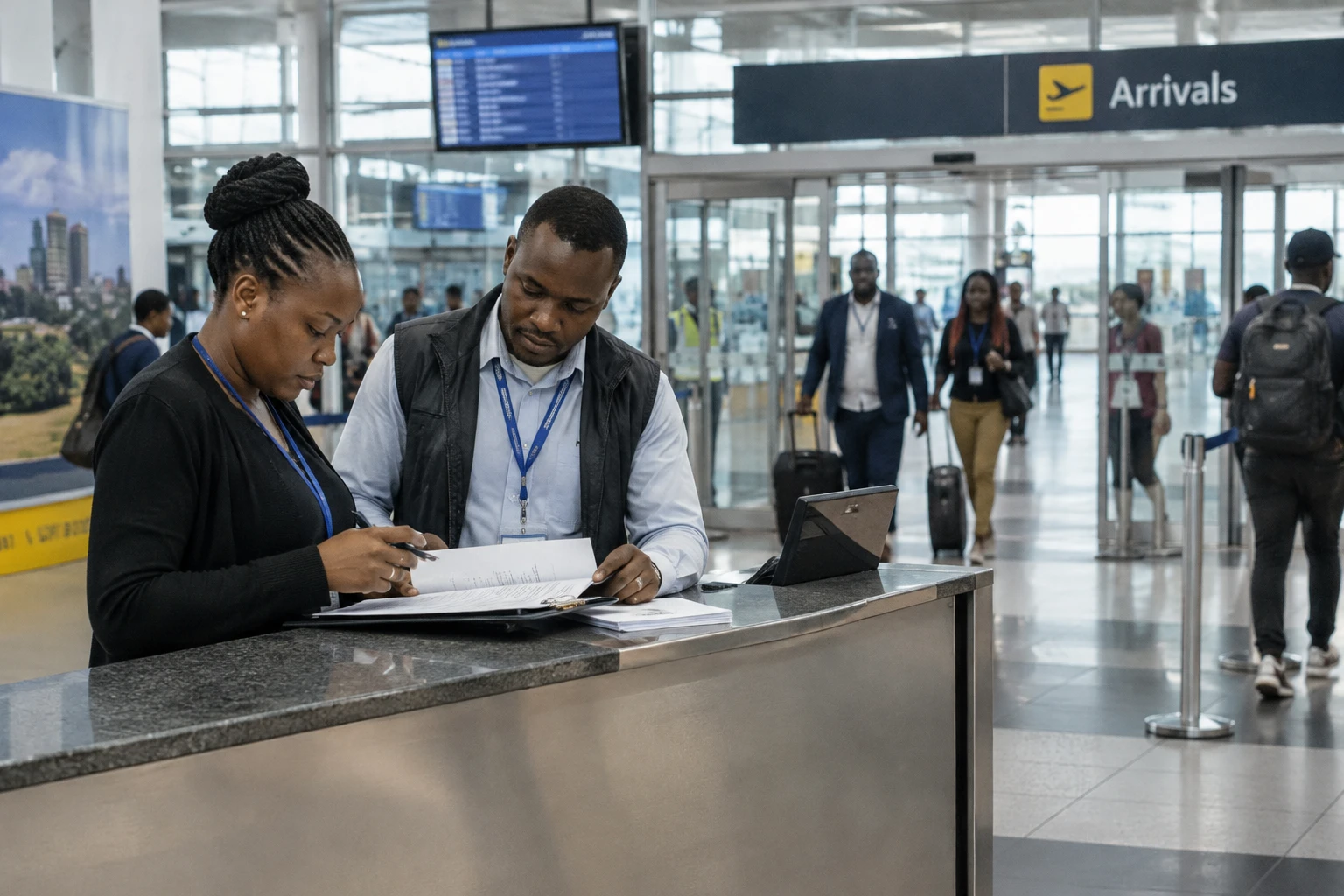
The patient, a Kenyan citizen who lived in the Democratic Republic of the Congo (DRC), fell ill about a month before returning. He left the DRC by road, travelled to Kampala in Uganda, then took a flight to Nairobi on 3 October 2026. Authorities say he arrived in the Kenyan capital on a Jambojet flight.
Admitted to hospital in Nairobi after his condition worsened, he tested positive for the Bundibugyo virus, a strain of Ebola. The national laboratories and the Kenya Medical Research Institute confirmed the result. Despite supportive care, the patient died during the night of 5 October. The Kenyan Ministry of Health announced the following day that this was the first confirmed imported case in Kenya.
This distinction matters. At this stage, the authorities have reported no secondary transmission in Kenya. An imported case refers to an infection contracted abroad and then detected in the country of arrival. On its own, it does not mean that a chain of transmission has developed there.
The ministry has identified 28 people who had contact with the patient, including relatives and healthcare workers. Health services are also looking for 23 passengers and four crew members who were on the same flight. Contact tracing and quarantine measures apply to people considered to have been exposed. The information available at the time of the official announcement reported no positive test results among the identified contacts.
National response under pressure
Kenya had stepped up its preparedness since the outbreak began in the DRC in May 2026. The ministry says it had screened more than 652,000 travellers and analysed 267 suspected samples in five laboratories by 6 October. These figures describe surveillance activity reported by the authorities; on their own, they do not measure the current risk in each region of the country.
The measures are not limited to Nairobi’s international airport. Two mobile laboratories have, in particular, been deployed at the Busia and Lwakhakha border posts, on the border with Uganda. Kenya must therefore balance checks at entry points with the continuity of travel in a region with extensive road, commercial and family links.
At a press briefing, Principal Secretary for Public Health Mary Muthoni described the case as an imported infection, not a local outbreak. This communication aims to distinguish the actual health risk from rumours that can cause fear or stigma. It does not, however, relieve health services of the need to check contacts and provide regular updates.
The quality of follow-up also depends on trust. People being traced must be able to come forward and access a medical assessment without being portrayed as responsible for spreading the disease. For healthcare workers, the priority is to identify symptoms quickly and follow prevention procedures, while protecting patients and hospital staff.
An outbreak that crosses borders
The regional context makes this vigilance necessary. The Bundibugyo strain outbreak has been reported in the DRC and has affected neighbouring countries, including Uganda. The DRC shares long borders with several states and has transport corridors that are difficult to monitor continuously. In these circumstances, early detection depends as much on cooperation between health services as on checks at airports.
Kenya is a member of the East African Community (EAC), a regional grouping that facilitates cooperation among its member states. The movement of people and goods, which is essential to local economies, makes epidemiological coordination particularly important. An effective system must relay alerts quickly between countries without treating travellers or border communities as a threat.
The Africa Centres for Disease Control and Prevention (Africa CDC) have announced that they are sending experts to support Kenya’s response. The World Health Organization also says it is working with the government on surveillance, contact tracing and prevention measures. This regional and continental support complements national teams; it does not replace their role in leading the response.
What the coming days will reveal
The contact-monitoring period is crucial: it should make it possible to identify anyone who develops symptoms after exposure. The authorities must also establish whether everyone on the flight has been located and maintain clear guidance for travellers and health professionals. The number of people being monitored and the results of assessments will need to be updated as the investigation progresses.
For Kenyans, the immediate impact will depend above all on how quickly the investigation proceeds and whether health facilities can provide care and prevention. Transport workers, medical teams and residents of transit areas may be affected by monitoring guidance. In Nairobi, the presence of the hospital that treated the patient also places infection prevention in healthcare settings at the centre of attention.
The case is a reminder, finally, that an outbreak does not stop at national borders. For East Africa, the priority is to link the alert systems of Kenya, Uganda and the DRC effectively, while drawing on the institutions of the EAC, Africa CDC and the WHO. What happens next will be measured by specific facts: whether all contacts are traced, whether secondary cases emerge and how transparent the next health updates are.