Algeria
 Egypt
 Libya
 Morocco
 Sudan
 Tunisia
 Benin
 Burkina Faso
 Cabo Verde
 Côte d'Ivoire
 Ghana
 Guinea
 Guinea-Bissau
 Liberia
 Mali
 Mauritania
 Niger
 Nigeria
 Senegal
 Sierra Leone
 The Gambia
 Togo
 Cameroon
 Central African Republic
 Chad
 DR Congo
 Equatorial Guinea
 Gabon
 Republic of the Congo
 São Tomé and Príncipe
 Burundi
 Comoros
 Djibouti
 Ethiopia
 Kenya
 Madagascar
 Malawi
 Mauritius
 Mozambique
 Rwanda
 Seychelles
 Somalia
 South Sudan
 Tanzania
 Uganda
 Angola
 Botswana
 Eswatini
 Lesotho
 Namibia
 South Africa
 Zambia
 Zimbabwe
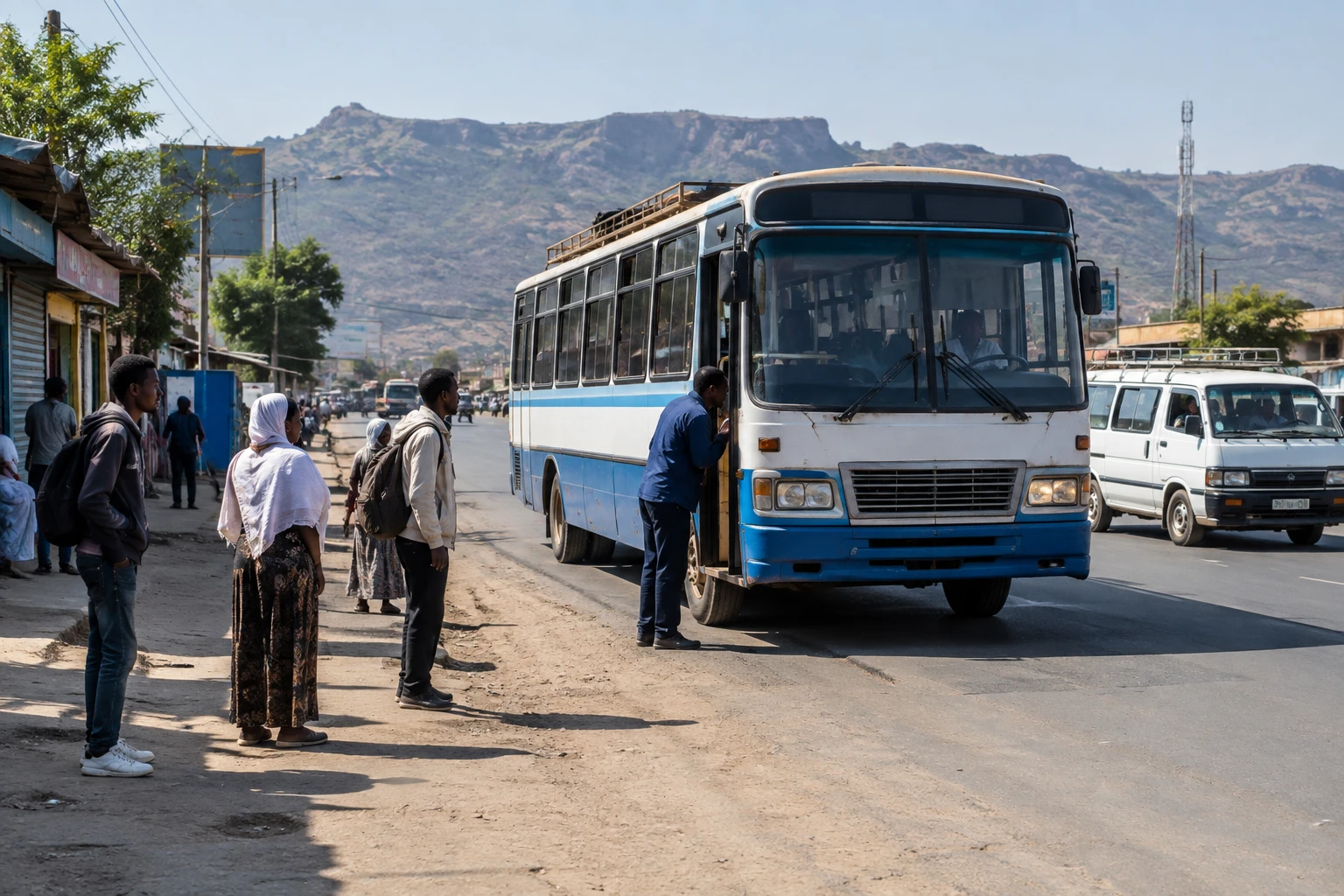
In Adigrat, a town in northern Ethiopia near the Eritrean border, every troop movement can shift the balance in a conflict that has already flared up again. Residents say they saw soldiers in Eritrean uniform heading south. If these observations are confirmed, they could widen a confrontation that now goes beyond Tigrayan and federal actors alone.
A fragile ceasefire in northern Ethiopia
The Tigray region remains scarred by the 2020–2022 war, which pitted the Ethiopian federal government against the Tigray People’s Liberation Front (TPLF), the party that dominated regional institutions. The agreement signed in Pretoria in November 2022 ended the main fighting. But several political and territorial tensions have not disappeared, and Eritrea was not party to the agreement.
Since 23 September 2026, new clashes have pitted the TPLF against Ethiopian federal forces, according to available information. The resumption of fighting comes as relations between Addis Ababa and Asmara deteriorate. Landlocked Ethiopia argues that it needs access to the Red Sea. Eritrea regards this ambition as a threat to its sovereignty and rejects Ethiopian allegations of interference.
The crisis is also unfolding in a sensitive regional context. IGAD, a co-operation organisation for countries in the Horn of Africa, includes Ethiopia and Eritrea. A lasting deterioration in their relations could complicate dialogue efforts in a region where security, borders and access to maritime routes are closely linked.
Reports from Adigrat, without full independent confirmation
On 7 October, a local official and several residents reported the presence of Eritrean troops in Adigrat, about 40 kilometres from the border. The official, who spoke on condition of anonymity, said soldiers had been there for four days and that the population was worried.
One witness says they saw soldiers in Eritrean uniform heading south. Another says they saw soldiers in trucks and military vehicles travelling towards Idaga Hamus, south of Adigrat. They also mention the presence of heavy weapons. These details are based on accounts reported by Agence France-Presse and do not, on their own, constitute independent verification of the identity or mission of the forces observed.
Reports published the same day also say Ethiopian military officials have accused Eritrea of having a presence in northern Tigray. This corroborates the existence of public accusations, but does not independently establish the specific deployment described in Adigrat. Eritrea has in the past rejected Ethiopian allegations that its troops are present on neighbouring territory. The Associated Press report on the fighting and allegations of an Eritrean presence also recounts these claims without presenting them as independent verification in Adigrat.
On the ground, Ethiopian federal forces and an allied militia entered Mekelle, the regional capital, after the TPLF withdrew, according to the information provided. Allied fighters are said to have subsequently reached Wukro, on the road heading back towards the border. These reported changes in control and movements make the situation particularly unstable, but do not in themselves allow an Eritrean strategy to be inferred.
Escalation with local and regional consequences
For residents of Adigrat and nearby communities, the immediate uncertainty concerns the safety of travel, access to services and the resumption of daily activities. Residents along roads and in rural areas may face different risks from those in major urban centres, particularly if fighting or military movements disrupt transport links and supplies.
For Addis Ababa, a confirmed Eritrean military presence would be a national security concern and could increase pressure on the northern front. For Asmara, any intervention, confirmed or alleged, could be presented as a measure to defend its border interests. But neither government has provided independent confirmation here that would settle the accounts gathered in Adigrat.
The precedent of the 2020–2022 war explains the gravity of the concerns. Eritrean forces fought alongside Ethiopian federal forces against the TPLF at the time. The Pretoria peace agreement subsequently brought an end to hostilities between the Ethiopian parties, without resolving disputes between Addis Ababa and Asmara. The past therefore offers insight into the risks, but does not prove that current events are following the same course.
At the regional level, direct Eritrean military involvement would broaden the crisis beyond Tigray. It could further strain bilateral relations and complicate mediation efforts in the Horn of Africa. The immediate challenge is to distinguish confirmed facts from allegations and witness accounts, while monitoring the course of the fighting, official communications from the two capitals and any dialogue initiative led by IGAD or the African Union.