Algeria
 Egypt
 Libya
 Morocco
 Sudan
 Tunisia
 Benin
 Burkina Faso
 Cabo Verde
 Côte d'Ivoire
 Ghana
 Guinea
 Guinea-Bissau
 Liberia
 Mali
 Mauritania
 Niger
 Nigeria
 Senegal
 Sierra Leone
 The Gambia
 Togo
 Cameroon
 Central African Republic
 Chad
 DR Congo
 Equatorial Guinea
 Gabon
 Republic of the Congo
 São Tomé and Príncipe
 Burundi
 Comoros
 Djibouti
 Eritrea
 Ethiopia
 Kenya
 Madagascar
 Malawi
 Mauritius
 Mozambique
 Seychelles
 Somalia
 South Sudan
 Tanzania
 Uganda
 Angola
 Botswana
 Eswatini
 Lesotho
 Namibia
 South Africa
 Zambia
 Zimbabwe
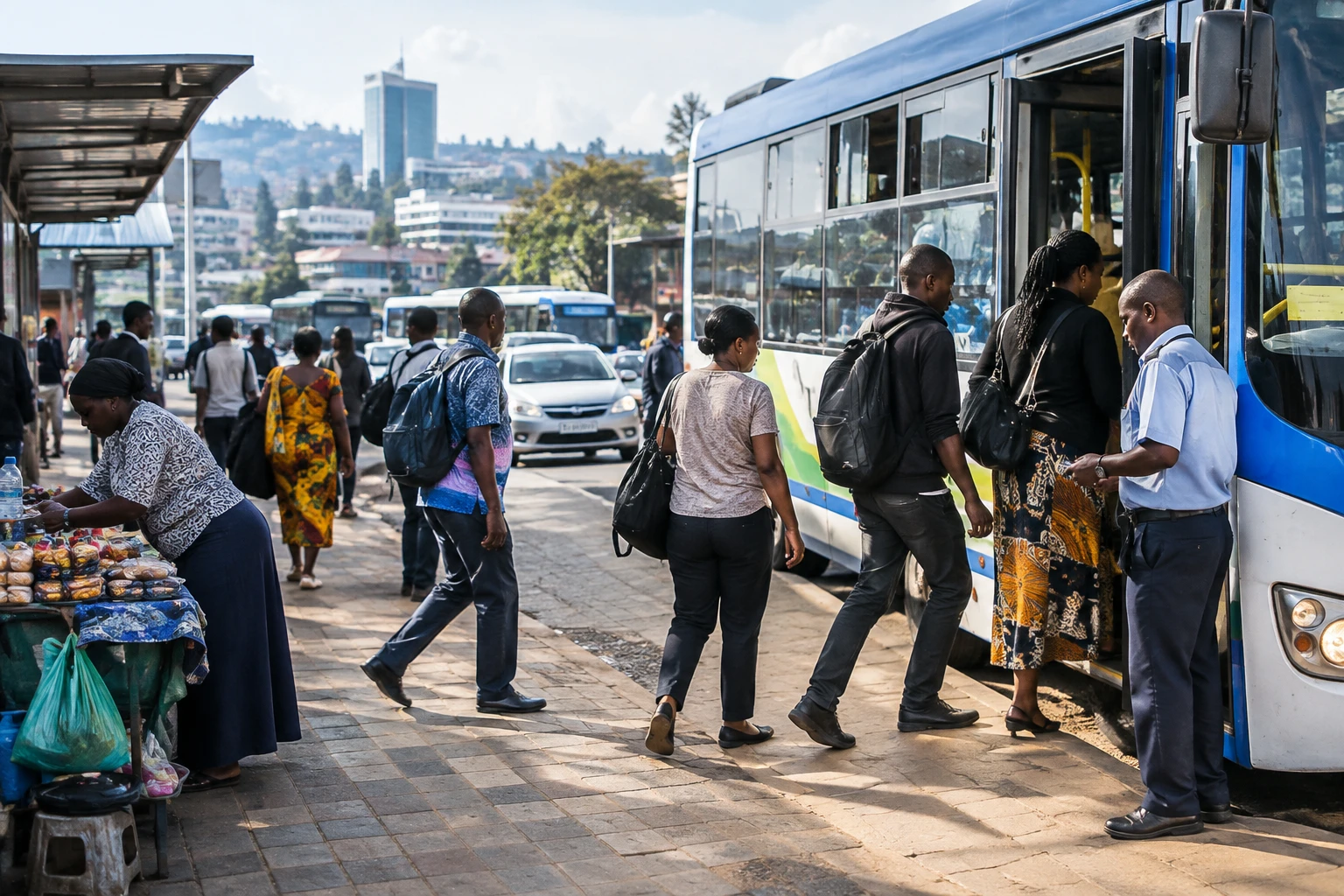
A narrowing public deficit does not automatically mean relief for households. In Rwanda, improved government accounts come as prices accelerate and financing needs remain high. The budget balance therefore depends as much on public revenue and spending as on the cost of living.
A fiscal path to consolidate
Rwanda’s budget deficit stood at 4.8% of gross domestic product (GDP) in the 2025/26 financial year, down from 5.5% the previous year, according to the Rwandan authorities and the International Monetary Fund (IMF). The figure was announced on 6 October 2026, following a preliminary agreement between Fund staff and Kigali on the first review of the current programme.
The improvement is attributed to higher tax revenues and spending restraint. Passing international oil prices through to the pump has also limited the cost of fuel subsidies. In return, this policy passes global market fluctuations more directly on to motorists and businesses.
The result is notable in light of the projections available when the programme was approved in June 2026. At the time, the IMF forecast a deficit of 5.7% of GDP for the financial year. The 4.8% figure reported in October therefore represents an improvement on that forecast, but does not settle the question of public-finance sustainability.
The 38-month programme agreed with the IMF in June is worth 185.031 million special drawing rights, or about $250 million. The staff-level agreement is not yet final approval by the Executive Board. Such approval would pave the way for a disbursement of 26.433 million special drawing rights, estimated at $35.7 million.
Growth does not shield against the price shock
Economic activity indicators remain strong. The economy grew by 9.7% in the first half of 2026, according to Rwanda’s Ministry of Finance. But this growth does not automatically translate into a lower cost of living. Annual inflation reached 15.7% in August, according to the National Institute of Statistics of Rwanda. Food, housing and transport prices weigh directly on family budgets and business costs.
External pressures are also complicating budget management. A decline in official development assistance reduces one source of financing, while higher oil and fertiliser prices make imports more expensive. For a landlocked country, these costs can feed through to transport, agricultural production and the prices paid by consumers.
The IMF estimated public debt at 73.1% of GDP in 2026 and expects it to decline gradually over the medium term. This ratio alone does not show how much debt servicing costs or how much room remains to fund public services. It does, however, indicate why Kigali is seeking to increase domestic revenues and make better choices about investment projects financed with external resources.
The second medium-term revenue strategy, known as MTRS-2, is intended to help broaden the tax base. The challenge will be to mobilise more tax revenue without placing a disproportionate burden on low-income households and small businesses, particularly those in the informal economy. At the same time, prioritising investment means weighing projects against their costs and expected benefits, rather than making indiscriminate spending cuts.
A regional issue too
Rwanda is a member of the East African Community (EAC), a regional bloc that aims to facilitate trade and the movement of goods and services. Pressure from energy and input prices crosses borders: it affects countries dependent on imports and borrowing in markets subject to the same international conditions.
Rwanda’s budget choices therefore have regional significance, although conditions are not identical in every EAC country. Consolidation that preserves productive investment can strengthen Rwanda’s ability to trade and fund its priorities. Conversely, poorly targeted cuts could weigh on services and economic activity, while fuel price adjustments can quickly increase transport costs.
The next step to watch is the IMF Executive Board’s consideration of the review, expected in December, according to Rwanda’s Ministry of Finance. It will also be important to see whether tax revenues remain strong, inflation eases and debt follows its projected path. Only then can the deficit reduction translate into lasting fiscal room, rather than a temporary improvement in the accounts.
Sources consulted: Rwanda’s Ministry of Finance, agreement on the first review ; IMF, programme approval and June 2026 projections ; National Institute of Statistics of Rwanda, August 2026 price index ; East African Community, regional trade integration.