Algeria
 Egypt
 Libya
 Morocco
 Sudan
 Tunisia
 Benin
 Burkina Faso
 Cabo Verde
 Côte d'Ivoire
 Ghana
 Guinea
 Guinea-Bissau
 Liberia
 Mali
 Mauritania
 Niger
 Nigeria
 Senegal
 Sierra Leone
 The Gambia
 Togo
 Central African Republic
 Chad
 DR Congo
 Equatorial Guinea
 Gabon
 Republic of the Congo
 São Tomé and Príncipe
 Burundi
 Comoros
 Djibouti
 Eritrea
 Ethiopia
 Kenya
 Madagascar
 Malawi
 Mauritius
 Mozambique
 Rwanda
 Seychelles
 Somalia
 South Sudan
 Tanzania
 Uganda
 Angola
 Botswana
 Eswatini
 Lesotho
 Namibia
 South Africa
 Zambia
 Zimbabwe
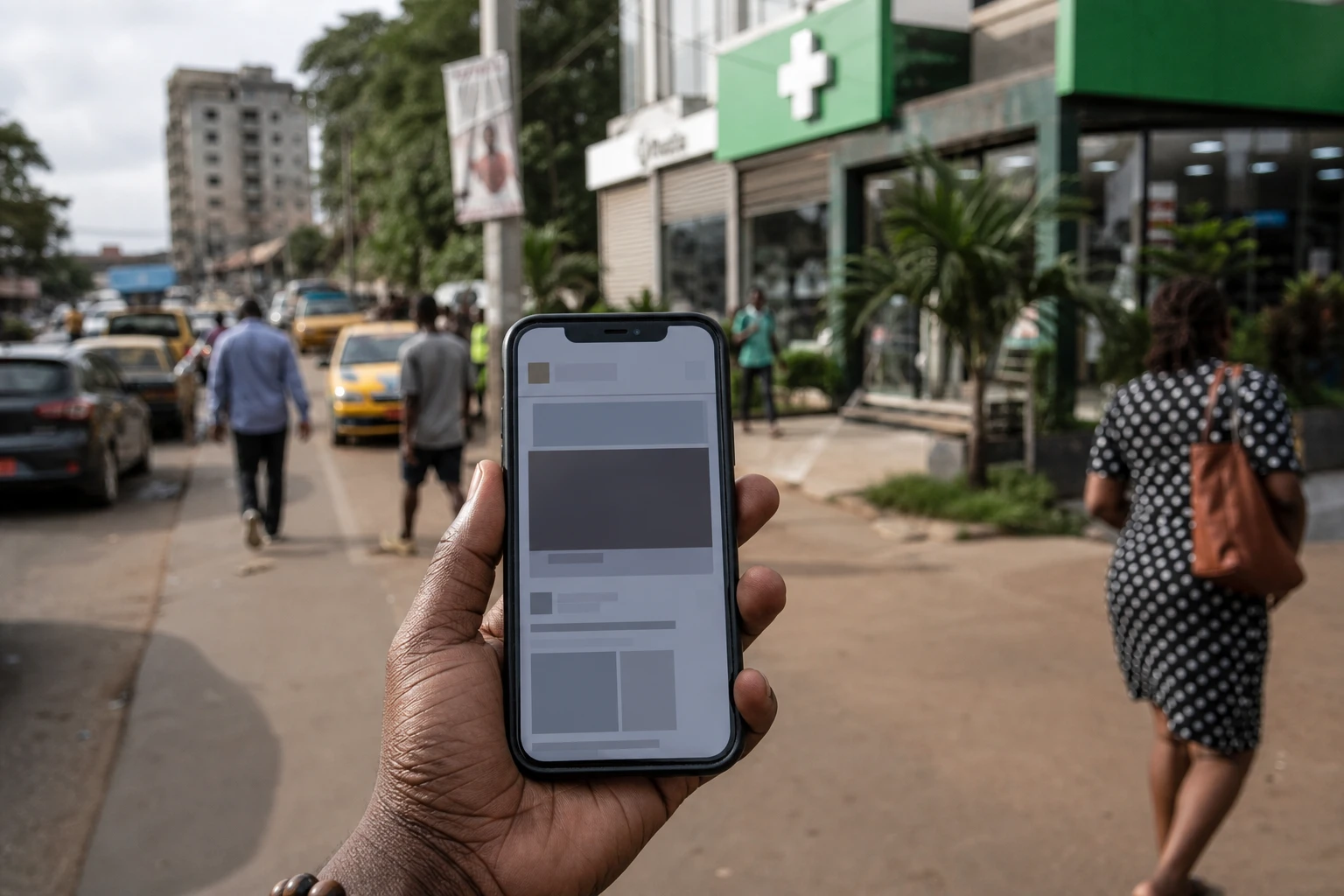
In Cameroon, the circulation of a medicine does not always guarantee its quality. Between official supply chains, informal markets and cross-border routes, products intended to heal can also become a source of danger.
The phenomenon extends well beyond Cameroon’s borders. In the Central African Economic and Monetary Community, or CEMAC, which brings together six countries sharing a common economic and monetary area, seizures of illicit medical products reached at least 251 tonnes between 2020 and 2025. The figure appears in a report by the United Nations Office on Drugs and Crime (UNODC), produced with the World Health Organization and the CEMAC Commission. It was also reported by Le360 Afrique and in a publication devoted to the UNODC’s regional report.
A market fuelled by difficulties accessing healthcare
Cameroon, Gabon, Chad, the Central African Republic, the Republic of the Congo and Equatorial Guinea are all affected by this warning. In these countries, malaria, tuberculosis and HIV continue to weigh on health systems. Yet access to safe, available and affordable treatment remains unequal, depending on location and income.
This gap creates space for clandestine sellers. Some offer genuine medicines diverted from authorised supply chains. Others sell falsified, incorrectly dosed, expired or never-authorised products. In both cases, patients do not always have the information they need to distinguish a reliable product from a dangerous one.
Seizures include antibiotics, antimalarials, painkillers and anti-inflammatory drugs. Tramadol and pregabalin have also been found in intercepted consignments. These substances have medical uses, but their diversion for recreational purposes can cause dependence, poisoning and serious complications.
The problem is not confined to street markets. The report says illicit products can sometimes enter authorised health facilities. For patients, this possibility undermines trust in pharmacies, health centres and public procurement programmes.
Cameroon at the heart of trafficking routes
Cameroon’s position gives it an important role in Central African trade. Its ports, road networks and commercial corridors link the Gulf of Guinea to the region’s interior. Products brought in by sea, air or land can then be transported to neighbouring countries.
This does not mean Cameroon is the sole source of consignments. Rather, it shows that the country lies along routes used by both legal trade and clandestine networks. Traffickers exploit the same flows, crossing points and sometimes the same means of transport as legitimate operators.
Cameroonian services regularly report interceptions. In June 2025, Cameroonian customs announced the seizure of 2,700 tramadol tablets hidden in a sack of goods from Nigeria, in the South-West Region. Another operation in Ngaoundéré uncovered 4,870 tablets in the luggage of a bus. Customs also reported 26,000 tablets hidden in sheets on the Maroua-Garoua route. These operations are documented in Cameroonian Customs bulletins and on its institutional website.
Routes to Gabon illustrate this cross-border dimension. In November 2025, Gabonese customs officers seized 7,750 tramadol tablets in Bitam, a town near the border with Cameroon. The consignment was hidden in sacks of flour, according to consistent reports from GabonReview and the Gabonese press.
A threat to health and institutions
A falsified medicine may fail to treat an illness. It may also contain a toxic substance or a dangerous dose. In the case of antibiotics, inadequate treatment can encourage antimicrobial resistance. This makes some infections harder to treat and increases pressure on hospitals.
The consequences are not the same for everyone. In large cities, patients may have access to several pharmacies and better information. In rural or remote areas, supplies may be more limited. Buying a single tablet from an informal seller can then become an immediate solution when a full course of treatment is too expensive or unavailable.
Young people are particularly exposed to the diversion of tramadol. In Gabon, the product is often known as “kobolo”. Its circulation fuels a market affecting urban neighbourhoods, transport routes and border areas. Responsibility, however, does not rest solely with consumers or small-scale sellers. Investigations must also trace suppliers, intermediaries and the organisers of these networks.
In the Central African Republic, the report describes another mechanism. Armed groups are said to be involved in looting health centres and taxing consignments crossing territories under their control. This turns medicines into a source of income. At the same time, it deprives communities of essential products and further weakens health facilities.
The response must go beyond seizures
Interceptions are a useful indicator, but they do not measure the full scale of the trade. They depend on inspections, information-sharing and the ability of services to record seized products. An increase in seizures may therefore reflect more trafficking, but also more effective surveillance.
The regional response must combine several measures. Customs, health authorities, security forces, pharmacists and magistrates need to be able to exchange information quickly. National laboratories must also have the resources to identify falsified products and establish how dangerous they are.
CEMAC has already begun harmonising pharmaceutical policies. The African Union, for its part, established the African Medicines Agency to strengthen the quality and safety of products across the continent. But rules are not enough if inspections remain uneven and essential medicines are still too expensive or difficult to find.
For Cameroon and its neighbours, the challenge is therefore twofold. They must dismantle networks that profit from medical needs and the diversion of medicines for consumption. They must also address the shortcomings that make this market attractive: stock shortages, high prices, long distances, weak oversight of sales outlets and insufficient information-sharing.
The next step will be to assess how the report’s recommendations are being implemented in the six CEMAC countries. The central question will not be only how many tonnes are seized. It will also be whether patients, in Yaoundé and in remote regions alike, can gain easier access to safe, identifiable and affordable medicines.