Algeria
 Egypt
 Libya
 Morocco
 Sudan
 Tunisia
 Benin
 Burkina Faso
 Cabo Verde
 Côte d'Ivoire
 Ghana
 Guinea
 Guinea-Bissau
 Liberia
 Mali
 Mauritania
 Niger
 Nigeria
 Senegal
 Sierra Leone
 The Gambia
 Togo
 Cameroon
 Central African Republic
 Chad
 DR Congo
 Equatorial Guinea
 Gabon
 Republic of the Congo
 São Tomé and Príncipe
 Burundi
 Comoros
 Djibouti
 Eritrea
 Kenya
 Madagascar
 Malawi
 Mauritius
 Mozambique
 Rwanda
 Seychelles
 Somalia
 South Sudan
 Tanzania
 Uganda
 Angola
 Botswana
 Eswatini
 Lesotho
 Namibia
 South Africa
 Zambia
 Zimbabwe
In Addis Ababa, Abiy Ahmed’s reappointment opens a new political cycle as northern Ethiopia slides back into violence. The prime minister has a strong parliamentary majority. But his second term begins under pressure from fighting in Tigray, tensions with Eritrea and persistent divisions in several Ethiopian regions.
A mandate confirmed by a large parliamentary majority
On 5 October 2026, the House of Peoples’ Representatives reappointed Abiy Ahmed as prime minister for five years. The appointment follows the general election of 1 June, which was won by a large margin by the Prosperity Party, the governing political formation.
According to results announced by the National Election Board of Ethiopia, the governing party won 438 of the 501 seats filled in the House. This majority allows it to form the federal government and nominate its leader to head the executive. The figure was reported by several media outlets and corresponds to the results published after the vote.
Ethiopia has a parliamentary system. Voters elect MPs, and the parliamentary majority then appoints the prime minister. Abiy Ahmed’s reappointment is therefore not the result of a direct presidential election. It follows from the balance of power established by the parliamentary elections.
The new legislature’s opening session was held in Addis Ababa. Abiy Ahmed was sworn in after being designated by MPs. The government presents this step as the start of a new five-year institutional cycle, dubbed the “Medemer government”, after a political principle the government translates as the idea of synergy and unity.
The parliamentary victory does not, however, mean that the vote took place in a uniform environment. The National Election Board reported that 143 polling stations were unable to open, particularly in the Amhara and Oromia regions, because of insecurity. Tigray, meanwhile, was at the centre of a political and military crisis that limited the vote’s national reach.
Tigray, the breaking point of the new term
The parliamentary ceremony is taking place as fighting has resumed in the north of the country. Since 23 September 2026, forces linked to the Tigray People’s Liberation Front, or TPLF, have been fighting federal forces and their allies in several areas of Tigray.
The TPLF regained control of several facilities, including the airports in Mekelle, Axum and Shire, according to the African Union and the United Nations. Mekelle, Tigray’s regional capital, subsequently returned to the control of forces allied to the federal government on 4 October, after the announcement that Tigrayan fighters had withdrawn from the city.
These military movements do not necessarily mark the end of the fighting. Above all, they highlight the fragility of the agreement signed in Pretoria in November 2022. The deal ended two years of war between the federal government and the TPLF. It provided, in particular, for a cessation of hostilities, the disarmament of fighters and the gradual restoration of federal administration in the region.
Several provisions, however, remain only partially implemented. The return of displaced people, the reintegration of fighters, the status of disputed territories and the presence of foreign forces in Tigray remain sensitive issues. The renewed clashes show that the ceasefire did not resolve the political causes of the conflict.
The human toll of this latest phase remains difficult to establish. Humanitarian organisations have reported that hundreds of people have been injured in several health facilities in Tigray since the fighting resumed. These figures have yet to be consolidated, as communication outages and access restrictions make independent verification difficult.
Relations with Eritrea under renewed strain
The Tigray crisis now extends beyond relations between Addis Ababa and the TPLF. Ethiopia accuses Eritrea of supporting forces opposed to the federal government. Asmara rejects the accusations and, for its part, considers Addis Ababa’s regional ambitions a threat to its security.
The two countries normalised relations in 2018, after two decades of hostility linked to the 1998-2000 border war. The thaw enabled Abiy Ahmed to win the Nobel Peace Prize in 2019. But relations deteriorated during the Tigray war, when the Eritrean army fought alongside Ethiopian federal forces against the TPLF.
In October 2026, Ethiopia and Eritrea announced the severing of diplomatic relations. Addis Ababa also expelled Eritrean diplomats. This escalation turns a domestic crisis into a regional issue. Above all, it revives fears of a direct confrontation over the border and Ethiopia’s access to the Red Sea.
For the population, the consequences are immediate. Fighting is disrupting travel, commercial flights, banks and supplies in several areas of Tigray. In rural areas, residents remain most exposed to access disruptions and forced displacement. In Addis Ababa, the priority is different: the government must preserve political stability, economic activity and investor confidence.
A test for IGAD and the African Union
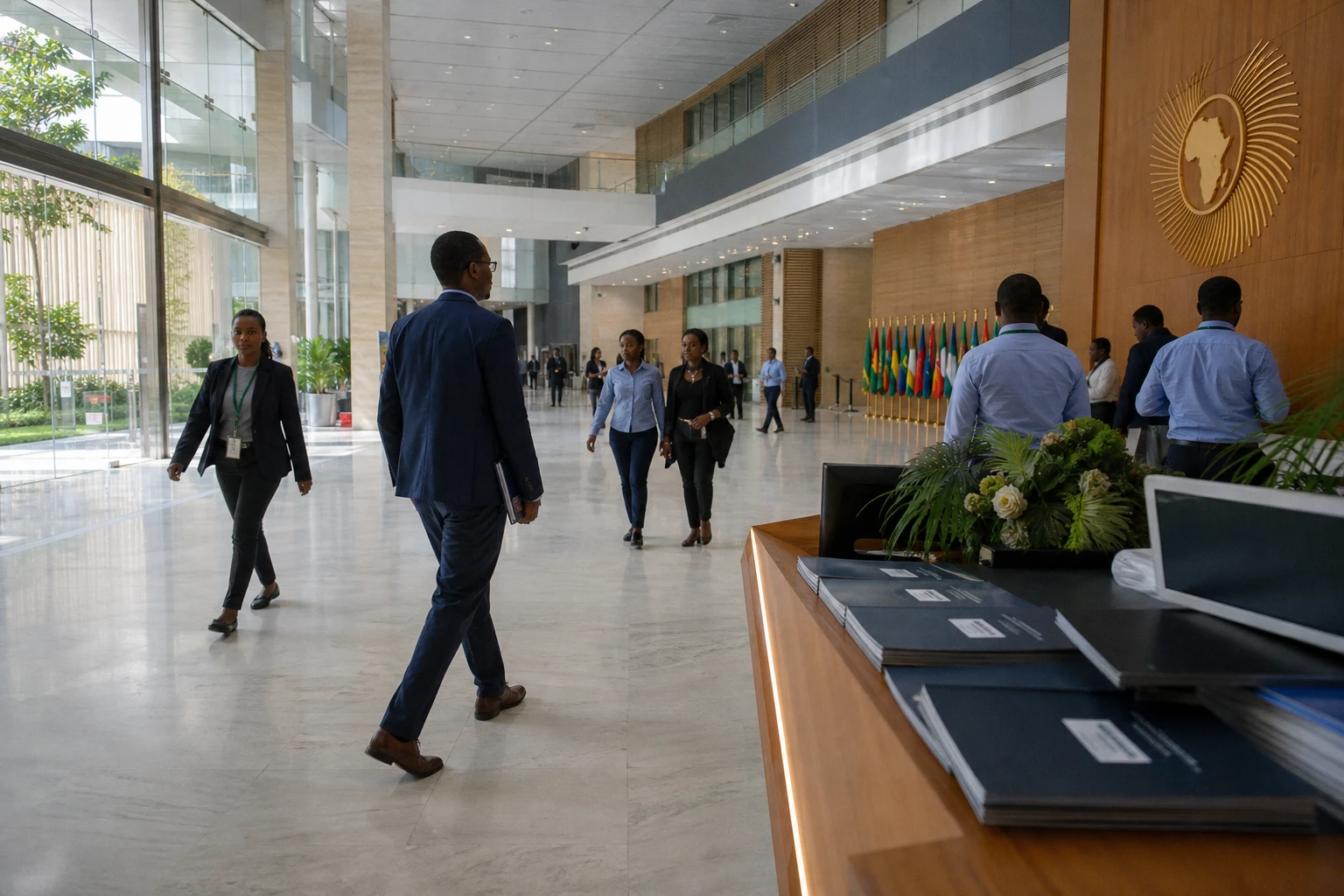
Ethiopia occupies a central position in the Horn of Africa. It hosts the headquarters of the African Union and plays a major role in the Intergovernmental Authority on Development, IGAD, the regional organisation that brings together countries including those in the Horn and the Nile basin.
The resumption of fighting comes as the region is already facing several crises. Sudan is mired in a prolonged war. Somalia continues its fight against armed groups. Tensions between Ethiopia and Egypt remain high over the Grand Ethiopian Renaissance Dam, built on the Blue Nile. A new war in Tigray could therefore multiply the lines of confrontation.
The African Union has called on the parties to show restraint and immediately de-escalate. It has also said it plans to mobilise its special envoy for the Horn of Africa. The regional priority is now to prevent the conflict from turning into open war between neighbouring states.
Abiy Ahmed’s second term will therefore be judged on two fronts. At home, he will have to address regional demands, violence in Amhara and Oromia, and the economic expectations of a large, young population. Abroad, he will have to restore a channel of communication with Eritrea and preserve the Pretoria agreement.
The next step will be as much diplomatic as military. The fate of disputed territories, the withdrawal of foreign forces, the reopening of routes to Tigray and the resumption of direct dialogue with the TPLF will provide a measure of the new term’s durability. For Ethiopia and the Horn of Africa, the central question is no longer just who controls Mekelle, but whether a political settlement can still prevent another long war.