
 Algeria
 Egypt
 Libya
 Morocco
 Sudan
 Tunisia
 Benin
 Burkina Faso
 Cabo Verde
 Côte d'Ivoire
 Ghana
 Guinea
 Guinea-Bissau
 Liberia
 Mali
 Mauritania
 Niger
 Nigeria
 Senegal
 Sierra Leone
 The Gambia
 Togo
 Central African Republic
 Chad
 DR Congo
 Equatorial Guinea
 Gabon
 Republic of the Congo
 São Tomé and Príncipe
 Burundi
 Comoros
 Djibouti
 Eritrea
 Ethiopia
 Kenya
 Madagascar
 Malawi
 Mauritius
 Mozambique
 Rwanda
 Seychelles
 Somalia
 South Sudan
 Tanzania
 Uganda
 Angola
 Botswana
 Eswatini
 Lesotho
 Namibia
 South Africa
 Zambia
 Zimbabwe
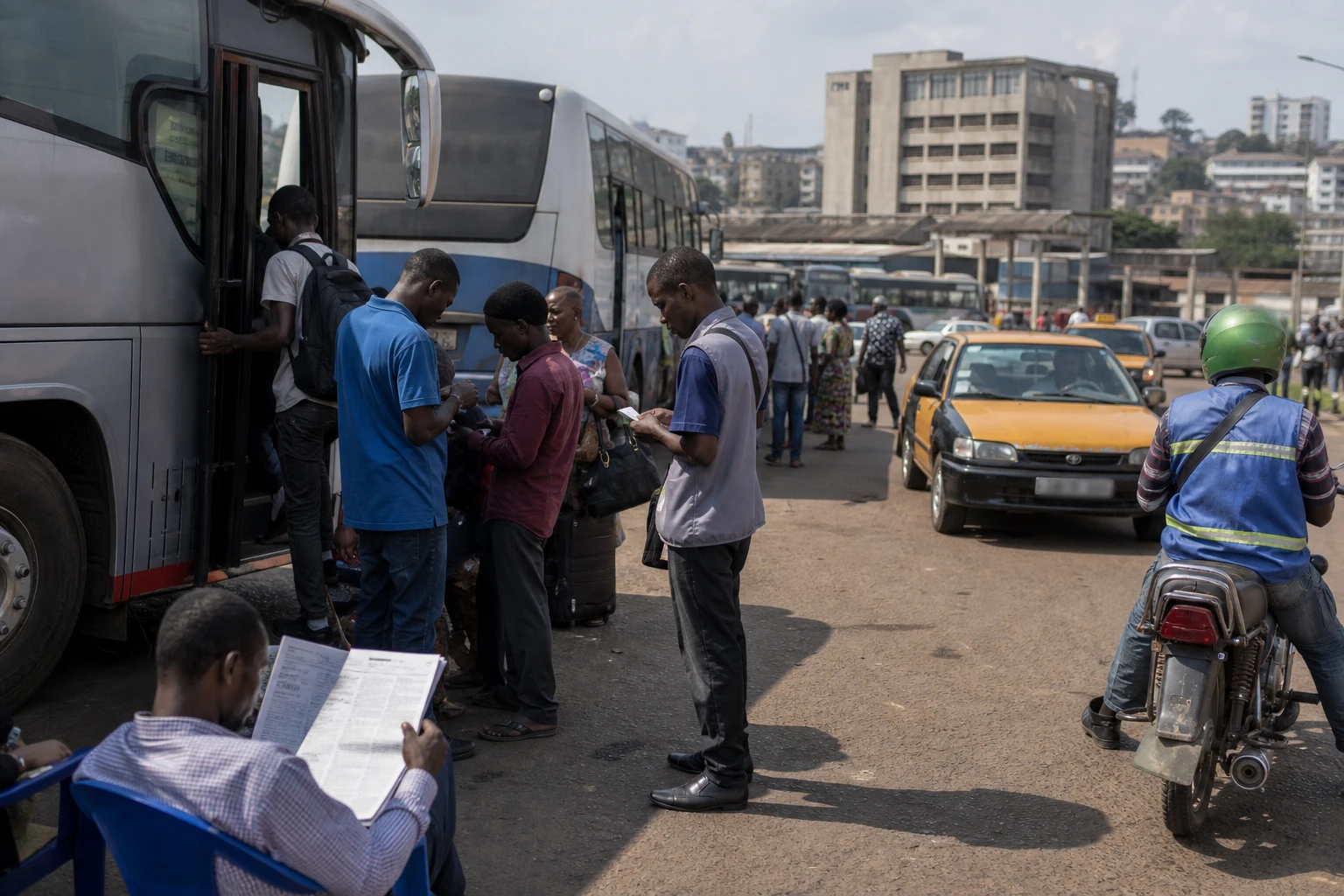
In Yaoundé, the death of Clément Atangana opens a period of transition at the head of an institution that has become central at the most sensitive moments in Cameroon’s political life. The president of the Constitutional Council died in Paris on Sunday 4 October 2026, aged 85, according to several Cameroonian and African media outlets.
An institution at the heart of presidential elections
Clément Atangana was appointed in February 2018 as one of the first members of the Constitutional Council. He later became its president, the first person to hold the post since the institution was fully established.
The Constitutional Council is responsible for reviewing whether laws comply with the Constitution. It also rules on disputes concerning national elections and proclaims the final results of presidential elections. In a country where the executive remains dominant, its decisions therefore extend far beyond the legal sphere.
During his two terms, Clément Atangana presided over hearings related to the 2018 and 2025 presidential elections. These events placed his words at the centre of public attention, as well as opposition criticism.
In 2018, the Constitutional Council confirmed Paul Biya’s victory, with more than 71% of the official vote. Maurice Kamto, who came second, disputed the results and claimed victory. The legal challenge was followed live amid a tense political climate.
Petitions filed by several candidates were examined by the court. In many cases, the panel chaired by Clément Atangana ruled them inadmissible, a phrase that remained associated with the Constitutional Council’s first major public intervention.
The controversial precedent of the 2025 presidential election
Seven years later, the institution was once again in the spotlight. The presidential election of 12 October 2025 took place amid intense competition over political succession and President Paul Biya’s longevity in office.
Before the vote, the Constitutional Council upheld the rejection of Maurice Kamto’s candidacy. The opposition leader, nominated by the African Movement for the New Independence and Democracy, Manidem, believed he could stand in the election despite the electoral commission’s decision.
On 5 August 2025, the court rejected his appeal. The decision prompted critical reactions from opposition groups and civil society. Several observers considered the exclusion a factor that reduced the contestability of the election.
After the vote, on 27 October 2025, the Constitutional Council proclaimed Paul Biya re-elected with 53.66% of the vote. Issa Tchiroma Bakary, a former ally of the ruling authorities who became the candidate of the National Salvation Front of Cameroon, received 35.19%, according to the official results.
Issa Tchiroma had claimed victory before the final results were published. The opposition denounced irregularities and disputed the legitimacy of the process. Protests and arrests followed in several cities, including Douala, Garoua and Yaoundé. The authorities, for their part, defended the Constitutional Council’s exclusive jurisdiction to rule on disputes and proclaim the results.
A record marked by both a judicial career and political mistrust
Tributes to Clément Atangana are likely to recall his career as a magistrate and his long service in Cameroon’s judicial system. His death, however, comes with a political and institutional legacy that remains deeply contested.
To his supporters, he embodied continuity of the state and the need to make a young institution function. Cameroon’s Constitutional Council has limited experience by historical standards. Its first decisions therefore helped establish the court’s practices, language and authority.
For his detractors, that same period strengthened the image of a Constitutional Council too close to the executive. Decisions on candidacies and election results fuelled accusations of institutional lockout. This interpretation is not an established judicial finding, but it shapes a significant part of public debate in Cameroon.
The controversy is above all about trust. An electoral court can have legal jurisdiction and still be contested if its decisions are seen as predictable or unbalanced. In Cameroon, this mistrust directly affects candidates, but also voters who expect institutions to provide credible arbitration after the vote.
The effects vary across regions. In Yaoundé, the Constitutional Council’s decisions are followed by political parties, the media and government departments. In the regions, how they are received depends more on local confidence in the electoral process, access to information and the ability of parties to organise appeals.
A succession that will be watched in Cameroon and Central Africa
Following Clément Atangana’s death, Paul Nchoji Nkwi is serving as interim president of the Constitutional Council, according to information published on 5 October 2026. This transitional period is intended to ensure the institution’s work continues until a new president is appointed.
The choice of the next office-holder will be closely watched. It will not simply be a matter of replacing a magistrate. The appointment will also signal whether Cameroon’s authorities intend to strengthen the perceived independence of the constitutional court.
The issue extends beyond national borders. Cameroon is a member of the Central African Economic and Monetary Community, CEMAC, which brings together six states in a shared economic and monetary area. Across the region, the strength of electoral institutions remains a recurring issue, particularly during political transitions and changes of government.
At African Union level, the issue also relates to commitments to credible elections, the rule of law and limiting post-election crises. Clément Atangana’s death does not resolve any of the disputes that have accumulated since 2018. Rather, it opens a new chapter in which the composition and methods of the Constitutional Council will be scrutinised ahead of the next political contests.



