
 Algeria
 Egypt
 Libya
 Morocco
 Sudan
 Tunisia
 Benin
 Burkina Faso
 Cabo Verde
 Côte d'Ivoire
 Ghana
 Guinea
 Guinea-Bissau
 Liberia
 Mali
 Mauritania
 Niger
 Nigeria
 Senegal
 Sierra Leone
 The Gambia
 Togo
 Central African Republic
 Chad
 DR Congo
 Equatorial Guinea
 Gabon
 Republic of the Congo
 São Tomé and Príncipe
 Burundi
 Comoros
 Djibouti
 Eritrea
 Ethiopia
 Kenya
 Madagascar
 Malawi
 Mauritius
 Mozambique
 Rwanda
 Seychelles
 Somalia
 South Sudan
 Tanzania
 Uganda
 Angola
 Botswana
 Eswatini
 Lesotho
 Namibia
 South Africa
 Zambia
 Zimbabwe
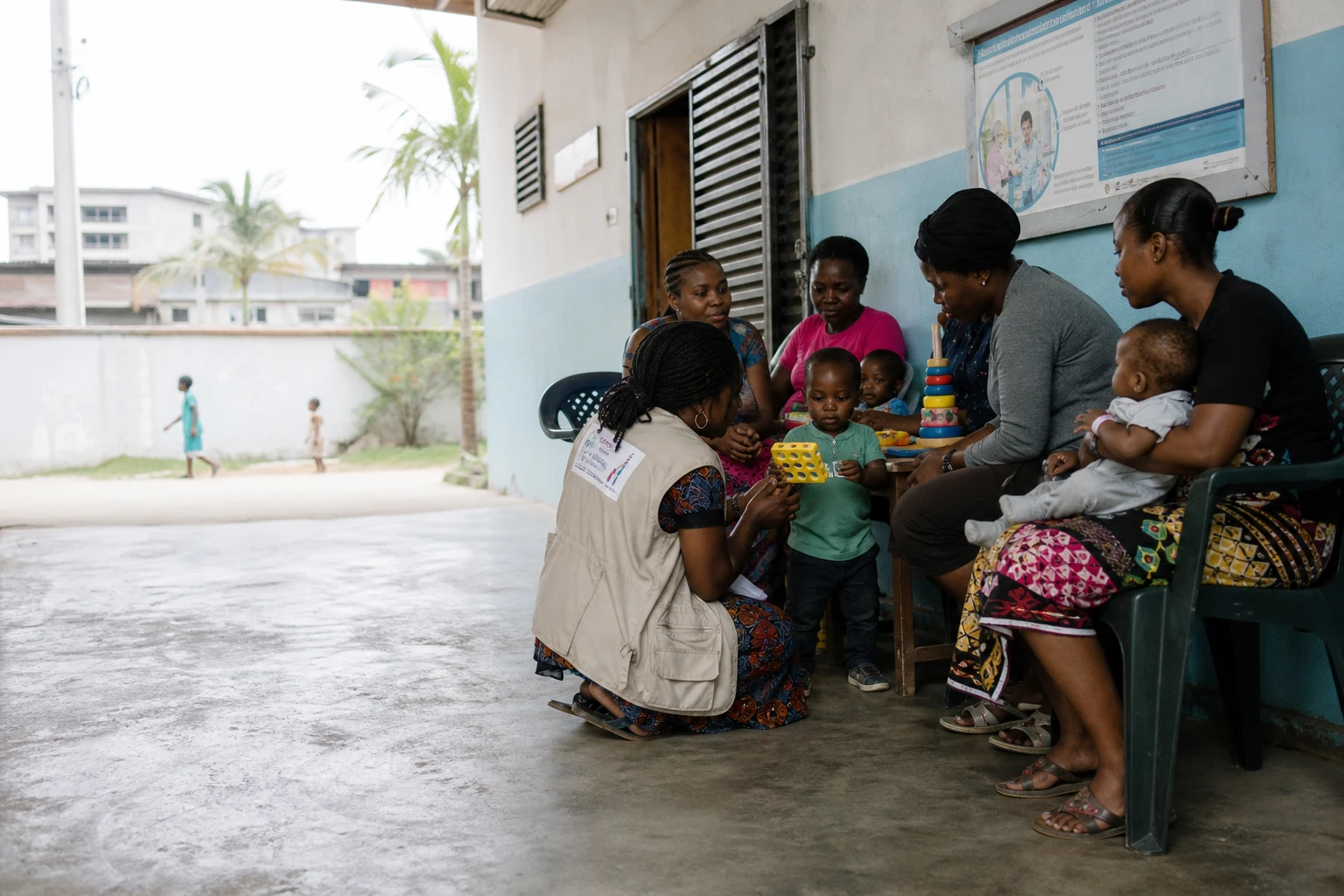
In Cameroon, including autistic children can also come down to simple gestures: an adapted toy, a consultation, an explanation given to a family. From 8 to 18 December 2026, Hope For Autism’s Christmas Caravan aims to reach more than 500 children in six cities across the country.
A Cameroonian caravan born out of experience
Run by Hope For Autism Cameroon, the initiative combines awareness-raising, family support, specialist consultations, training and opportunities to share. It is chaired by Charles Nombot, the father of an autistic child who has been committed to promoting inclusion for several years.
The sixth edition will also mark five years of the caravan. In December 2021, the team brought together 62 children. Subsequent editions gradually expanded its reach: five cities and 150 learning toys in 2022, followed by 250 toys in 2023 and 300 in 2024. In 2025, 350 toys were distributed and more than 600 people took part in training, including prospective teachers.
These milestones show significant progress. The event is no longer just a year-end celebration. It seeks to deepen the knowledge of parents, professionals and communities who support children in their daily lives.
In several parts of Cameroon, autism remains poorly understood. Families may still associate it with punishment, a curse or possession. These beliefs sometimes delay diagnosis and isolate children. Awareness-raising therefore aims to change perceptions: autism is a neurodevelopmental disorder, not a fault committed by the child or their relatives.
Toys to support learning
For the 2026 edition, DNA association, established in 2022 in Oullins-Pierre-Bénite, near Lyon, is set to join the caravan. The French association usually works in schools and businesses to discuss disability and support carers.
Its “DNA sans frontières” programme plans to deliver 500 learning toys. The collected toys must be clean, complete and suited to needs identified with the Cameroonian team. They will be given to children supported by Hope For Autism at each stop.
Play has a particular role in supporting autistic children. It can encourage attention, motor skills, sensory exploration and early interactions. It does not replace medical care or educational support. However, it provides a practical tool for communication and learning.
Cost remains a key concern for many families. According to the organisers, a learning toy can cost around 10 euros in Cameroon. The price can be difficult to afford when household incomes are low and transport, healthcare or school costs are mounting.
The French fundraising effort is not limited to sending equipment, however. DNA association also plans to fund the transport of the toys, the mission’s travel and the production of a documentary. The film is intended to show the work of local teams, give families a voice and present the activities carried out during the caravan.
An issue that extends beyond the big cities
In Cameroon, specialist resources remain heavily concentrated in the main urban centres. Douala and Yaoundé have more professionals and facilities than remote areas. For families living in smaller cities or villages, seeing a specialist can mean several hours of travel and additional costs.
The caravan is specifically seeking to bridge this gap. It is due to visit six cities and combine meetings with families with training sessions. This approach can provide guidance not only to parents, but also to teachers, healthcare workers and community groups.
Available figures should nevertheless be treated with caution. The figure of more than 100,000 autistic children often cited in Cameroon comes from estimates or older sources attributed to the Ministry of Public Health. It is not necessarily a recent and comprehensive census. A lack of screening and unequal access to healthcare make it harder to assess needs accurately.
This statistical gap does not erase the reality experienced by families. Rather, it highlights the importance of strengthening diagnosis, professional training and national data collection. Without these tools, public policies risk underestimating the needs of children and their carers.
Building cooperation with local organisations
DNA association’s participation gives the operation an international dimension. It does not replace Hope For Autism’s expertise. The Cameroonian association knows the families, the constraints on the ground and the priorities at each stop. The partnership is therefore based on complementary roles: fundraising and logistics in France, organisation and support in Cameroon.
This coordination is essential to ensure solidarity does not stop at sending products. Local needs must guide donations. They also include training, consultations, transport, access to information and continuity of support after the caravan has passed through.
The project is part of a wider regional context. Cameroon belongs to the Economic and Monetary Community of Central Africa, or CEMAC, which comprises six countries that share, among other things, economic and monetary cooperation mechanisms. Yet access to services for people with disabilities remains highly unequal across Central Africa. Local initiatives therefore play an important role in developing practices that can be replicated.
In the short term, attention will focus on how the caravan runs from 8 to 18 December 2026, the number of children actually supported and how the toys are distributed across the six cities. In the longer term, the question will be whether these efforts can build a lasting network among families, schools, healthcare professionals and Cameroonian associations.
For Hope For Autism and its partners, distributing 500 toys is therefore a concrete goal. But the operation’s impact will also be measured by its ability to improve understanding, reduce families’ isolation and embed inclusion in everyday practices.



