Algeria
 Egypt
 Libya
 Morocco
 Sudan
 Tunisia
 Benin
 Burkina Faso
 Cabo Verde
 Côte d'Ivoire
 Ghana
 Guinea
 Guinea-Bissau
 Liberia
 Mali
 Mauritania
 Niger
 Nigeria
 Senegal
 Sierra Leone
 The Gambia
 Togo
 Central African Republic
 Chad
 DR Congo
 Equatorial Guinea
 Gabon
 Republic of the Congo
 São Tomé and Príncipe
 Burundi
 Comoros
 Djibouti
 Eritrea
 Ethiopia
 Kenya
 Madagascar
 Malawi
 Mauritius
 Mozambique
 Rwanda
 Seychelles
 Somalia
 South Sudan
 Tanzania
 Uganda
 Angola
 Botswana
 Eswatini
 Lesotho
 Namibia
 South Africa
 Zambia
 Zimbabwe
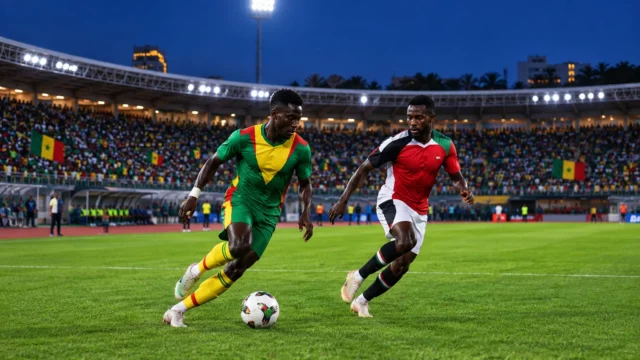
In Abidjan, Cameroon turned a warm-up match into a display of solidity. The Indomitable Lions beat Ivory Coast 1-0 on Saturday 3 October 2026 at the Alassane Ouattara Stadium in Ébimpé. A narrow but significant victory for a Cameroon side able to withstand the pressure of an opponent backed by its home crowd.
A tight contest decided straight after the break
The first half was for a long time a cautious affair between two teams. Ivory Coast sought to establish its game in the Cameroonian half. Cameroon, meanwhile, favoured a compact defensive block and quick breaks. Chances were scarce, despite the intensity of a meeting between two leading national teams from Central and West Africa.
The decisive moment came in the 46th minute. Played in by Arthur Avom, Bil Nsongo got the better of his marker in the Ivorian penalty area before beating Alban Lafont. The goal put Cameroon ahead as the teams returned from the dressing rooms, forcing the Elephants to change their approach.
Ivory Coast then had more control of the ball. The introduction of several attacking players brought greater pace and presence in the final third. However, Cameroon’s defence held its shape. Goalkeeper Simon Ngapandouetnbu also made assured interventions when the Ivorians managed to raise the tempo.
The match narrative and score are confirmed by reports from the African Press Agency, as well as the detailed coverage of the match at Ébimpé.
Rotation puts Ivorian choices back under scrutiny
Hervé Renard made sweeping changes to his team. Ten changes were made compared with the side that started four days earlier against Somalia, who were beaten 2-0 in the 2027 Africa Cup of Nations qualifiers. Franck Kessié, Evan Ndicka and Yan Diomandé were among those who began on the bench.
The decision served a clear purpose: to give newly called-up players game time and broaden the available options. Christ Tapé, Kassoum Ouattara and Amadou Koné were thus given a chance to prove themselves in a demanding setting. The Ivorian coach defended the strategy after the match, while acknowledging that his team had lacked fluency and precision.
The debate stems from the contrast between this extensive rotation and the symbolic importance of the fixture. The day before, Hervé Renard had pointed out that a match between Ivory Coast and Cameroon could never be quite like an ordinary friendly. In a fixture of this kind, sporting rivalry, public expectations and the impact on the FIFA rankings lend every result extra significance.
The defeat does not necessarily call the Ivorian project into question. It does, however, reveal the immediate cost of a rebuild. An experimental team can provide useful information for the coaching staff, but it also loses some of its understanding. Against a Cameroon side more settled in its organisation, that gap proved decisive.
Cameroon rewarded for continuity
Cameroon approached the match with a more coherent core. After a victory against Comoros and a 1-1 draw with Congo, the Indomitable Lions ended their international camp with a notable win. In both cases, the priority was collective balance and the ability to stay compact when the opposition took the initiative.
Arthur Avom’s work in midfield was crucial in building the decisive move. Bil Nsongo, for his part, converted one of the few clear-cut chances of the match. That efficiency gives Cameroon a valuable victory, even if it is not enough to draw definitive conclusions about the pecking order between the two national teams.
David Pagou, for his part, emphasised the quality of the Ivorian team after the final whistle. That assessment reflects the shape of the match: the Elephants had the means to come back, but lacked precision with their final touch. Cameroon gained more from managing difficult spells than from territorial dominance.
Two paths, one continental goal
The match forms part of preparations for the 2027 Africa Cup of Nations qualifiers, hosted by Kenya, Tanzania and Uganda. Before this international window, the Confederation of African Football had confirmed the first results for Ivory Coast and Cameroon in the campaign, including Ivory Coast’s win against Somalia and Cameroon’s draw with Congo. The CAF’s review of this run of matches puts the Ébimpé game in the context of this regional campaign.
For Ivory Coast, the challenge now is to turn individual auditions into a reliable collective performance. The country has an experienced squad, but the renewal under way under Renard will take time. Senior players will need to support the integration of new arrivals without upsetting the team’s balance.
For Cameroon, the victory boosts confidence in a group still seeking full stability. Above all, it confirms the value of matches against top-level opposition. In Central Africa, where Cameroon is part of the Central African Economic and Monetary Community, or CEMAC, such contests also serve as benchmarks ahead of continental fixtures.
The Ébimpé result will also affect the FIFA rankings, which are used to determine seeding positions for some draws. Its sporting impact is limited by the match’s friendly status, but its strategic value is real. Both teams must now turn the lessons of the evening into consistent performances in the next rounds of qualifying.