Algeria
 Egypt
 Libya
 Morocco
 Sudan
 Tunisia
 Benin
 Burkina Faso
 Cabo Verde
 Côte d'Ivoire
 Ghana
 Guinea
 Guinea-Bissau
 Liberia
 Mali
 Mauritania
 Niger
 Nigeria
 Senegal
 Sierra Leone
 The Gambia
 Togo
 Cameroon
 Central African Republic
 Chad
 DR Congo
 Equatorial Guinea
 Gabon
 São Tomé and Príncipe
 Burundi
 Comoros
 Djibouti
 Eritrea
 Ethiopia
 Kenya
 Madagascar
 Malawi
 Mauritius
 Mozambique
 Rwanda
 Seychelles
 Somalia
 South Sudan
 Tanzania
 Uganda
 Angola
 Botswana
 Eswatini
 Lesotho
 Namibia
 South Africa
 Zambia
 Zimbabwe
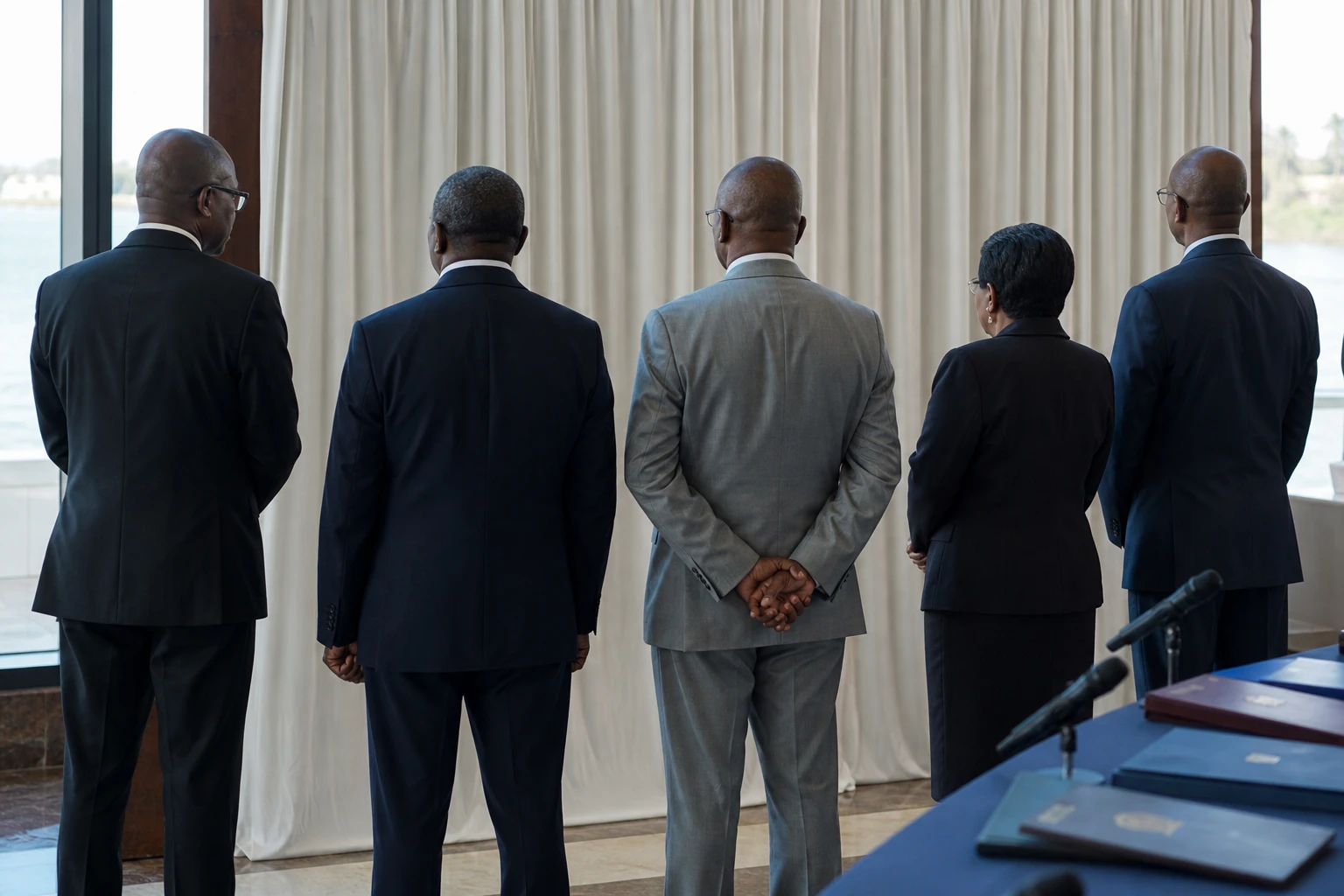
On the Congo River, a border usually crossed for trade and family ties became a zone of tension on 26 August 2026. A month later, Kinshasa and Brazzaville are seeking to prevent an incident between patrols from undermining a relationship of strategic importance to both banks.
Presidential visit aims to ease tensions
The president of the Democratic Republic of the Congo, Félix-Antoine Tshisekedi Tshilombo, travelled to Brazzaville on Saturday 3 October 2026. He was received by his counterpart from the Republic of the Congo, Denis Sassou Nguesso.
The Congolese head of state arrived by boat from Kinshasa. The two leaders held several meetings at the presidential palace. Their discussions focused on the armed incident that had occurred a few weeks earlier between security force personnel from the two countries.
Félix Tshisekedi expressed regret. He said the people on both banks formed a single human community and that resorting to arms between their forces was “wrong and senseless”. The statement was intended primarily to defuse political and military tensions.
The president of the Democratic Republic of the Congo also announced that he intended to meet those affected by the incident. He referred to compensation to be provided by Kinshasa, subject to the findings of the work under way between the two states.
This qualification is important. The announced compensation does not yet constitute a final settlement of responsibility. The authorities must first establish the exact circumstances of the shooting, identify the victims and determine the damage involved.
What is known about the clash on the river
The shooting broke out in the area of Makoloko Island, between Makotipoko, on the Republic of the Congo side, and Yumbi, in Mai-Ndombe province in the Democratic Republic of the Congo. The Congo River serves as a natural border between the two countries.
The first available reports indicate that a river patrol made up of soldiers and gendarmes from the Republic of the Congo encountered personnel from the Armed Forces of the Democratic Republic of the Congo, the FARDC. Published accounts still differ on exactly how the shooting began.
Casualties have been reported. However, no definitive death toll has been independently confirmed. Several local sources have reported the death of a teenager on the Yumbi side, while soldiers may also have been killed or injured. These details remain subject to the findings of the investigation.
Two soldiers from the Republic of the Congo were taken to Yumbi after the clash. They were subsequently handed over to the authorities in Brazzaville on 30 August, according to reports published by 7SUR7.CD. Conflicting reports also indicated that people had gone missing in the first hours after the incident.
The government of the Democratic Republic of the Congo has announced an investigation. Its findings should clarify responsibility and review coordination procedures between units operating on the river.
A sensitive area for people on both banks
The Yumbi and Makotipoko area is more than a border line. Residents have longstanding commercial, family and cultural ties. Travel by pirogue or boat is essential for reaching markets and services, and for fishing.
A military incident can therefore have immediate consequences for daily life. An increased security force presence can slow crossings. It can also disrupt informal trade, which supports many households on both sides of the river.
The consequences are not the same for everyone. Government administrations have representatives in the capitals and major cities. People living along the river, by contrast, depend more on local routes and direct dealings with authorities on the ground. A temporary closure of the river can therefore weigh more heavily on small traders, fishers and families separated by the border.
Caution is all the more necessary because Yumbi territory still bears the scars of the communal violence of December 2018. At the time, clashes displaced people to several localities in Mai-Ndombe and to the Republic of the Congo. The latest incident has a different context, but it is a reminder of the fragility of this border area.
Kinshasa and Brazzaville must turn de-escalation into a lasting mechanism
The meeting between Félix Tshisekedi and Denis Sassou Nguesso offers a short-term diplomatic way out. It will not be enough, however, unless the two armies have common rules for their river patrols.
Several measures could be considered as part of the bilateral talks. These include clarifying patrol zones, establishing direct communication channels between commanders and setting out a joint procedure for unexpected encounters between units.
The identification of vessels is also central. On a busy river, military patrols must be quickly recognisable. Compatible radio equipment and regular notifications could reduce the risk of mistaken identity.
The interior and defence ministries of both countries should continue this work. It should involve provincial authorities, administrative officials from Yumbi and Makotipoko, and representatives of communities along the river.
The matter also concerns the Economic Community of Central African States, ECCAS, which brings countries in the subregion together on issues of peace, security and integration. Regional involvement would not necessarily mean internationalising the incident. It could provide a technical framework for strengthening the prevention of border tensions.
A test for cooperation between the two Congos
Kinshasa and Brazzaville have an interest in containing this matter quickly. The two capitals are separated by the river, but bound by exceptional human ties. They also share concerns around movement, trade, security and the management of river areas.
The promise to compensate victims could help restore trust. It must, however, be accompanied by transparency about the investigation and the fate of those affected. Without clarification, conflicting accounts risk fuelling distrust on both banks.
The next challenge will therefore be less the symbolism of the presidential visit than what follows in practical terms. People are waiting for measures that make crossings safer, protect civilians and prevent another confrontation between forces tasked with monitoring the same border.