Algeria
 Egypt
 Libya
 Morocco
 Sudan
 Tunisia
 Benin
 Burkina Faso
 Cabo Verde
 Côte d'Ivoire
 Ghana
 Guinea
 Guinea-Bissau
 Liberia
 Mali
 Mauritania
 Niger
 Senegal
 Sierra Leone
 The Gambia
 Togo
 Cameroon
 Central African Republic
 Chad
 DR Congo
 Equatorial Guinea
 Gabon
 Republic of the Congo
 São Tomé and Príncipe
 Burundi
 Comoros
 Djibouti
 Eritrea
 Ethiopia
 Kenya
 Madagascar
 Malawi
 Mauritius
 Mozambique
 Rwanda
 Seychelles
 Somalia
 South Sudan
 Tanzania
 Uganda
 Angola
 Botswana
 Eswatini
 Lesotho
 Namibia
 South Africa
 Zambia
 Zimbabwe
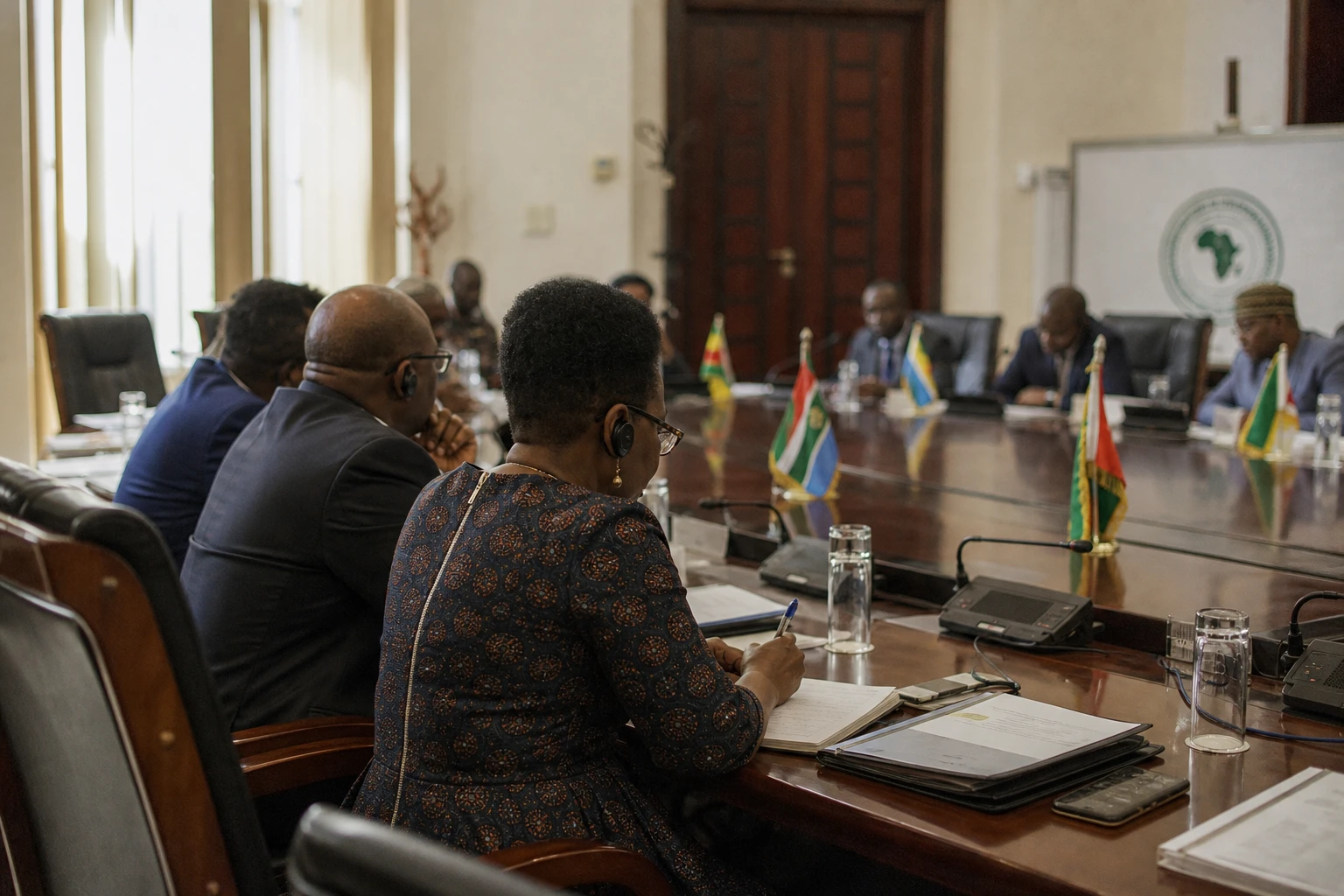
In Abuja and Lagos, the debate is no longer just about the need for reforms. It is about how they translate into everyday life. On 1 October 2026, as Nigeria celebrated 66 years of independence, Bola Ahmed Tinubu sought to close the chapter on emergency measures and open one focused on tangible results.
A presidential address focused on what comes after reform
In his address to the nation, the Nigerian president said the main economic corrections had been set in motion since he took office in May 2023. He said the country was now entering an « era of prosperity », with a stated priority of reducing the cost of living and expanding employment opportunities.
Bola Tinubu cited growth in economic activity, the rebuilding of foreign-exchange reserves and the stabilisation of the currency market. He also said non-oil exports had exceeded $6 billion in 2025. These results form part of the record presented by the presidency and should be read in the light of data published by Nigerian economic institutions.
The federal government also says real gross domestic product grew by 4.43% in the second quarter of 2026, compared with 4.23% over the same period in 2025. This macroeconomic improvement does not, however, mean that pressure on households has eased. National growth can coexist with falling purchasing power when prices rise faster than incomes.
The head of state therefore stressed agricultural production, irrigation, mechanisation, storage and transport infrastructure. The aim is to reduce costs between farms, factories and markets. He also pledged support for access to credit, digital skills, industry and youth employment.
Economic choices continue to weigh on people
Since 2023, the government has scrapped the fuel subsidy and reorganised the foreign-exchange market. The first measure was intended to ease the state’s budgetary burden. The second was meant to reduce distortions between different exchange rates and encourage investors to return.
These decisions have, however, led to a sharp depreciation of the naira. They have also driven up the cost of transport, food, agricultural inputs and imported goods. For informal workers, small traders and urban families, the central question remains how much disposable income is left at the end of the month.
The government presents these sacrifices as the price of a necessary rebalancing. The president argued that the reforms had not created the economy’s structural weaknesses, but had exposed and addressed them. Nigerian entrepreneurs and analysts dispute this interpretation, calling for more visible results on prices, electricity, security and employment.
The contrast between national indicators and local realities is particularly stark. Businesses able to access finance or benefit from the recovery in some sectors can take advantage of the new landscape. By contrast, small enterprises reliant on fuel, imports or road transport directly absorb the rise in costs.
The situation also varies across the country. Lagos remains the country’s main economic centre. Abuja is home to federal institutions and some services. In rural areas, access to markets, the safety of travel and the price of fertiliser have a greater bearing on the real impact of public policies.
The social cost remains at the heart of criticism
The presidency says inflation has fallen from its peak and the economy has returned to a more stable path. But this statistical improvement is not enough to erase the cumulative price rises since 2023. For many Nigerians, the cost of food, housing and transport remains higher than before the reforms.
Economic pressures are compounded by persistent security problems. Kidnappings, armed attacks and localised violence continue to disrupt travel and economic activity in several states. This insecurity penalises farmers, transport operators and regional markets, while complicating the implementation of the production programmes announced by Abuja.
The government points to social measures, student loans, consumer credit and the regular payment of salaries and pensions. Their impact will, however, depend on how widely they are actually available. In a country of more than 200 million people, limited or irregular assistance cannot durably offset the general rise in costs.
A decisive political year in West Africa
The electoral calendar gives the 1 October address a political dimension. Nigeria’s next presidential election is due in 2027, but information published by the Independent National Electoral Commission (INEC) has circulated with different dates across its platforms. The commission cited 20 February 2027 in an official statement, while another institutional document lists 16 January 2027.
This discrepancy calls for caution before making any definitive claim. It also serves as a reminder that preparations for the election will be closely watched by political parties, civil society and regional partners. Bola Tinubu is expected to defend his economic record, while his opponents will seek to make the high cost of living and security the main campaign issues.
The issue extends beyond Nigeria’s borders. As West Africa’s largest economy and most populous country, Nigeria plays a major role in the Economic Community of West African States (ECOWAS). A lasting stabilisation of its economy would strengthen regional trade. By contrast, a fresh surge in inflation or a prolonged political crisis would weigh on trade corridors, investment and confidence in the region.
The next test will therefore be a practical one: will the announced reforms enable the country to produce more, reduce costs and improve incomes? In Abuja, the government now wants to be judged on this transformation. For Nigerians, the question is less whether the indicators are improving than when that improvement will reach markets, workshops, farms and households.