Algeria
 Egypt
 Libya
 Morocco
 Sudan
 Tunisia
 Benin
 Burkina Faso
 Cabo Verde
 Côte d'Ivoire
 Ghana
 Guinea
 Guinea-Bissau
 Liberia
 Mali
 Mauritania
 Niger
 Nigeria
 Senegal
 Sierra Leone
 The Gambia
 Togo
 Cameroon
 Central African Republic
 Chad
 DR Congo
 Equatorial Guinea
 Gabon
 Republic of the Congo
 São Tomé and Príncipe
 Burundi
 Comoros
 Djibouti
 Ethiopia
 Kenya
 Madagascar
 Malawi
 Mauritius
 Mozambique
 Rwanda
 Seychelles
 Somalia
 South Sudan
 Tanzania
 Uganda
 Angola
 Botswana
 Eswatini
 Lesotho
 Namibia
 South Africa
 Zambia
 Zimbabwe
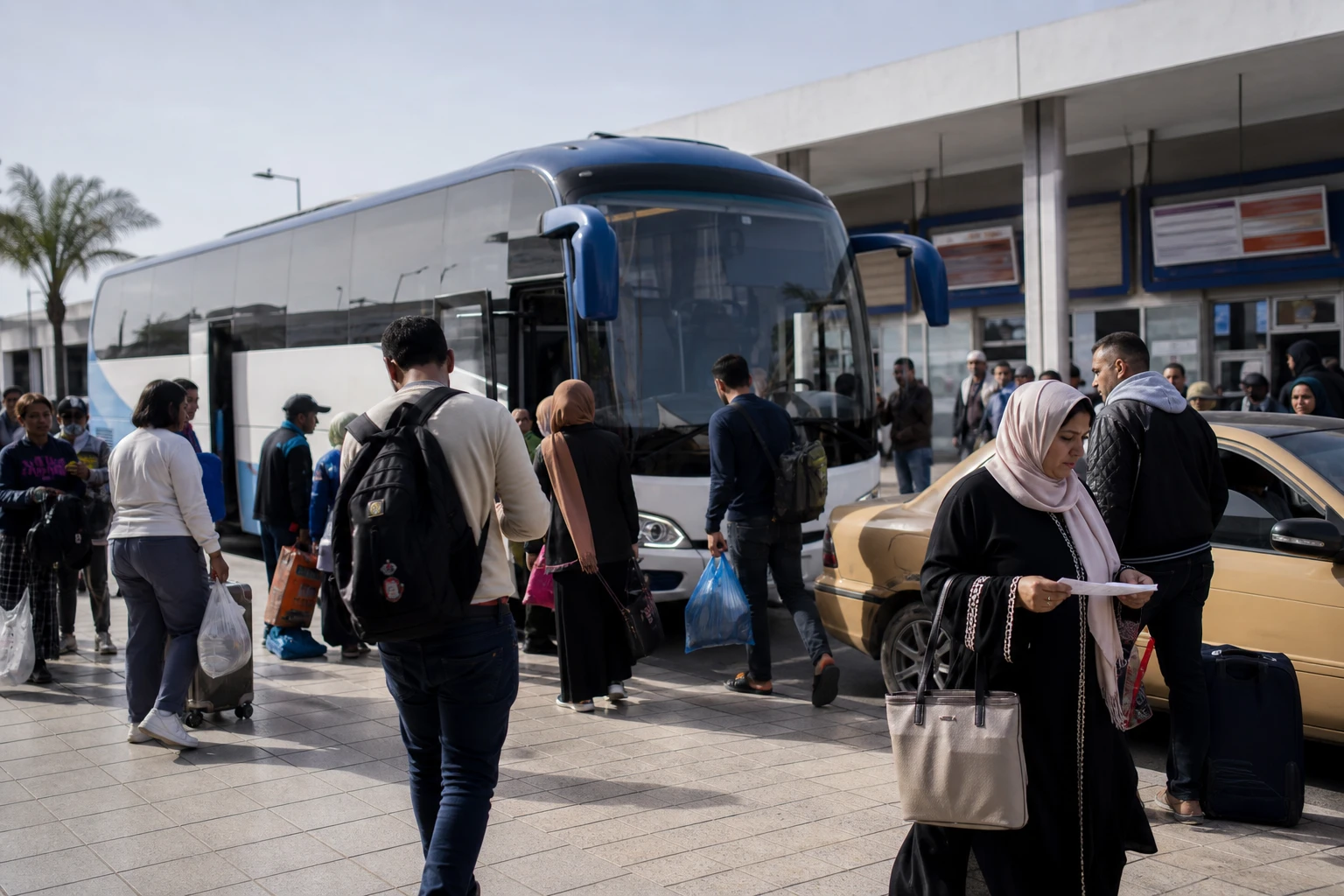
From the royal palace in Rabat to the chanceries of the Horn of Africa, this week has highlighted political choices that reach beyond national borders. In Morocco, a new chapter begins with the appointment of a woman as head of government. Further east, the rupture between Ethiopia and Eritrea has revived the risk of a regional conflagration. In West Africa, Guinea-Bissau is preparing for a vote under intense pressure.
In Rabat, a historic first opens a demanding political chapter
On 29 September 2026, King Mohammed VI appointed Fatima Ezzahra El Mansouri as head of the Moroccan government. The decision was announced by the Ministry of the Royal Household from Rabat. She becomes the first woman to hold the post in Morocco’s history.
A lawyer by training, former mayor of Marrakech and former Minister of Territorial Planning, Fatima Ezzahra El Mansouri belongs to the Party of Authenticity and Modernity, the PAM. Her appointment follows the legislative elections of 23 September, which were won by her political party. She must now build a majority and form a new government.
This appointment is more than a symbol. The new head of government will have to address concrete expectations: jobs, purchasing power, access to healthcare, housing and narrowing the gaps between major cities and less advantaged regions. Moroccan women’s rights associations are also watching the make-up of the future government. Having a woman at its head does not, on its own, guarantee greater representation of women in decision-making positions.
Morocco is also following a particular regional path. The kingdom is not part of an economic community such as ECOWAS or SADC. It is a member of the Arab Maghreb Union and has strengthened its ties with West Africa, the African Union and continental financial institutions in recent years. The new team will therefore have to align domestic priorities with this active African diplomacy.
The official announcement of Fatima Ezzahra El Mansouri’s appointment confirms her mandate to form the government.
Ethiopia-Eritrea: diplomatic standoff becomes a regional crisis
Relations between Addis Ababa and Asmara deteriorated sharply on 1 October. Ethiopia closed its embassy in Eritrea and ordered ten Eritrean diplomats to leave the country within forty-eight hours. Addis Ababa accuses them of activities constituting a direct threat to its national security.
Eritrea responded by severing diplomatic relations with Ethiopia. The two countries had nevertheless restored ties in 2018, after two decades of tensions following the 1998-2000 border war. The rapprochement had been presented as a major step towards stabilising the Horn of Africa.
The latest crisis comes as federal Ethiopian forces are fighting armed groups in the north of the country. Addis Ababa accuses Eritrea in particular of supporting opponents of the central government in the Tigray region. Asmara rejects this account and says the Ethiopian authorities have pursued a hostile policy for several years.
Reports of explosions in Addis Ababa and conflicting information about military operations make the situation difficult to verify. Casualty figures and precise responsibility should therefore be treated with caution. The main risk is that the conflict could spread beyond Ethiopia’s domestic front, in a region already marked by tensions over the Red Sea, borders and access to ports.
For local populations, the rupture could complicate travel, family ties and cross-border trade. It could also weigh on African Union mediation efforts; the organisation is headquartered in Addis Ababa. The regional priority will be to prevent the diplomatic crisis from turning into open military confrontation.
The account of the diplomatic expulsions and Eritrea’s response has been confirmed by several international news agencies.
In Guinea-Bissau, Embalo’s announced return puts vote under pressure
In Guinea-Bissau, former president Umaro Sissoco Embalo has announced his intention to return to the country and stand in the presidential election scheduled for 6 December 2026. He has been living in exile since his overthrow in a military coup following an earlier electoral process.
The transitional authorities want to make the vote a step towards restoring constitutional order. But Embalo’s announced candidacy could complicate the process. It raises questions in particular about security guarantees, recognition of the electoral authorities and the army’s ability to stay out of politics.
Guinea-Bissau belongs to the Economic Community of West African States, ECOWAS, an organisation tasked with promoting regional integration and political stability. After several coups in West Africa, the credibility of its prevention mechanisms is under particular scrutiny. The vote in Guinea-Bissau will therefore be watched beyond the country’s borders.
African commitments around Gaza remain uncertain
The proposed International Stabilisation Force for Gaza continues to prompt discussion. Uganda secured parliamentary approval in August to consider deploying troops. Ugandan and Burundian military officials subsequently travelled to Israel to examine the terms of possible participation.
Morocco has also been named among the countries expected to contribute to the force. However, the precise mandate, timetable and rules of engagement will be decisive. Without a clear political framework, a foreign military presence could expose contributing countries to fierce controversy, particularly over civilian protection, governance of the territory and coordination with Palestinian actors.
For the African states concerned, the stakes are twofold. They can draw on their peacekeeping experience while avoiding association with an operation perceived as detached from Palestinian interests. The African Union’s position and international guarantees will therefore be essential.
AfCRA aims to change how African risk is assessed
The Africa Credit Rating Agency, or AfCRA, is preparing to launch as an African financial ratings agency. A ratings agency assesses the ability of a state or company to repay its debts. Its analyses then influence borrowing terms in the markets.
The project, backed by the African Union and led with support from the African Peer Review Mechanism, aims to offer analyses more firmly rooted in the continent’s economic realities. Its proponents criticise the methods of major international agencies, which they say are sometimes too severe towards African economies.
The new institution will nevertheless have to demonstrate its independence, transparency and the soundness of its data. A different rating will not be enough to reduce the cost of debt if investors do not regard it as credible. The challenge will therefore be institutional as well as financial.
Memory in Saint-Louis and university crisis in Cameroon
In Saint-Louis, Senegal, a former building associated with the transatlantic slave trade is deteriorating. Historians estimate that tens of thousands of captives passed through the city before being deported to the Americas. The loss of these traces threatens the preservation of a history that extends beyond visible colonial heritage.
UNESCO has asked Senegal to submit an updated report on the state of conservation of Saint-Louis Island by 1 December 2026. Restoration will therefore have to combine architectural protection, historical research and the involvement of residents.
In Cameroon, the start of the university year scheduled for 7 October remains uncertain. The National Union of Higher Education Teachers, the Synes, is continuing a strike launched on 3 September. Teachers are demanding, among other things, the payment of academic bonuses announced at 16 billion CFA francs, or about 24 million euros.
The action directly affects students, as well as families and the local economies of university towns. It is a reminder that the stability of an education system depends as much on infrastructure as on honouring financial commitments to teachers.
From Rabat to Saint-Louis, this week’s events thus point to the same question: how can African institutions gain legitimacy while responding to immediate social expectations? The coming milestones will be decisive, particularly the formation of Morocco’s government, the vote in Guinea-Bissau and developments in the standoff between Ethiopia and Eritrea.